.png) 1 month ago
45
1 month ago
45
During her time at the helm of a multimillion-dollar organisation linked to baby deaths around the world, Emilee Saldaya has always avowed one thing: she’s never heard of a woman dying after a freebirth.
“I’ve never heard of a mother dying in childbirth in the sovereign birth world,” the Free Birth Society founder said in a December 2024 appearance on The Way Forward podcast, adding: “In the sovereign birth world we aren’t losing mothers.”
Ten months after this interview, a 30-year-old nutritionist, wellness influencer and first-time mother, Stacey Warnecke, died from complications of a massive postpartum haemorrhage after a freebirth attended by one of Saldaya’s students and friends, the Melbourne-based unlicensed birth attendant Emily Lal. An inquest heard this month that Warnecke had paid Lal A$6,000 to attend her birth as “a birth keeper”, a term promoted by the Free Birth Society.
In 2025, a year-long Guardian investigation identified 48 cases of late-term stillbirths or neonatal deaths or other forms of serious harm involving mothers or birth attendants who appeared to be linked to FBS. The cases spanned the world, from the US to Canada, Switzerland, France, South Africa, India, Australia and the UK.
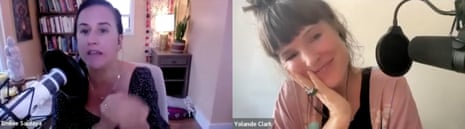
Now, for the first time, the Guardian can reveal the full extent of Lal’s ties to FBS. A former insurance industry worker with no medical qualifications, she was personally trained by Saldaya and her business partner, Yolande Norris-Clark, through their Radical Birth Keeper School. In her five years as a birth keeper, Lal would be named in inquests into two deaths, that of Warnecke and of a newborn baby in 2022.
Through Lal, Australia’s most prominent FBS-trained birthkeeper, Saldaya and Norris-Clark would export their extreme, anti-scientific views to a continent thousands of miles away. In so doing, FBS would be connected to what Saldaya had always said she had never heard of in the freebirth world: a maternal death.
Before she entered the birth world, Lal worked for the insurance company QBE. In 2020 she enrolled in FBS’s online programme, which pledged to train a generation of “authentic midwives”, according to emails seen by the Guardian and the recollections of fellow students and ex-FBS members. They recall Lal waking up at early hours of the morning to dial into calls, along with the handful of other Australian women who enrolled in the course.
Through the Radical Birth Keeper School, Saldaya and Norris-Clark claim to have trained 850 RBKs to attend births around the world. Many of these women, like Lal, had no medical experience. They began attending births after completing the course, which is three months long and taught via Zoom. Replete with scientific inaccuracies and dangerous misinformation, the programme has a strong focus on brand-building via social media.
Saldaya and Norris-Clark have taught their students that neonatal resuscitation can be a form of “sabotage”, questioned the fact that bacteria causes infection and dismissed life-threatening pregnancy complications as “variations of normal”. Norris-Clark and Saldaya have also, respectively, questioned the existence of gravity and whether the Earth is round.
FBS provides some basic advice to trainee RBKs on dealing with emergencies. Experts who have reviewed this advice say it contains inaccurate, misleading and dangerous information. But in podcast interviews recorded before Warnecke died, Lal appeared to suggest that she had the life-saving skills necessary to assist in emergency situations, including a haemorrhage.
“If there was excessive bleeding,” she said in a 2021 interview on the Matresence podcast, “or something out of the ordinary occurred that we’d consider to be a variation of normal, I’ve got the skills behind me to help the woman to birth her baby if, if she wants my help.”
After completing her training, Lal remained in touch with Saldaya, appearing on the FBS podcast in 2021, when Saldaya described her as a “friend”. Lal quickly became successful, telling the Positive Birth Australia podcast in 2023 that she attended three to four births a month. “My book’s full,” she said.
She did not appear unduly concerned about the risk of situations she couldn’t manage. On the Matresence podcast, she said there was “no better training than just learning on the job, really.” Her philosophy on birth, Lal said, was that “birth is as safe as life gets. And if we leave it alone, it unfolds beautifully, [the] majority of the time.”
In court, Lal appeared calm, her voice breaking slightly only when she read from her statement for the coroner, describing her arrival at Warnecke’s home the night she gave birth and finding her client “happy and smiling”.
“I kissed her on the forehead to greet her,” Lal told the court, before pausing, composing herself and continuing. Having previously refused to give a statement to police after Warnecke’s death, Lal agreed to testify in exchange for a guarantee that her evidence wouldn’t later be used against her.
She told the coroner that she had never claimed to be a health worker. Instead, she said, a birth keeper was “essentially a doula”, a non-medical person who supports a woman during birth.
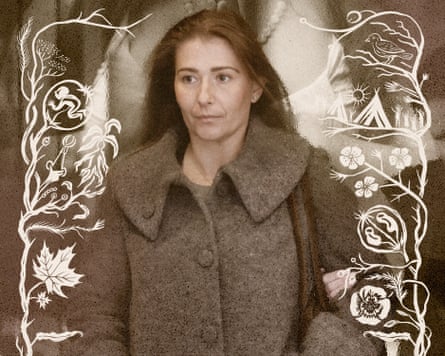
But Lal had formerly denied being a doula. “Legally,” she said, in her 2021 Matresence appearance, “obviously, we can’t refer to ourselves as midwives. I don’t consider myself to be a doula because I do have the knowledge behind me that if there are complications that arise I can assist.”
The term “radical birth keeper” was invented by Saldaya as a way to help her students skirt laws that ban practising midwifery without a licence.
“To manoeuvre around these unjust laws,” Saldaya taught FBS students, “I made up the term radical birth keeper … to be crystal clear, a radical birth keeper is, in practice, [an] authentic midwife.”
She encouraged these “authentic midwives” not to sign contracts with clients, only to accept gifts after successful births, and to avoid the sort of women who might blame them if something went wrong. “I only ever operate as a non-professional friend,” Norris-Clark said in a 2024 FBS teaching module titled “navigating birth culture legalities”, advising students against signing contracts, because “you’re just there at the birth as a friend”.
Giving evidence, Lal used the word “friend” eight times. “That’s the agreement that I have with the families that I’m supporting, is if I came to your birth, I’m there as a friend,” she told the inquest.
Services covered by her $6,000 fee – advertised on her now taken-down website – included prenatal support, birth planning, education, herbs, tinctures and kits to support pregnancy, labour and birth. Warnecke, Lal said repeatedly, had hired her to be a “supportive friend”.
It also emerged through Lal’s evidence that Warnecke appeared to have engaged with FBS materials. On her birth plan, she had a section entitled “variations of normal”, the phrase used by FBS to downplay often-serious pregnancy and labour complications. As part of her package, Lal had provided Warnecke with educational materials about them.
Lal told the court Warnecke had probably taken the details for her birth plan from “a couple of different sources” and she had not given her client a template.
When Warnecke became unwell after her son’s birth, Lal appears to have followed her FBS training. A fundamental pillar is the principle that women have the right to refuse medical attention, even if this choice leads to their death or the death of their child. “Autonomy,” Saldaya and Norris-Clark teach their students, “is an essential pillar of authentic midwifery.”
As Warnecke began to bleed out, the inquest heard, Lal asked her twice if she wanted an ambulance. When she said no, Lal did not call one.
Her commitment to this ideological approach was examined by the counsel assisting the coroner, Rachel Ellyard. Lal insisted that she would not call an ambulance against her client’s wishes, even if the woman was unconscious and dying.
“If she’s like, ‘I, under no circumstances, do I want you to call an ambulance without my express permission,’ that’s what I will do,” Lal told the court.
“Even if she’s literally unconscious,” replied Ellyard, “and you don’t know whether she wants one or not?”
“If I’ve had that conversation with her previously, I’m going to honour her wishes,” Lal said. She explained that “autonomy was very important” to Warnecke: “There was no way I was gonna call an ambulance against her wishes.”
This is an extreme view promoted by senior FBS leaders. “The idea that any of you would call 911 before the mother says to is like a ludicrous idea,” Saldaya taught RBK students in 2023, adding: “Oh, that makes me want to throw up. That is so horrible.”
It was only on the third time that Lal asked that Warnecke agreed to having an ambulance called. By then, she’d been bleeding for about half an hour. At Melbourne’s Frankston hospital, staff exhausted their entire supply of Warnecke’s blood type trying to save her and performed a hysterectomy, along with a procedure to drain fluid from her heart, which was experiencing trauma from repeated cardiac arrests and CPR. She died after suffering a further cardiac arrest post-surgery.
Every medical expert who gave evidence at the inquest described her condition – a huge post-partum haemorrhage – as treatable and preventable, had Warnecke access to swift medical care.
On the day Warnecke died, a senior doctor at the hospital went to Frankston police station to report his concerns about Lal, something he’d never done before. Giving evidence at the inquest, he explained that the staff who’d tried to save Warnecke’s life were sceptical that Lal really was just her “friend” because she’d used medical terminology in conversations they witnessed.
When police arrived at Warnecke’s home, they found that Lal had cleaned it so thoroughly they couldn’t even determine the layout of the room she’d given birth in. Lal had even taken home the blood-stained carpet, she told the inquest, so Warnecke’s husband wouldn’t be confronted by the scene, and because it would not fit in their bin.
She refused to make a statement to police, explaining that, as she was not legally required to do so, she chose not to. Ellyard put to her: “You knew that someone who was your friend had just passed away and you were an eyewitness to some of the events. Why wouldn’t you want to make a statement to describe what you had seen?”
Lal repeated that she had no legal obligation to do so. “I don’t want to over-egg it,” Ellyard continued, “but if you were present at Stacey’s house as a friend, and you witnessed effectively the events that led to her death, why wouldn’t you?”
Throughout her evidence, Lal had appeared calm but it was here that she grew agitated. “Because the last time I did [give a statement to a police],” she said, “it was a birth that had absolutely nothing to do with me, and somehow it ends up with every media report saying that the baby’s death was my fault.”
She was referring to the death of a newborn girl, Baby E, hours after her birth in December 2022. Baby E’s mother is believed to have listened to the Free Birth Society podcast. In an interview with the Australian free birth podcast The Renegade Mama after Baby E’s death, she recalled a comment she believed Yolande Norris-Clark had made on the podcast, citing it as influential in her decision to freebirth.
“She said, ‘When you’re sick, what is it that you want? Do you want somebody to nurture you and bring you things … or do you want to be completely left alone? … that’s a good indication of how you’re going to be in birth,’” Baby E’s mother recalled.
After reflecting, she decided that “I don’t even want someone to talk to me when I’m sick at all”, so freebirth seemed like the best option for her.
She rented a birth pool from Lal. A 2025 inquest by the coroner’s court of Victoria into Baby E’s death concluded that her cause of death was pneumonia, meconium aspiration and chorioamnionitis, after a prolonged labour in the birthing pool. There is no suggestion that Lal was present at the mother’s birth or the baby’s death; the mother told the inquest she had “sought no other service or advice” from Lal.
Baby E was born about 10.30pm on 28 December 2022. The next morning the mother realised that her baby was not well. The coroner’s court heard evidence that the woman had texted Lal about 8am to say “we can’t wake her, we aren’t sure if she’s breathing” and sent a photograph of their daughter, whose face was blue, according to a record of a conversation between Lal and a staffer at Mercy hospital for women. According to this record, Lal told the hospital worker that she had not seen the message for 25 minutes, at which point she had FaceTimed the parents, who showed her the baby. She believed her to be dead and told them to call an ambulance.
This version of events broadly correlates with the information she gave police at the home, according to the coronial inquest. Baby E was declared dead at the scene. Police who attended and spoke to the father and Lal determined there were no suspicious circumstances.
But Lal told the inquest she had only spoken to Baby E’s mother to arrange the pool hire and when she visited the home after emergency services arrived, having previously been asked by the mother of Baby E to come and visit her and the baby. In August the coroner Catherine Fitzgerald determined that “the death of baby E was preventable”. She made no findings against Lal personally.
In a 2023 Positive Birth Australia interview, Lal said Baby E’s death “shook” her and made her recontend with, and ultimately accept, the “possibility of death” at a time when she was also pregnant. She said she had analysed her choices and decided that freebirth remained, for her, “the safest option”. Lal continued attending births, taking on Warnecke as a client nearly three years later.
The inquest into Warnecke’s death remains open pending forensic analysis of her phone. It is expected to determine why she chose to reject medical care.
After the death, the Victorian health complaints commissioner suspended Lal from providing or advertising health services while it investigated concerns about her services. That investigation is ongoing.
Lal, Saldaya and Norris-Clark did not respond to requests for comment. In response to previous Guardian reporting, Saldaya said in one email that “some of these allegations are false or defamatory”. She has previously responded to criticism by saying she does not care if women freebirth but wants them to have the choice. She has also described past Guardian reporting on the Free Birth Society as “propaganda” based on “lies”. On her Substack in June, Norris-Clark responded to Guardian reporting by stating that “my supposed crime was ‘endangering’ others with my ideas, but the real offence was spreading the insurrectionary gospel of self-responsibility, and illustrating (never instructing, never telling, but embodying) the possibility of reclaiming birth outside of the system”.
In her five short years as a birth keeper, Lal would be connected to two avoidable tragedies. It is a future she could never have predicted for herself when she decided to sign up for an online school to explore her passion for birth. Through her, the radical ideology of the Free Birth Society spread through the Australian birth world.
But her birthwork career is now over, with Lal telling the court that after Warnecke’s death she had stopped attending births.
“It was really traumatic watching someone that you love die,” she said. “It was horrible. I don’t think I would be able to be in a birth space without bringing that in me.”