.png) 3 months ago
57
3 months ago
57
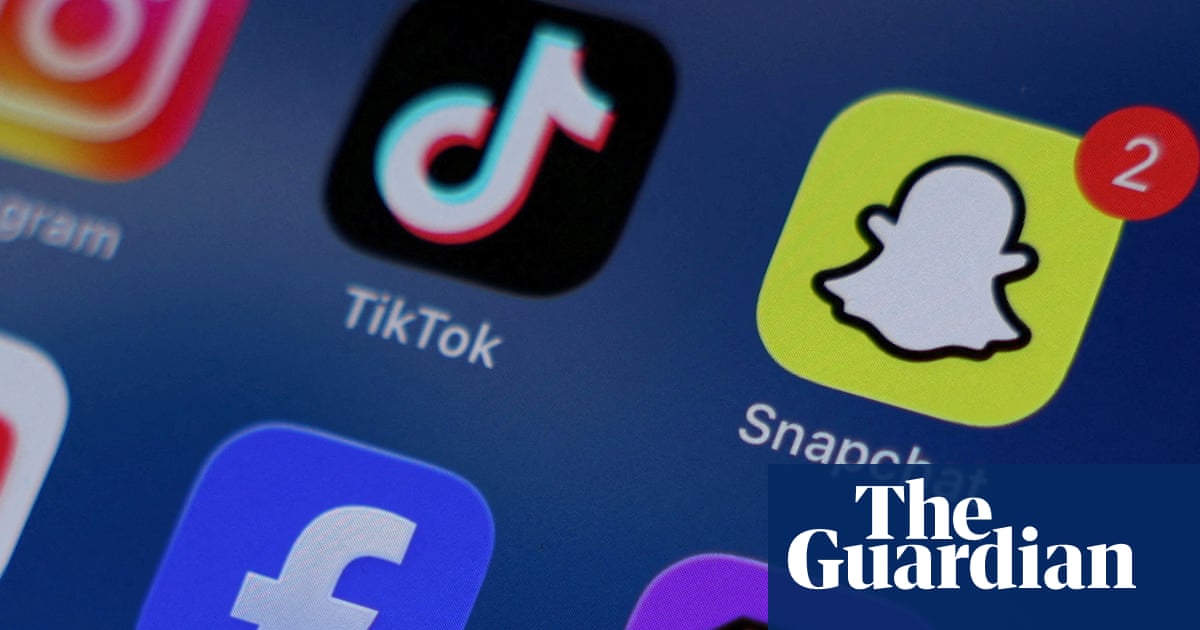
More than 4.7m accounts for teens under 16 have been been taken offline by Australia’s social media ban, but that doesn’t mean it’s been successful.
As the UK government faces pressure to follow suit, let’s take a closer look at the facts and figures.
On Friday, the Australian prime minister, Anthony Albanese, said he had measured the success of the ban in three ways: “One is the feedback that we’ve had from parents saying, thank you for doing this, this has made a difference in our household,” he said.
“The second is from young people themselves. There’s a lot of younger people that I’ve spoken to who speak about, ‘gee, we wish that was in place when I was 13 or 14. It’s making a difference to my younger brother or sister’.
“And the third is the fact that in spite of some skepticism out there, it’s working and being replicated now around the world. It is something that is a source of Australian pride.”
The UK prime minister, Keir Starmer, said on Thursday he was watching the Australian experiment with interest.
It is true that compliance by the platforms subject to the ban gave the Australian government an early win.But tangible evidence that it’s achieving the broader goals of the policy, such as by improving mental health outcomes for teens, has yet to come.
Part of it is the timing: it is currently school holidays and the Australian summer means it is too soon to collect much data on how it is progressing.
The Australian eSafety commissioner, Julie Inman Grant, said on Friday the number was potentially lower than expected.
“The real impacts will not be measured just in days and weeks, but actually in terms of years and demonstration.”
Anecdotally, everyone knows of teens who have been able to bypass the age assurance checks, such as by changing the birth date on their account and passing the facial age estimation tool.
Teens have been swapping details on how to bypass the ban. One in three teenage Australians told mental health organisation Headspace they would look for ways to get around the ban.
Inman Grant acknowledged that some age checking methods needed to be improved, but she said she will ask the platforms about how the checks currently in place were working.
“What’s really important is that these companies are deploying them in the right way. And if they don’t have the right settings or they’re setting the calibrations too high, that is where they’re going to likely have false positives.”
Some teens have used the ban to make a decision to stay off the platforms, but others have said many of their friends have remained online and the Fomo factor is hitting.
Inman Grant said she will ask the platforms what they’re doing to ensure teens aren’t creating new accounts or using virtual private network (VPN) tools to in order to get back on social media.
“They have the age inference tools to be able to stop that – and we’ll make sure that we’re checking that they are doing so,” she said.
Albanese conceded that for some it would have been a “difficult period” when the ban came in. He said on Friday, $700m in mental health funding was aimed at youth who find the transition difficult.
The next hard data on the ban will come in February, when eSafety presents an independent evaluation of the ban, including research with parents and young people on their experiences. From there, it will be measuring mental health outcomes, test scores and other data for the initial cohort.
But since that will take months or years, it is too early to say whether the experiment has been a success or failure – and those considering following Australia’s lead should moved cautiously.