.png) 2 months ago
38
2 months ago
38
Speaking hours before polls closed in Makerfield, a Downing Street source acknowledged a rare moment of doubt about the prime minister’s future. “Keir will fight on,” the source said, repeating the message to which Keir Starmer has stuck for several weeks. “Although, that might depend on the size of the majority.”
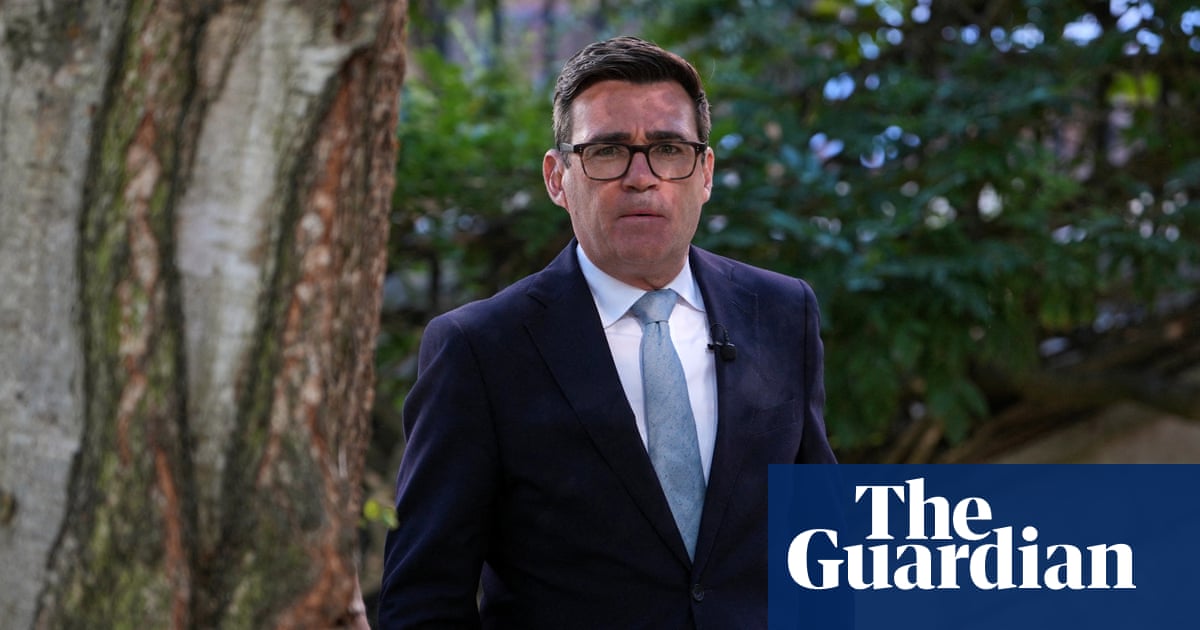
In the end, Andy Burnham’s majority was so convincing that allies hope he can be installed in No 10 within days. Louise Haigh, the Labour MP who helped run Burnham’s campaign, said on Thursday night: “I hope that [Starmer] will consider an orderly and managed transition.
“We have said that the party is in an existential crisis and things cannot continue. It was quite clear after the local elections, unfortunately, that he considered that business as usual would suffice.
“Andy has potentially shown tonight what change the Labour party can bring.”
Lisa Nandy, the culture secretary, said Burnham was the “only Labour politician in the country that could have pulled off that result”, adding: “That wasn’t just a win, that was an emphatic win … It was an astonishing share of the votes, and I think it shows that you can beat hate and division and anger and despair.”
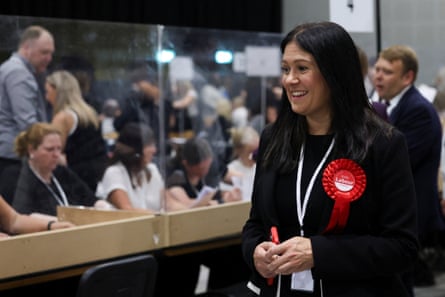
In fighting the byelection, the Greater Manchester mayor wanted not only to return to Westminster to challenge the prime minister, but also to show how Reform UK can be taken on and beaten, even in their most promising seats. He said after the result: “We must now take this up and put this country back on the right path and bring people back together and get things working properly.”
Of the 90 seats where Reform finished second to Labour at the 2024 general election, Makerfield was the seventh closest result. At the local elections in this constituency, Reform won more than half the vote, with Labour way behind on 23%.
Burnham, however, has won the seat with a majority of 9,231 – nearly double that enjoyed by his predecessor. With 54% of the vote, the mayor finished about 20 percentage points ahead of Reform, and, crucially, gained comfortably more votes than Reform and Restore Britain combined. Nigel Farage, the Reform leader, cannot argue that he would win this seat at a general election by uniting the hard right.
Attention will now return to Westminster, and how quickly Burnham might mount a challenge to the prime minister. The mayor’s allies said before the vote that they did not want ministers to resign over the weekend, insisting they wanted any change of power to be as harmonious as possible.
Those close to Burnham say he has the support of more than the 81 MPs needed to trigger a leadership contest, in which Starmer would automatically have the right to stand should he wish.
But they hope it will not come to that, and that ministers will quietly spend the next few days persuading the prime minister that he should agree to an orderly transition of power.
Polls suggest Labour would be doing about six percentage points better if Burnham was prime minister – though even his allies accept he would face the same policy dilemmas that have tripped up Starmer.
Joe Twyman, the director of the polling company Deltapoll, said: “In the short term, he may well manage a bounce in the polls if Burnham becomes prime minister, but longer term, will voters perceive him and his Labour government to have made a noticeable improvement in their lives? Or will they ultimately view him as just more of the same?
“Regardless, the phoney war of the Labour leadership contest is now over.”
Starmer, the man Burnham is seeking to unseat, posted a brief message of congratulations on social media on Friday morning. “Congratulations, @AndyBurnhamGM, Labour’s new MP for Makerfield,” the prime minister wrote. “Voters chose Labour’s campaign of hope and optimism over division and hate.”
Burnham will use the win to argue that it shows his brand of politics can lead Labour to a second consecutive general election victory. But the reality is that this byelection was highly unusual in several important ways.
By running as a Labour candidate but on a promise to challenge the prime minister, Burnham was able to use the full resources of the governing party while also positioning himself as the option for change.
Almost every Labour MP went to campaign at some point over the last few weeks, many more than once. Party officials say they knocked on some doors as many as seven times, managing to speak to 60% of voters during the campaign – far above the normal contact rate.
There were so many Labour volunteers out on polling day that some in Burnham’s campaign feared they risked angering local voters. By turning the byelection into a de facto referendum on whether he should be prime minister, Burnham succeeded in squeezing the vote share of almost every other major party except Reform.
Voters turned out en masse, with nearly 60% of people casting a vote, more than at the general election. But that could not prevent the Conservatives, the Liberal Democrats and the Greens all losing their deposits, on 2.2%, 0.4% and 0.7% of the vote respectively.
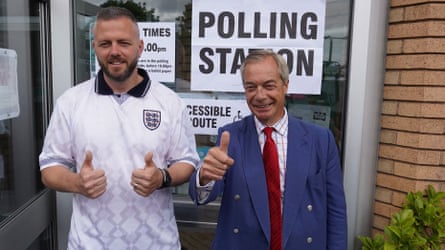
The result will disappoint Reform. Farage campaigned prominently in the constituency, though the party did achieve its second biggest share of the vote in any byelection, with 35%.
It will delight Farage’s former colleague Rupert Lowe, whose new Restore Britain party gained 7% of the vote, showing it could provide a threat to Reform in seats across the country.
For now, with Labour in flux, senior members of Starmer’s government showed signs of hedging their bets on Thursday night. “I think that with [Burnham] back in the top team, at the top table, helping to drive that change, I think we’ll be in a really strong position,” Nandy said.