.png) 2 months ago
50
2 months ago
50
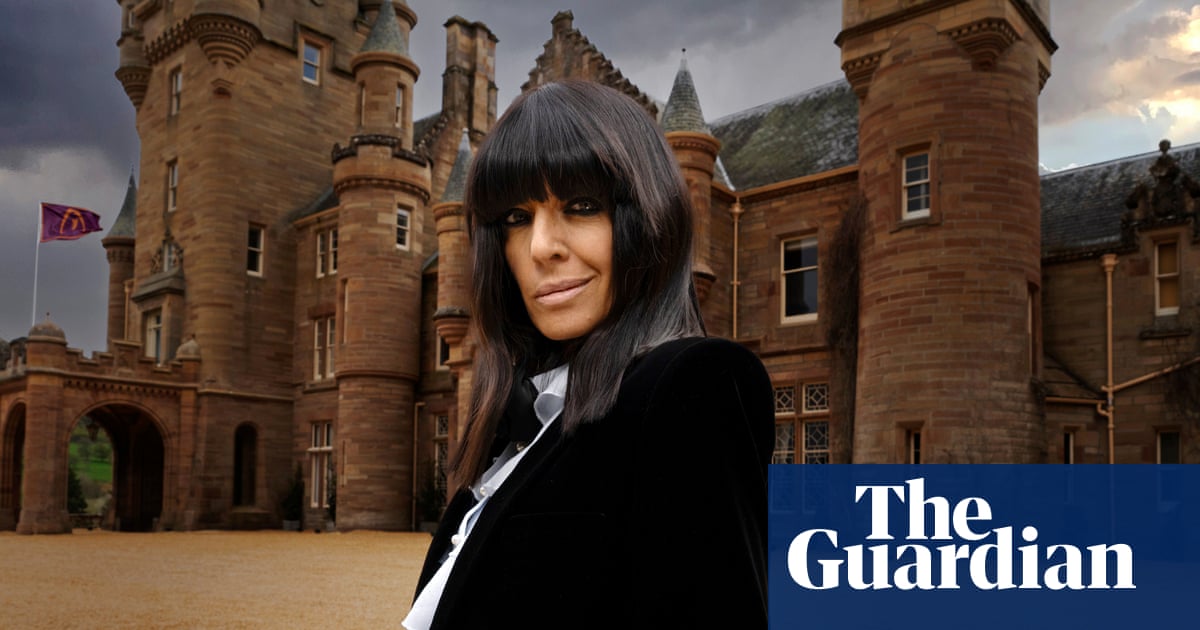
At the height of her music career in the early 1980s, Lesley Woods got accustomed to dealing with irate men. As the singer and guitarist of Au Pairs, the Birmingham post-punk four-piece, she recalls “guys being aggressive purely because you were a woman on stage”. At one show, the band were on the bill with UB40 and the Angelic Upstarts, only the latter didn’t turn up. “So the audience, who were 95% skinheads, were gobbing at us and throwing anything they could get their hands on – which included a bin.” Was she scared? “No, I was bolshie back then. I just went to the front of the stage and said: ‘You missed.’”
After the band split in 1983, Woods hoped her days of dealing with overt misogyny were behind her. But then she retrained and became a lawyer. “When I came to the bar [in the 1990s], women couldn’t even wear trousers. I used to get men saying: ‘What colour knickers are you wearing today, Lesley?’ It’s better now, but back then law was way worse than music in how it treated women.”
Woods – who is now 67 – still works as a barrister, specialising in immigration law, though in the last 15 years she has dipped her toes back into music, performing occasional solo gigs and self-releasing an EP, In the Fade, in early 2025. Next month, she returns to the stage for a UK tour as Au Pairs. Led by Woods, the band now has new members: Estella Adeyeri of the Black feminist punk band Big Joanie, and the Thurston Moore Group’s Jem Doulton and Alex Ward. “They are all a lot younger than me, but then most people are,” she says with a dry laugh.
I meet Woods over tea and biscuits at her home in east London where she lives with her small dog, Dusky. Woods is hilariously unfiltered: pithy pronouncements about former associates, both in law and the music industry, are invariably followed by a more cautious, “You should probably leave that out, or I’ll get into trouble.” Woods is currently deep into Au Pairs rehearsals and loving every minute of it. “The band know the old songs but we’re working on new stuff, too. I’m hoping we can make an album.” But not everyone is so thrilled with the Au Pairs reboot. When they split, the band – who, alongside Woods, comprised bassist Jane Munro, guitarist Paul Foad and drummer Pete Hammond – were not on good terms. Though there has been sporadic email contact, Woods says they haven’t been in the same room for more than 40 years.
It was a promoter who originally approached Woods about a tour. He hoped the original band might reunite but when Woods demurred, saying the others wouldn’t be keen, he suggested hiring new musicians. Woods says she contacted the ex-members out of courtesy. “I said to them: ‘I am reforming Au Pairs. Are you interested?’ They responded as I imagined and said no.” Woods didn’t tell them a tour was on the table, as she wanted to “sound them out first. It’s no good going on a tour if you can’t get on.”
After they declined to be involved, Woods trademarked the band name and set about finding new musicians. When the tour was announced, the ex-members sent out a press release making clear their displeasure. In a joint statement to the Guardian, Munro, Foad and Hammond say that Woods had asked them if they were interested in reforming, “but it didn’t feel like a genuine or friendly offer and we responded individually, declining for different reasons. Days later we discovered she’d trademarked the band name behind our backs. We asked her to make clear this was her project and distinct from the Au Pairs – unfortunately the tour was advertised with the cover of our first album, which misled people into thinking it was the original lineup … The tour should not be going out under the Au Pairs name with only one original member involved.” They challenged any suggestion that Woods was the driving force. “We were ALL the driving force and have fought to keep the band’s music in the public domain.”
Woods acknowledges the tour was initially advertised on a third-party website using a picture of the original lineup, but says that she requested the picture be taken down. She says that, for the ex-members, it’s a case of “we don’t want to do it, but we don’t want you to do it”. She adds that it’s “extremely upsetting that something that started off with such great ideals and in a happy state of mind has disintegrated to this point”.
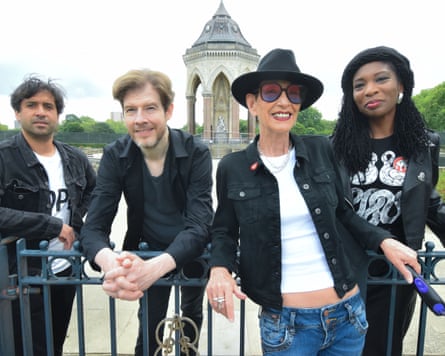
The Au Pairs formed in 1978 after a chance meeting between Woods and Foad at a bus stop in Birmingham; the pair began dating and set about assembling a band, though the relationship ended before the first Au Pairs album came out. Woods was studying philosophy and French at Birmingham University at the time but dropped out and transferred to Keele in Staffordshire which “was a hotbed of leftwing politics and feminism”. Woods funnelled what she was learning about gender politics into songs that were furious, funny and defiantly explicit.
Au Pairs’ debut LP, 1981’s Playing With a Different Sex, proved a thrilling showcase for their jagged guitar-based rock and declamatory songwriting. Tracks included We’re So Cool, which examined open relationships – “I don’t mind if you want to bring somebody home” – and Come Again, which depicted a woman providing tongue-in-cheek commentary as a man tries to bring her to orgasm: “Is your finger aching? I can feel you hesitating.”
For Woods, the lyrics were “the antithesis to the boy-meets-girl, drippy falling-in-love stuff”. Was she worried how people would react? “Not at all. Though I do remember Paul’s mum saying: ‘You shouldn’t sing about that, that’s private.’ But I guess you’re brave when you’re young.” Elsewhere, the song It’s Obvious fantasised about a time when gender roles ceased to matter, while Headache for Michelle, about being too strung out on drugs to protest society’s ills, was inspired by Woods’ first girlfriend who “was a bit of a drug fiend”. Woods says her own drug of choice was speed, “partly because I had a terrible complex about being fat and the one thing speed did was stop me eating”.
Kathleen Hanna has cited Au Pairs as an influence on her band Bikini Kill and the wider riot grrrl movement, and Kurt Cobain was said to have been a fan. Critics were also full of praise. Hailing them alongside the Raincoats and the Slits, Lester Bangs wrote that “the absolute best rock’n’roll anywhere today is being played by women: last night I saw God in the form of the Au Pairs” while the venerable Greil Marcus wrote a paean to them in his book In the Fascist Bathroom. Along with the provocative lyrical content, Woods’ sexuality became a talking point in interviews. Though she identifies as bisexual, back then it was easier to tell journalists that she was a lesbian, despite knowing it could harm her career. “Any number of male artists were in the closet back then, for good reason. But I guess being in a band, and being around people who are endorsing you, your values and politics, puts you in a kind of bubble.”
Despite the current fractious relations between Woods and her ex-bandmates, the singer still looks back with pride and affection at the early days, when they were a gang of friends touring the country and having a blast. “If you look at the early photos, we all look very happy. When you’re starting out, it’s wonderful. It’s like being at the start of a passionate affair. You’re so happy and you’re in love with each other and everyone else. Your passion for the music and the chemistry, it’s all there. But unfortunately it doesn’t always last.”
Things began to sour with their second album, 1982’s Sense and Sensuality, which saw Au Pairs embracing a more eclectic and rhythmic sound. Woods says the band “lost our sense of musical direction and the new material wasn’t worked through enough. But we were up against it financially, and we had to get in the studio.” At the same time, she was losing her voice as she had been “slaughtering it” during live shows trying to make herself heard over shonky PA systems. Woods was also in a volatile relationship, the details of which she’d rather not get into, but which was “very traumatising. I don’t think I’d been open with anyone about that because I’d probably felt ashamed or embarrassed.”
After playing more than 200 shows in the space of a year, Au Pairs were exhausted and stopped communicating with one another. Then their record label went bankrupt. Munro was the first to leave the band. Woods says that Au Pairs were subsequently offered a new contract with another label and a chance to record with the producer Steve Lillywhite, but she met with Foad and Hammond to discuss it and they said they’d had enough. “So that was it. That was the end.”
With the band over, Woods left Birmingham and moved back in with her parents in Stevenage. A desire for a fresh start led to her enrolling to do a law degree. “I thought: ‘What can I do that’s really difficult that will help me get my head together?’” The training lasted five years. “I never thought I’d pass the exams. When I got the results, I’d gone to Paris and my mum phoned and said, ‘You’ve passed’. I was, like: ‘Oh no. I’ll have to carry on now.”
Woods has now worked as a lawyer for 35 years. In that time, she has always intended to return to making and performing music. Now feels like the right time to restart Au Pairs, she says. “At my age, it’s not like the future is stretched out in front of you. Time isn’t on my side, and I think I can make a good album. I wouldn’t want to leave this world without having tried. I don’t think I’ve given the best of me yet.”
Au Pairs tour from January, first with the Skids and later with Gina Birch and the Unreasonables.