.png) 3 months ago
62
3 months ago
62
“We are bringing the boys home,” says Ngenoh Erick Kibet, a wildlife officer at the Mount Kenya Wildlife Conservancy, as a cargo plane carrying four mountain bongo touches down on a wet runway at Jomo Kenyatta international airport.
The operation is the culmination of two weeks spent in Czechia, a first flight for Kibet, and a decades-long collective effort to rescue a species on the edge of extinction.
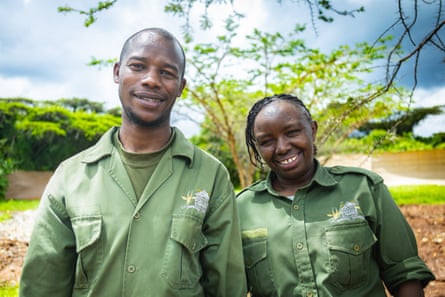
The mountain bongo may seem like any other antelope but no more than 100 have been counted in the wild. They are endemic to Kenya’s highland forests: the Aberdares, Mount Kenya, the Mau and the Eburu. For Kibet and Christine Gichohi, an animal keeper at the conservancy, spending time with these critically endangered antelopes on a daily basis is more than a job, it is key to ensuring that the species thrives.
-
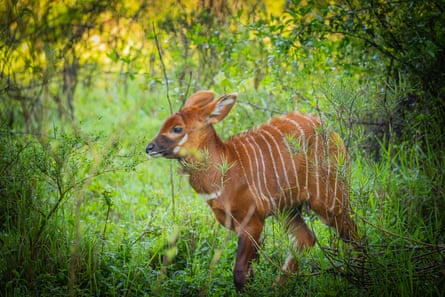
The 100th bongo calf was recently born at the conservancy
The trip to Czechia was the first time Gichohi and Kibet had left Kenya. The four bongos they were bringing back – Fitz, Maue, Kudu and Bon64 – had been held in a quarantine facility, isolated from other animals and cared for indoors, their world condensed to an enclosed space. Gichohi and Kibet spent two weeks there, learning the animals’ routines, earning their trust and studying each bongo.
“Mountain bongos are the shiest antelopes,” Gichohi says. “Even if they are tamed, that shyness and curiosity will still be there.” Each of the four males has a distinct personality, and the keepers had to get to know them before the journey home could begin.
-
Wildlife officer Ngenoh Erick Kibet and animal keeper Christine Gichohi
Maue is gentle, settled and the one who made everything easier. “He was very friendly and calm,” Kibet says. “You could get in where he was without any fear.” In the Czech facility, it was Maue who licked Kibet’s arm. It sounds like a small gesture. It was not.
Then there is Fitz – “the aggressive one”, Gichohi says. “He is one of the bongos that must be handled with a lot of care. He is not so friendly to humans.”
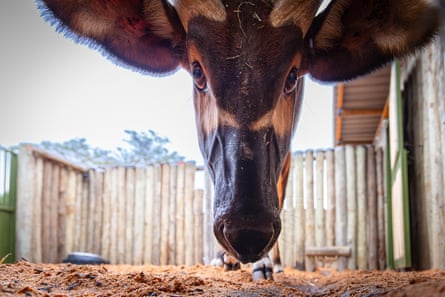
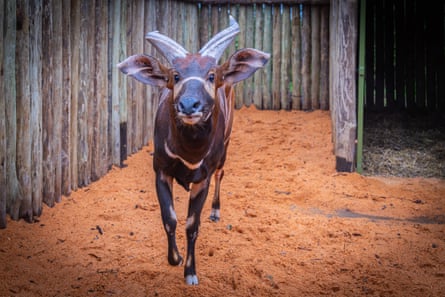
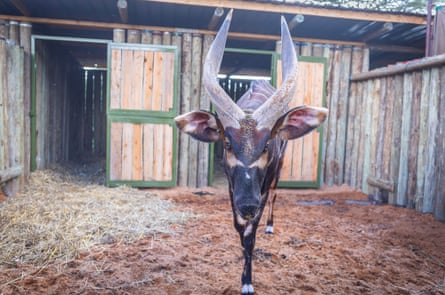
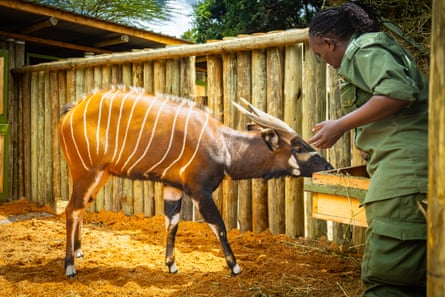
-
Clockwise from top left: Maue, Fitz, Bon64 and Kudu: the species is extremely shy and curious, but each animal has a distinct personality, which can affect how it adapts to new surroundings
Kudu has trust issues. “You have to create a relationship with him before he allows you to roam around his enclosure,” Gichohi says. It was Kudu who gave them the most difficult time in Czechia.
Bon64, the youngest, is curious, prone to spooking, turning his feeding trough upside down and running from new faces. “Being curious is a good thing,” Gichohi says. “It will allow him to protect his territory and survive with other animals in the wild.”
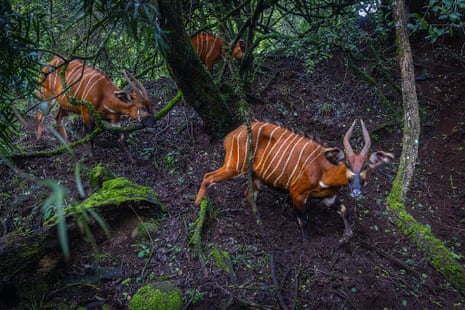
-
The male bongos explore their new home
The transfer was led by experts from England’s Chester Zoo in collaboration with the Kenya Wildlife Service (KWS) and the European Association of Zoos and Aquariums.
On the morning the bongos were moved from their quarantine enclosure into transport crates for the journey to the airport, it was tense. “We had to increase the manpower to facilitate the movement,” Kibet says. “For them, they were quite curious and not at ease.”
Once airborne, there was no sleeping. “It was a mixed reaction,” Kibet says, “because you are excited, and at the same time you have to be very alert.” The pair monitored breathing, watched for movement against the crate walls and were ready to alert the veterinary team at the first sign of distress. “The excitement was all over my face,” Kibet says of the moment the plane touched down. “I think I was the happiest person in the team.”


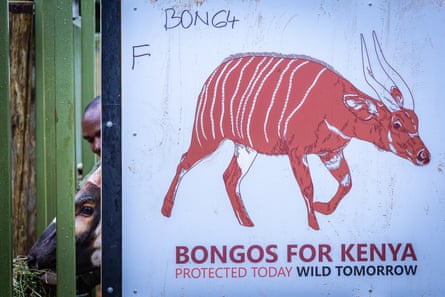
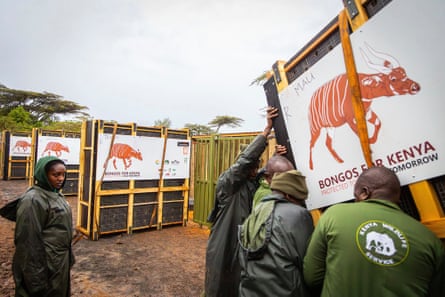
-
The four male bongos arrive at the airport before being carefully transferred to their new home, ready to be released
The journey to bring mountain bongos home started in 2004, when 18 individuals were repatriated from North American zoos to the Mount Kenya Wildlife Conservancy. These four males are part of a second wave, brought to strengthen the conservancy’s gene pool.
Gichohi and Kibet, who spend their days in the field and know each animal by name, temperament and feeding habit, are keenly aware of the fragile state of the species both in captivity and in the wild. But, says Kibet: “There is hope in the future, given that we are bringing the four boys to increase the gene pool within the facility we have.”
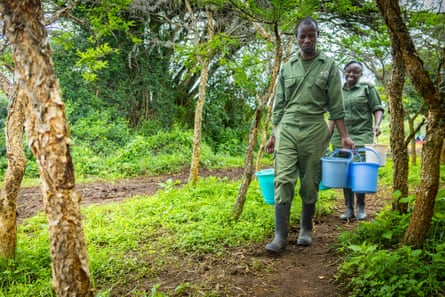
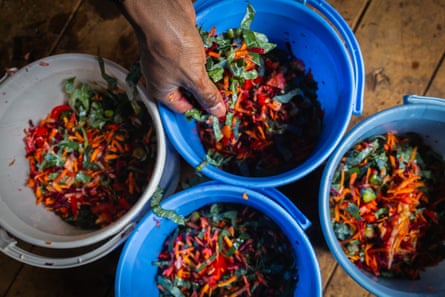
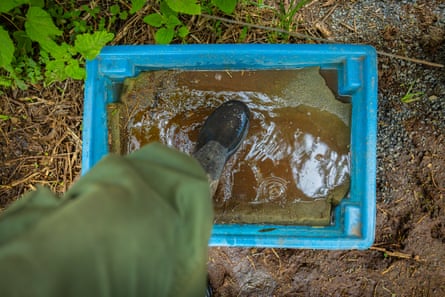
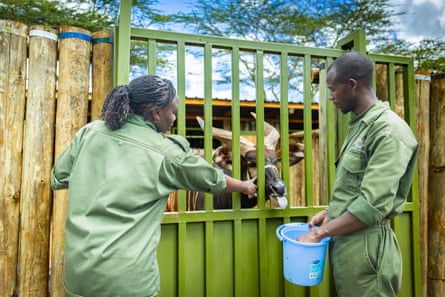
-
Top: Gichohi and Kibet spend their days caring for the animals. They are fed only freshly prepared vegetables, such as red pepper, carrots and kale. Bottom: footwear must be disinfected to prevent the spread of bacteria and fungi to the new bongos
Gichohi has been watching the numbers shift since she first arrived at the conservancy. “I was born and raised around Mount Kenya forest,” she says. “Growing up, I have seen wild animals and the challenges we face as community members with wildlife.”
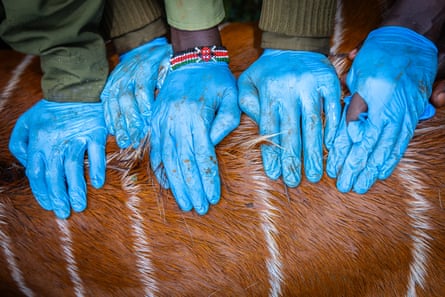
-
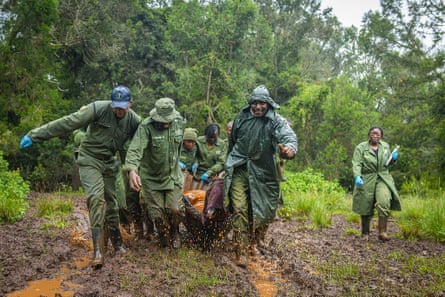
Wildlife officers prepare to move four female bongos into the area where they will mate with the males
Kibet’s route into conservation began as a third-year university student when, during a field trip at the conservancy in 2017, he saw staff rushing across the grounds. He asked his lecturer what was happening. A bongo was unwell and was being attended to by vets.
“I saw how people set out to really care,” he says. He applied for an internship the following year. When a job opened up, he applied again. “What keeps me here is that I want to see these animals in the wild. Not my grandchildren seeing them in books.”
-
A group of wildlife officers transports a female to the new area. After 21 days, one male bongo at a time will be released to meet the females with the hope of them mating
Meanwhile, the four bongos have been settling in. Kudu and Maue love digging at the ground, tipping their water up, marking their presence. “It’s a good sign,” Gichohi says, “showing they are now comfortable in the new environment.”
-
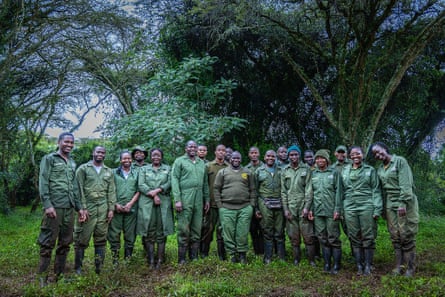
The team at the Kenya Wildlife Service and Mount Kenya Wildlife Conservancy Trust
Thanks in part to the work of people such as Gichohi and Kibet, there are now 179 mountain bongos in the wild and captivity in Kenya, up from 150 in 2021. The conservancy’s captive herd, once 54 animals in 2021, had grown to 93 before the arrival of the four males. And recently, a 100th bongo calf was born at the conservancy, a moment that the organisation described not as a statistic but as proof that their efforts matter and the future of this species is viable.
“I am part of it,” Gichohi says, of the ongoing conservation effort. “Which is something that feels very good – to be part of something where you can see the impact while you are still alive.”
-
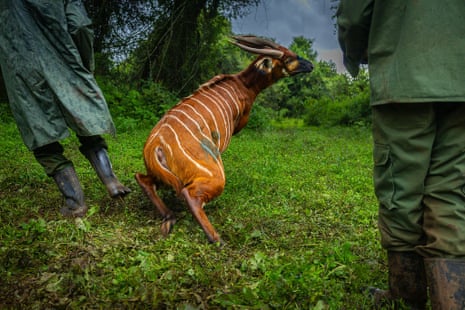
A translocated bongo is released by wildlife officers. The breeding programme is providing hope for the future of this critically endangered species