.png) 3 months ago
76
3 months ago
76
Tickets for BTS’s comeback concert in central Seoul were snapped up almost immediately on Monday night, with authorities expecting an estimated 260,000 fans to descend for the K-pop group’s first full performance in nearly four years.
At one point, more than 100,000 people flooded the booking website when sales opened at 8pm for the free concert at Gwanghwamun square on 21 March, causing screens to crash and booking systems to freeze.
About 15,000 tickets for the concert at the historic plaza in front of Gyeongbokgung palace vanished almost immediately.
Fans flocked to PC cafes – internet gaming venues with faster connections that have become fixtures of South Korean ticketing culture – to gain an edge in the booking battle.
Online forums filled with stories of families mobilising multiple devices simultaneously, only to see screens freeze or display messages that seats were already taken.
Seoul police issued fraud warnings earlier in the day as scam posts began circulating befor the evening sale.
The city’s police chief, Park Jeong-bo, said officers had requested the deletion of 34 posts offering proxy ticket purchases for fees ranging from 10,000 to 300,000 won ($7-2; £5-155) or claiming tickets could be resold for between 100,000 and 1.2m won.
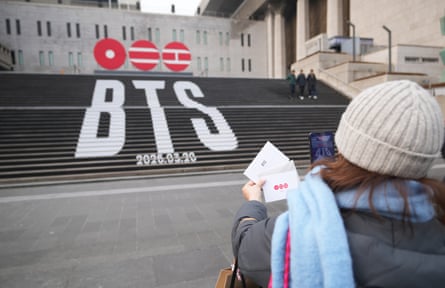
Police plan to treat Gwanghwamun – the site of the concert – as a virtual stadium, controlling crowd flow through 29 designated entry points, and have warned of likely disruption to nearby metro stations and roads.
The one-hour concert, which will launch BTS’s new album, Arirang, and precede their 82-date world tour, will be broadcast live on Netflix to 190 countries. Seoul city will be separately hosting fan events nearby for about 30,000 people.
The event has already caused accommodation prices to surge across central Seoul, with some hotels charging five times normal rates.
South Korea’s president, Lee Jae Myung, responding to reports of similar price gouging in Busan for the world tour dates, condemned what he described as “unscrupulous abuse that destroys the order of the entire market and causes great harm to everyone”, adding that penalties should far exceed any illicit gains.
Anti-scalping legislation passed in January allows fines up to 50 times the original ticket price for resales.
The group’s return has energised what analysts call “BTS-nomics” – the substantial economic impact BTS generates across the tourism, hospitality and retail sectors.
The Sejong arts centre, adjacent to Gwanghwamun square, has cancelled all performances on 21 March, while the national history museum will close for the day.