.png) 4 hours ago
8
4 hours ago
8
In the village plazas of Pando, a remote northern Amazonian region of Bolivia, the main talk is no longer just about the next harvest. One pressing issue is the “invisible air” being sold to foreigners who regularly visit their communities.
In June 2024, the country’s constitutional court struck down the ban on a funding mechanism linked to carbon markets. Since then, Indigenous leaders of three ethnic groups – the Tacana, Ese Ejja and Cabineño – have complained about companies and foundations that arrive with offers of “climate solutions”, often during the ever more frequent droughts or floods.
“We heard about this [carbon] business and nobody understood what it was,” says Julio Mayo, from the Cabineña nation. “Even today, I don’t think people understand. We’re still in doubt.”
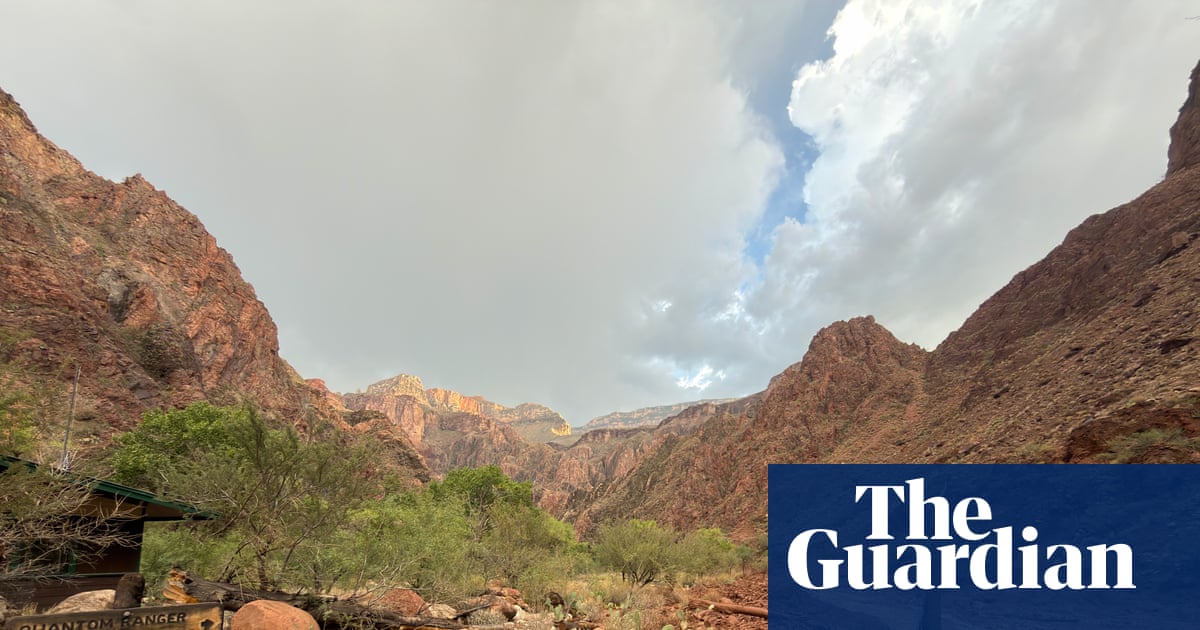
In this corner of the Amazon, the air is a heavy blanket, scented with damp earth, and rivers snake through some of the world’s most pristine rainforest. For Mayo and others, the forest is not a carbon sink or a commodity – it is their living pharmacy, a guarantee of food security and a sacred ancestor.
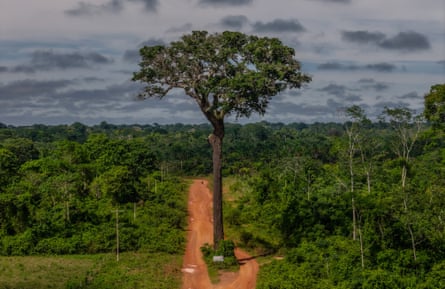
Bolivia, where more than 40% of the population identifies as Indigenous, and whose consent to any proposed laws or development of their land and resources is protected by the International Labour Organization’s Indigenous and tribal peoples convention, was until recently Latin America’s staunchest opponent of carbon markets. A law passed in 2010 on the “rights of Mother Earth” in effect banned the “commodification of nature”.
Yet that had changed even before the court decision. Months before the ban was overturned in June 2024, disputed carbon contracts were already being signed. On 12 March 2024, a handful of Indigenous leaders in the Pando region signed a contract with the Federico Hecker Foundation.
The agreement handed the foundation control over carbon credits, audits and sales across 440,000 hectares (about 1m-acre) of the Multi-ethnic Indigenous Territory II (TIM II) for 30 years. Lucio Ayala, TIM II’s president, says: “They just told us that we were going to receive money, a lot of money, but they didn’t explain what it was about.”
TIM II is shared by the Cavineña, Tacana and Ese Ejja nations – each with its own authority, but held under a single collective land title. After the Cavineña, the Ese Ejja signed the foundation’s contract in September 2024.
Mayo says: “They spoke nicely about the project, the benefits, but it wasn’t in the contract.”
Leaders of a different community who did sign the agreement say they were swayed less by an understanding of carbon markets than by promises of food aid and better housing, which never materialised.
The foundation “categorically denies that it offered money, bribes or personal benefits to obtain signatures”, and says it put forward “from the outset a comprehensive proposal for conservation and community development” that would go beyond “simply generating carbon credits”.
It added: “Food security, housing and basic services were not isolated promises – they were part of a multidimensional development proposal designed to ensure that forest conservation would also lead to social and economic improvements and contribute to various SDGs [sustainable development goals].”
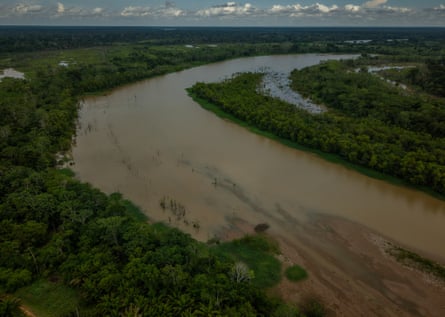
Leaders of the Tacana say they refused the offer specifically because they recognised the Hecker name. Federico Hecker was a Swiss immigrant who arrived in Bolivia’s northern Amazon during the late 19th-century extractive boom and rose within the rubber empire. His son, Peter Hecker, later served as a senator for Beni and became a Brazil nut trader.
Tacana families remember the Heckers not as conservationists but as patrones – bosses under Bolivia’s old debt-peonage system. “Many families were bonded to the Heckers,” one community member recalled.
Although debt peonage, known in Bolivia as Pongueaje or Pongueaje, was formally abolished under agrarian reforms decreed in 1953, Indigenous people maintained only precarious control over their ancestral lands. That arrangement ended only when Indigenous pressure for land reform won the collective title to TIM II in 2001. Another Indigenous leader claims the contracts are “the way they [the Heckers] are trying to get back what they consider their land”.
Referring to the large Bolivian estates geared to the extraction of rubber and then Brazil nuts, the foundation acknowledged that “the general history of the Amazonian barraquera economy … went through periods of highly asymmetrical labour relations and mechanisms of empowerment, indebtedness and economic dependence that gradually changed throughout the 20th century”, but states that “this context does not lend credence to allegations against the Hecker family regarding members of TIM II”.
By March 2025, TIM II’s board and the Ese Ejja nation had formally rejected the agreement, saying their representatives had been “surprised, pressured and manipulated” into signing a document that “should never have existed”. The foundation rejected the allegations.
Opposition to the agreement was not confined to TIM II. At the National Forum on Land, Territory and Environment in Santa Cruz in October 2025, Indigenous organisations from across Bolivia issued a joint statement saying: “We reject carbon bonds for promoting the commodification of nature and undermining territorial sovereignty and Indigenous rights.” They also pointed to deals such as the Hecker contract as examples of what they feared.
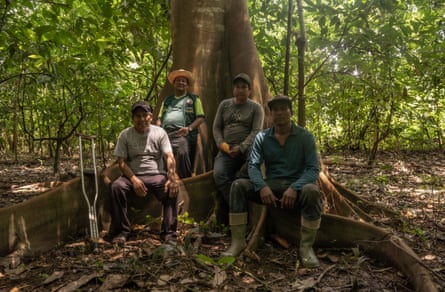
Critics warn that the carbon market, meant to fund environmental projects and cut emissions, often worsens inequalities. Problems include unfair contracts that remove community control, land grabs, displacement, limited access to traditional lands, conflicts with food production, and false promises of jobs, income and infrastructure.
The deal may have been signed in Bolivia’s remote fringes, but it has direct ties to the country’s parliament. Aimé Hecker Urresti was elected in 2025 as a national MP and has been working with the centre-right government of Rodrigo Paz Pereira to advance carbon markets.
The foundation’s website lists Hecker Urresti as chairman and credits him with the “groundbreaking political and legal effort” that opened Bolivia to carbon markets. He is one of four MPs who formally presented a bill in 2025 to congress to regulate the market his own foundation wants to operate in.
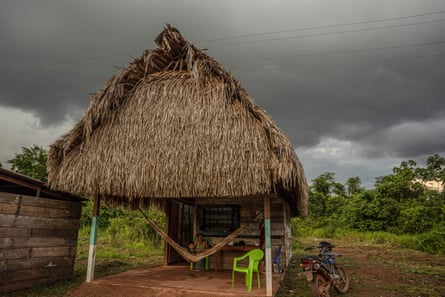
“It cannot be that a lawmaker is now promoting a law that will regulate an initiative in which his own family is involved,” says Miguel Vargas, a lawyer for Indigenous rights and a former director of the Centre for Legal and Social Studies (CEJIS), a non-profit Bolivian human rights organisation based in Santa Cruz de la Sierra.
Hecker Urresti says all parties to the foundation’s contracts were fully informed of the stipulations in advance and that the foundation respects their right to annul the agreements.
“The communities were not regarded as passive recipients. The contracts assigned roles to the Indigenous councils and authorities for outreach, coordination, providing information to the communities, and monitoring and oversight,” the foundation said in a statement.
Hecker Urresti also denied any conflict of interest and stressed that the bill had been substantially revised since the initial draft.
Bolivia’s supreme decree 5264, issued in October 2024, centralises control of the market in the national government but excludes Indigenous authorities from its structure and sets no binding rules on consent, carbon ownership or benefit-sharing on Indigenous land. A new bill, which is reportedly intended to address this, mentions consultation but grants no veto rights and bears Hecker’s signature.
“The draft bill is not intended to establish privileges but to define general, transparent, verifiable rules that apply equally to all participants in the carbon-credit market,” he says.
Ayala says he learned about the new bill only when reporters told him. “Now the worry is with the current government. I’ve just heard about it; they’re drafting a law so carbon can be sold. If it passes, what are we supposed to do? We no longer have a voice or a vote,” he says.
However, Hecker Urresti says: “Comments [were] gathered during the consultation process with Indigenous organisations, public bodies, sub-national governments, specialists and other stakeholders involved in climate finance.”
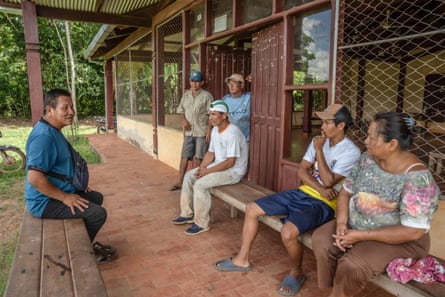
Struggling economically and battling loss of forest, the country’s president is now touting Bolivia as a new source of carbon credits, with the pro-business government saying it aims to sell billions of dollars’ worth in the coming years.
European governments and initiatives are also involved. The EU says it has never directly funded carbon-credit projects in Bolivia, yet an internal planning document for a joint €24m (£21m) EU-Swedish climate programme states that Bolivia’s opening to carbon markets took place “with significant support from the EU-Sweden initiative”.
The EU delegation in Bolivia maintains it “did not influence or participate directly” in adopting the decree. Since 2021, the EU has allocated approximately €104m for environmental programmes in Bolivia. Last year, the EU officially incorporated credits into its emissions-reduction targets by 2040.
Deep in the Amazon, local communities are gathering the last of the season’s nuts and preparing their small plots of yucca. They have survived the rubber fever, the timber fever and the gold fever. Now they fear that “carbon fever” will deprive them of full rights to their lands.