.png) 8 hours ago
494
8 hours ago
494
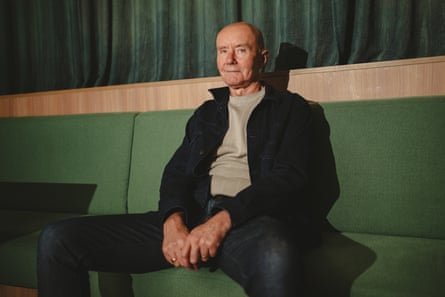
Irvine Welsh, author
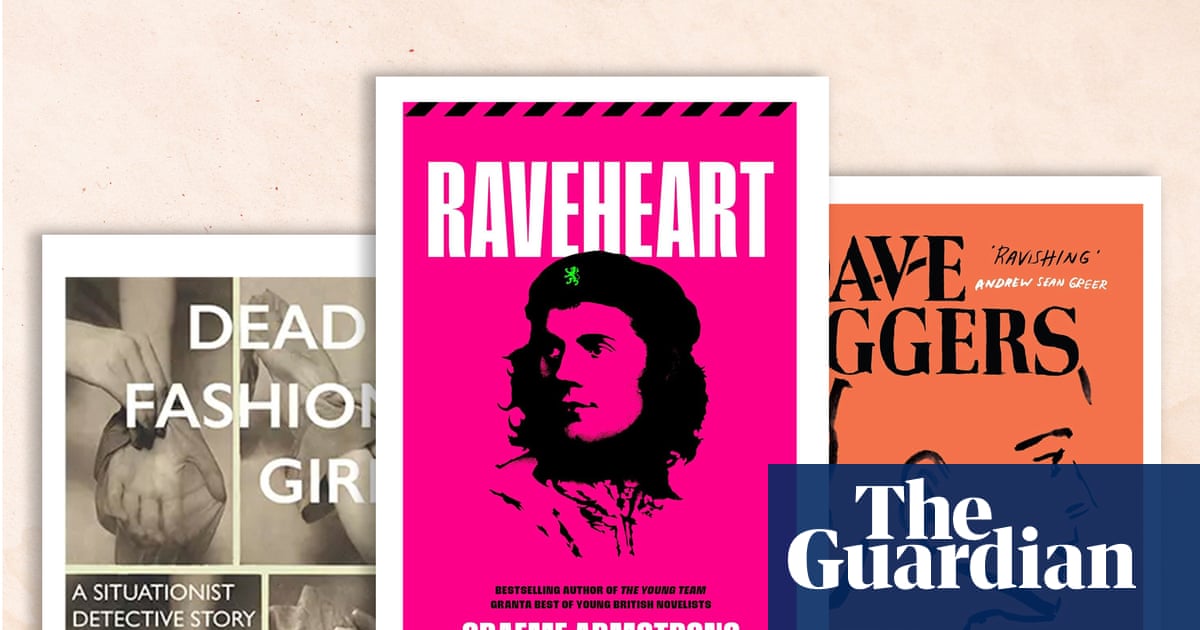
I’ve been enjoying Contrapposto by Dave Eggers. The premise that love and art are the only things that make life worthwhile pulses beautifully through this novel and its two protagonists, spanning decades of their obsession with both, and each other. The tragedy is they are not sufficient alone for a relationship to survive to the exclusion of everything else (namely capitalism, which always has a place at the table), but they remain essential and enduring. Nowhere is this better evoked than here. Think John Williams’s Stoner but with art instead of literature and stuffed with more memorable characters.
In Raveheart, Graeme Armstrong confronts the twin promises of utopia and madness in a time before the internet’s colonisation of the mind, when people still dared to dream and lived to party. This book made me want to call some heads, rent a farmhouse, get a sound system and neck several pills. In fact, I might just do that.
Finally, another one for creatures of the night in all their disparate glory. Overnight by Dan Richards is more than a tribute to the people (and other critters) who operate in the hours of darkness to ensure we have everything we need – it’s a discourse on the very nature of night-time itself, and its essential relationship to our humanity. This is a beautifully written work of startling brilliance, astonishing the reader page after page.
Can Nothing Save Us? by Irvine Welsh is published by Jonathan Cape (£20). To support the Guardian, buy a copy at guardianbookshop.com. Delivery charges may apply.
Jean, Guardian reader
I am reading The Shampoo Effect by Jenny Jackson. My only regret is not saving this book until my late summer beach vacation, because this book is best read with sand betwixt your toes. The story follows a group of lifelong friends in their thirties in their Massachusetts home town as they navigate marriage, parenthood, and careers. A newcomer from New York City arrives to work on what she hopes will be her big break as a writer and becomes irrevocably interwoven in the group’s complicated dynamics. It’s funny, sharp, and has me wondering as a child-free woman if many parents are self-medicating with weed on a regular basis to get through the day.
Janice Hallett, author
I’ve been diving deep into true crime lately. London Falling by Patrick Radden Keefe is a book that examines so much more than its central crime story: that of a young man whose big dreams and relentless drive took him in a deadly direction. Keefe elevates the tragedy by placing it in the context of our capital’s criminal history. I’ve also revisited Carol Ann Lee’s exceptionally researched and presented The Murders at White House Farm.
For someone fascinated by criminal psychology and the legal system, this book is without a doubt a core text on the Jeremy Bamber case. Meanwhile, I was hooked for a whole weekend on Dead Fashion Girl by Fred Vermorel. Described as “a situationist detective story” it starts with the 1954 murder of a young fashion designer in Ruislip, not far from where I live, and splays outwards and downwards into London’s postwar criminal underbelly.
The Silent Appeal by Janice Hallett is published by Profile (£20). To support the Guardian, order your copy at guardianbookshop.com. Delivery charges may apply.
Barbara, Guardian reader
You wouldn’t think that an account of a ten-month long legal process would be a page-turner, but that is exactly what Emmanuel Carrère has achieved in V13, the book based on his weekly magazine columns covering the trial of the surviving perpetrators of the terror attacks in Paris on Friday (ie Vendredi) 13, 2015. He delves into the lives of the victims, the perpetrators, the lawyers, and produces an all-round picture of the human beings involved in this horrific event. It is written with compassion, empathy, and a genuine curiosity about motivation.
Light-years away (or perhaps not) is the deceptively simple tale told by Iain Crichton Smith in Consider the Lilies, a short novel about an elderly woman’s treatment at the hands of the Duke of Sutherland as he evicted tenants during the Highland Clearances – one woman, representing the fates of 150,000. A note at the front of the book tells me that I bought it on North Uist more than half-a-century ago, and now that I’m older I find it possibly even more moving than it was then.