.png) 2 months ago
55
2 months ago
55
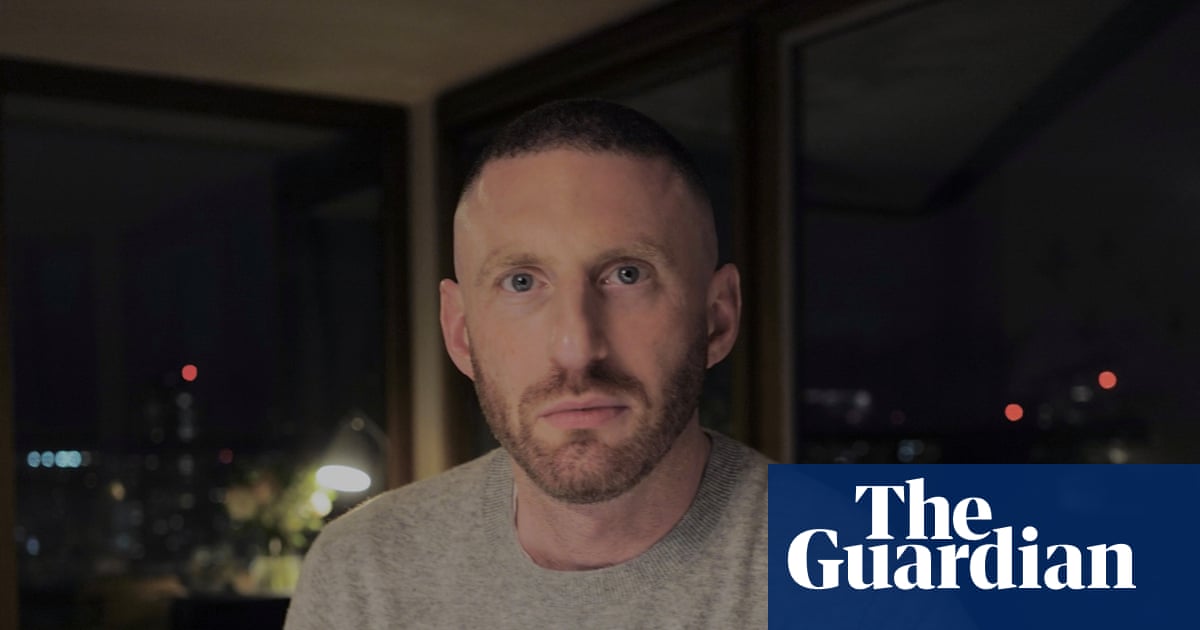
In an age of division, director Josh Fox is hoping to bring people of all kinds together. Specifically, he wants them to share a table – to break bread for a meal, and come together in exuberant song.
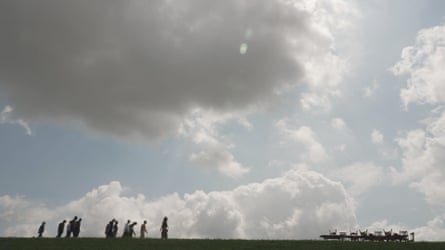
In his new documentary film The Welcome Table, the director of the the Emmy-winning Gasland travels around the world to talk to people at the leading edge of global warming’s effects. The film is part stark warning of the climate crisis, part opportunity to enter into the experience of those living in the corners of the globe. It culminates with the sounds of these individuals together at an enormous table in New Orleans, eating and rejoicing.
“The sound of the thousand voices singing together is something I want to bring all over the world,” Fox told me of the joy unleashed when his collaborators came together to eat and sing. “I didn’t anticipate it, but I learned how powerful that can be. I think we underestimate how powerful collective joy can be.”
Fox believes that a welcome table is the perfect antidote to a wall – for instance, the one that rightwingers are obsessed with building on the US’s southern border – and he argues that with the climate crisis unfolding, we all had better become prepared to welcome new neighbors.
“Welcoming is a practice,” he told me. “It’s hard, it’s not an easy thing to do. Encountering people from other cultures is a difficult project. The film offers that template, and I think that’s the most powerful aspect of it.”
The film offers the dire warning that one third of all humanity will lose their homes due to climate change, taking viewers face to face with modern-day refugees who have forced to migrate due to extreme weather and other natural disasters resulting from global warming. In fact, a 2020 article published in the respected journal PNAS claimed the 1 in 3 figure – saying that this many people will have to move to cooler regions due to extreme heat – while in 2021 the World Bank put the figure for extreme heat migrataion at only 216 million by 2050. Various other figures below the 1 in 3 number have been produced by other studies.
Regardless, even if the picture due to climate change turns out to not be quite as bad as Fox claims, that’s still a lot of climate migrants, combined with refugees stirred up by increasingly virulent hatred against LGBTQ+ people, wars around the globe, and slowing progress in combating worldwide poverty. It is true that immigration isn’t stopping any time soon, and we would do well to get better at welcoming those in search of a life of safety and dignity.
From Paradise, California, the site of horrific wildfires that claimed the lives of 85 people, to torrential rains and landslides in São Sebastião, Brazil, drought in the Turkana Basin in north-western Kenya, and more adversity in Peru, Australia, and other locations, The Welcome Table takes viewers face to face with many suffering the brunt of climate change. Via a network of organizations, Fox bears witness to people whose ways of life are far different from the modern western lifestyle, giving an important look at the lived realities for so many around the globe. “The amazing thing about this movie is that all of these people welcomed me into their lives,” Fox said. “I was in all these places and just trying to show up with my humanity. In the end, the most important thing about this movie is that it’s a group narration. There’s a group ensemble voice to this film.”
Throughout the movie, Fox connects the dots between the people he meets abroad and the increasingly extreme hatred against immigrants being fomented in the United States. With footage of ICE raids and mass detention centers, as well as hateful statements made by Donald Trump, Fox drives home the point that the wealthy and powerful in the US are increasingly responsible for the inability of migrants around the world to find peace and safety. “Climate change is a form of economic and political oppression that is created by a billionaire class that refuses to stop,” he told me.
In Brazil, Fox starts out by meeting with Léo Farah, a firefighter turned humanitarian who co-founded the group Humus, which seeks to mitigate the impact of climate disasters throughout Brazil. While viewing the impacts of a landslide, Fox and his associates happen to meet up with a group of LGBTQ+ Brazilians making their lives in a favela.
He connects with a gay man named Gabriel, who had to flee his home after coming out, and who now regularly exudes bravery in helping those impacted by extreme weather and other natural disasters. From there, a chance encounter with a queer family snowballs into what the film endearingly calls its “queer dream team of disaster mutual aid workers”, who navigate through the favela offering hope and support.
“I went to cover the landslide, and I didn’t anticipate that it was going to be this amazing story of looking at the climate catastrophe through the lens of the LGBTQ+ community,” Fox said. “It became a story about how these people were facing a triple catastrophe of climate change, bigotry, and poverty. It was important to me to show how the LGBTQ+ community will suffer in much greater ways.”
Fox also travels to the Turkana Basin in Kenya, long considered the cradle of all humankind. “The people in Turkana are the only people in the world who are not migrants,” Fox said. “We are the migrants, all of us are the migrants, we all came from somewhere else.” Due to a harsh, years-long drought that has ravaged the area, many in Turkana have been forced to migrate to neighboring countries, like Uganda, where they have been mistreated.
In Turkana, Fox meets up with two outspoken members of the indigenous community, Arot and Lodoyo, who are attempting to remain in their homeland and survive. Standing before a group of animal figurines that she has made to represent the animals that once thrived in Turkana before the drought, Arot says: “I want to show the rich leaders of countries who are responsible for this crisis the abundance we used to have.”
Fox explained that he was inspired by the stridency of Arot and Lodoyo and particularly wanted to feature them on screen. “These are two people who are incredibly outspoken and incredibly passionate about speaking their truth,” he said. “They are wanting to tell the the United Nations what is going on, and are outraged at the same time.”
Throughout The Welcome Table, Fox makes the point that freedom to travel around the globe should not be restricted to the wealthy or those who are coming from the proper nations. He quotes from documents like the UN universal declaration of human rights, which states “everyone has the right of movement and residence within the borders of each state”.
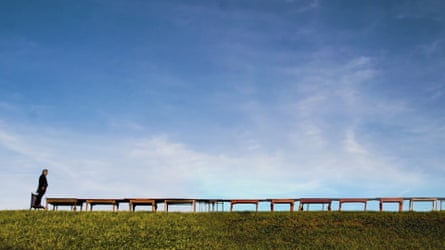
Yet in a dramatic demonstration of just how far the United States has departed from those ideals, not even all participants in The Welcome Table were granted the freedom to come to New Orleans and join in Fox’s feast. Fox explained that none of the Kenyan participants in the documentary were permitted to enter the United States. “We tried really hard to get them to the table,” Fox told me, “but none of them were given visas.” In fact, according to Fox, only one person from all of Africa was allowed to enter the US – Purity Gakuo, a Kenyan climate change advocate who acts as a liaison to the indigenous community in Turkana.
Bringing together the film’s participants was extremely important to Fox, as he sees collective joy as a crucial ingredient in overturning the hatred that tells immigrants to stay away. According to him, no place embodies that spirit at much as New Orleans. “It’s a place where there’s collective joy in the streets all the time,” he said.
Fox looks to the the Big Easy to embody the kind of resistance spirit that he hopes will defeat the forces of authoritarianism, and allow the collective action in the face of global warming that is featured all throughout The Welcome Table. “To celebrate the hard things in life is such a very New Orleans thing to do,” he told me, “and at this moment it’s something that we directly need. The opposition’s whole point is to make us depressed, fragmented, defeated – we have to draw on the power and the strength that we have.”
-
The Welcome Table airs on HBO on 23 June and will be available on HBO Max