.png) 2 months ago
66
2 months ago
66
Close to Tottenham Hotspur’s shiny football stadium in London is a squat, nondescript block of flats. It holds a grim secret beyond the unremarkable beige brickwork – a cramped, second-floor apartment in the British capital, linked to murderous atrocities unfolding 3,000 miles south.
The one-bedroom flat off north London’s Creighton Road is, according to UK government records, tied to a transnational network of companies involved in the mass recruitment of mercenaries to fight in Sudan alongside paramilitaries accused of myriad war crimes and genocide.

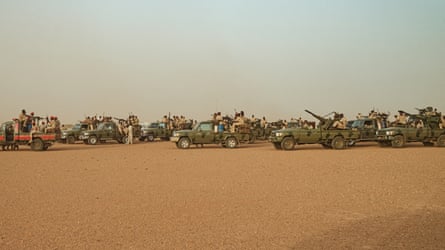
Hundreds of former Colombian military personnel have been enlisted to fight with Sudan’s Rapid Support Forces (RSF), a paramilitary group responsible for mass rapes, ethnic slaughter and the systematic killing of women and children.
Colombian mercenaries were directly involved in the paramilitaries’ seizure of the south-western Sudanese city of El Fasher in late October, which prompted a killing frenzy that analysts say has cost at least 60,000 lives.
As news of atrocities continue to mount, a Guardian investigation has found connections between the mercenaries hired to overrun El Fasher and addresses in the UK capital.

The flat in Tottenham is registered to a company called Zeuz Global, set up by two individuals named and sanctioned last week by the US treasury for hiring Colombian mercenaries to fight for the RSF.
Both figures – Colombian nationals in their 50s – are described in documents at Companies House, the government register of firms operating in the UK, as living in Britain.
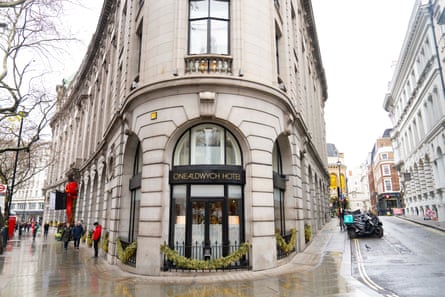
The firm is active. The day after the US treasury announced sanctions on those behind the Colombian mercenary operation – 9 December – Zeuz Global abruptly moved its operation to the very heart of London. On 10 December the firm shared “new address details”. Its new postcode matches One Aldwych, a five-star hotel in Covent Garden.
Yet the first line of Zeuz Global’s new address is, confusingly, “4dd Aldwych,” which corresponds to the Waldorf Hilton hotel 100 metres away.
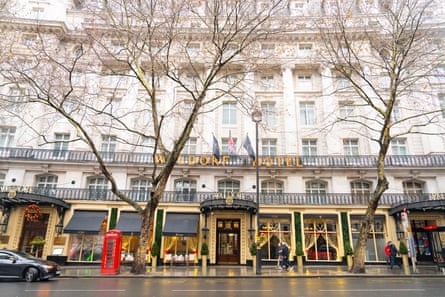
Both hotels said they had no link to Zeuz Global and had no idea why the firm had used their postcodes.
Experts say the saga raised questions over how individuals whom the US has openly censured for “their roles in fuelling the civil war in Sudan” were able to seemingly set up and run a company in the UK capital.
The British foreign secretary, Yvette Cooper, has condemned the RSF for “systematic killings, torture and sexual violence” after the group’s seizure of El Fasher. The RSF has been accused by the US of genocide.
Mike Lewis, a researcher and former member of the UN panel of experts on Sudan, said: “It is of major concern that the key individuals the US government claims are directing this mercenary supply have been able to set up a UK company operating from a flat in north London, and even to claim that they’re resident in the UK.”
When Companies House was asked if it had any knowledge of what Zeuz Global actually did, or is doing, it did not respond. The government agency would also not confirm whether the sanctioned individuals were, in fact, resident in the UK.
Contacting Zeuz proved fruitless; its website, set up in May, was labelled as “under construction” with no contact details provided.
According to the US treasury, the man at the centre of the Colombian recruiting network for the RSF is a dual Colombian-Italian national and retired Colombian military officer based in the United Arab Emirates (UAE) called Álvaro Andrés Quijano Becerra.
The US treasury accuses Quijano of playing a central role in recruiting former Colombian soldiers to be deployed to Sudan using a Bogotá-based employment agency he co-founded. His wife, Claudia Viviana Oliveros Forero, was also sanctioned for owning and managing the agency.
A dual Colombian-Spanish national called Mateo Andrés Duque Botero was similarly censured by the US for managing a business accused of handling funds and payroll for the network hiring the Colombian fighters.
“In 2024 and 2025, US-based firms associated with Duque engaged in numerous wire transfers, totalling millions of US dollars,” the US treasury statement said.
On 8 April this year Duque and Oliveros registered a company in north London called ODP8 Ltd – later renamed Zeuz Global – with £10,000 capital.
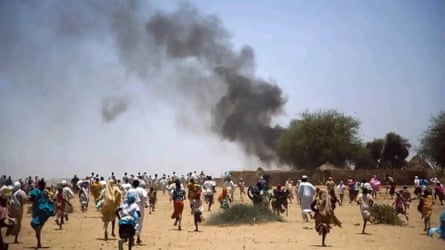
Three days later, the RSF attacked Zamzam displacement camp, slaughtering more than 1,500 civilians. After its capture, the camp was handed over to Colombian mercenaries who began the preparations for attacking El Fasher, eight miles to the north.
Duque and Oliveros are named in Companies House records as owning “initial shareholdings”, with the latter named as a person of “significant control” within the company.
Oliveros, a 52-year-old Colombian, describes Britain as her “country of residence”.
On 17 July 2025 Duque was appointed as a director and is also described as resident in the UK. The hiring of the Colombians has had a profound impact on the trajectory of the conflict, analysts say, and its nationals have trained children to be soldiers, as well fighting as snipers and infantrymen.
They have also served as instructors and pilots for the drones that proved instrumental in the fall of El Fasher and during fighting in Kordofan, the region bordering Darfur.
Lewis said: “The war in Sudan is a hi-tech one, with guided weapons and long-range drones causing daily civilian deaths. These weapons require external help to operate. We know that the Colombian mercenary operation has been a major component of this external assistance.”
He added that the involvement of sanctioned individuals in a London firm underlined broader concerns over the lack of rigorous checks undertaken when companies were set up.
“Having a UK company like this is a passport for criminals to do business with legitimate counterparts. It’s still harder to join a gym in most cases than to set up a UK company,” said Lewis.
“As a result, there is a long, well publicised history of UK shell companies being used to broker weapons and military assistance to embargoed actors in Sudan, South Sudan, Libya, North Korea – even to Isis [Islamic State].”
Lewis added that the issue raised concerns over what the British government was doing to ensure UK companies were not involved in the mercenary operation.
A government source said the recent introduction of “mandatory identity verification” for directors and persons with significant control would provide greater assurance about who was setting up, running and controlling UK companies.
New powers for Companies House, they added, had made significant progress in tackling false information entered on the register and improving support to police.
The Colombians’ involvement in Sudan first emerged last year, when an investigation by the Bogotá-based outlet La Silla Vacía revealed that more than 300 former soldiers had been contracted to fight. The revelation prompted an apology from Colombia’s foreign ministry.
One of the mercenaries recently confirmed to the Guardian that he had trained children in Sudan and fought in El Fasher.

The UAE, which has long been accused of arming the RSF, has also been linked to the hiring of Colombian mercenaries.
A report by the investigative organisation the Sentry alleged last month that Emirati business people supplying Colombians to the RSF were linked to a senior UAE government official. The United Arab Emirates has consistently denied these allegations.
A British government spokesperson said: “The UK is calling for an immediate end to atrocities, the protection of civilians, and the removal of barriers to humanitarian access by all parties to the conflict.
“We recently sanctioned RSF commanders for their role in the atrocities in El Fasher,” they said.
Contact us about this story
Show
The best public interest journalism relies on first-hand accounts from people in the know.
If you have something to share on this subject, you can contact us confidentially using the following methods.
Secure Messaging in the Guardian app
The Guardian app has a tool to send tips about stories. Messages are end to end encrypted and concealed within the routine activity that every Guardian mobile app performs. This prevents an observer from knowing that you are communicating with us at all, let alone what is being said.
If you don't already have the Guardian app, download it (iOS/Android) and go to the menu. Select ‘Secure Messaging’.
SecureDrop, instant messengers, email, telephone and post
If you can safely use the Tor network without being observed or monitored, you can send messages and documents to the Guardian via our SecureDrop platform.
Finally, our guide at theguardian.com/tips lists several ways to contact us securely, and discusses the pros and cons of each.
Illustration: Guardian Design / Rich Cousins