.png) 3 months ago
69
3 months ago
69
Exhibition of the week
Crossing into Darkness
Tracey Emin curates an exhibition about thresholds of despair and the power of melancholy featuring Goya, Munch, Bourgeois, Baselitz and other visionary artists.
Carl Freedman Gallery, Margate, opens Sunday
Also showing
Ming Wong
The National Gallery’s artist in residence responds to homoerotic paintings of Saint Sebastian.
National Gallery, London, until 5 April
Souvenir
Artists Iain Forsyth and Jane Pollard curate this homage to the lost London of the late 1970s and early 1980s, with Michael Bracewell, Sal Pittman and more.
Fitzrovia Chapel, London, until 8 February
Story Painters, Picture Writers
The power of narrative and the mysterious relation of words to images engross the artists here including Julian Bell, Gala Hills and Jane Griffiths.
St John’s College, Oxford, 20 January to 2 February
Solidarity Wins
Community-made posters, collages and other artworks testify to the power of popular struggle in north Edinburgh.
Scottish National Portrait Gallery, Edinburgh, until 30 April
Image of the week
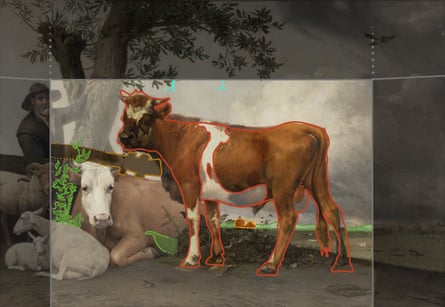
Bucolic scene The Bull by Paulus Potter is one of the star paintings at the Mauritshuis in The Hague. But research has shown that the bull’s testicles were halved in size by the artist to respect 17th-century sensibilities. The image above shows the original outline of the beast’s build, against the painting’s final form. Abbie Vandivere, a paintings conservator at the museum, says: “[The bull’s] balls were bigger and lower, his whole back end was shifted – but, indeed, the balls are the biggest change.” More details here.
What we learned
Ian McKellen will lip-sync to previously unheard audio tapes of LS Lowry
David Bowie visited a psychiatric clinic in 1994 to spend time with outsider artists
Joseph Beuys’ bathtub contains all the horrors of modern history
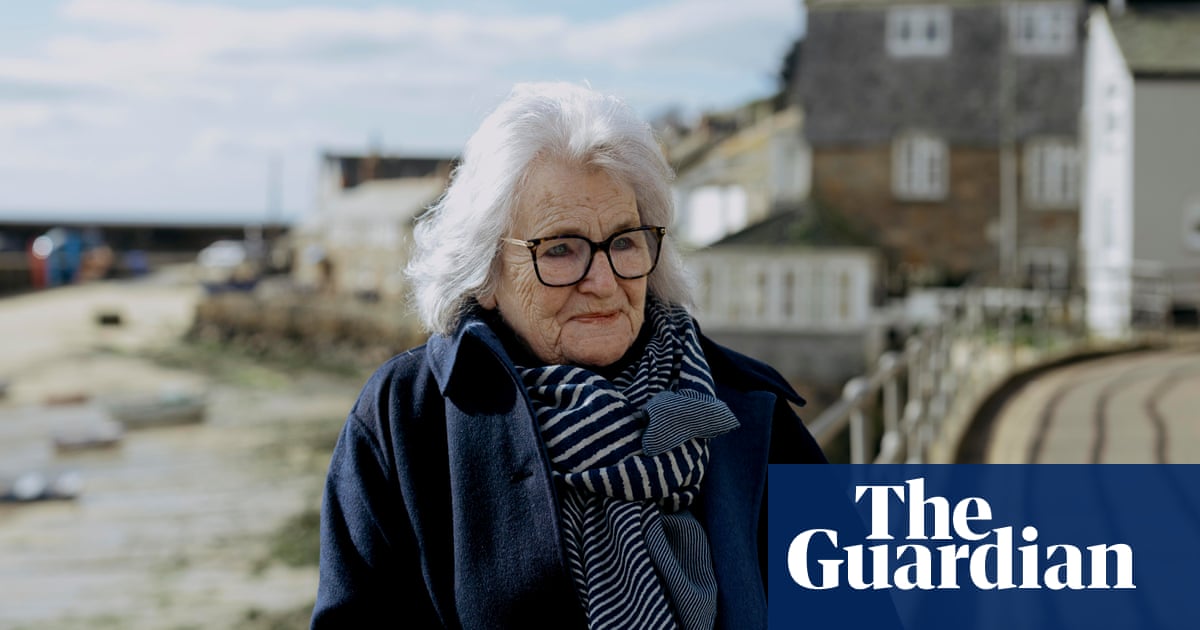
Piet Mondrian may owe his success to a cross-dressing lesbian artist who lived in a Cornish cove
Abstract painter Sean Scully uses loss, breakdown and schooling by ‘scary nuns’ to fuel his art
Trump has put museums and galleries in jeopardy across the States
Masterpiece of the week
Saint Cecilia by Pietro da Cortona
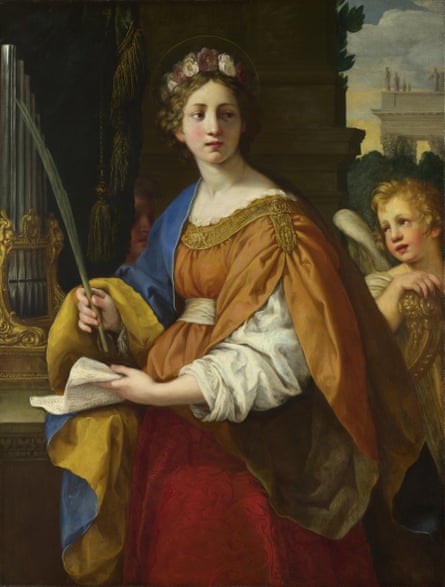
Women often take centre stage in the religious art of the baroque – the emotive, sometimes lurid, often spectacular style that emerged in early 17th-century Italy to serve a renewed Catholic church in its battle for hearts and souls. This paved the way for a female visionary, Artemisia Gentileschi, to depict women as heroes and avengers: but as this work by one of her male contemporaries in early 1600s Rome reveals, that focus on the female was not unique to her. Perhaps it was a way for the church to involve and control women, for Cortona portrays Saint Cecilia as a bland-faced icon of chastity: the story of this early Christian figure had it that she refused to let her husband touch her. She also stands by a pipe organ, for Cecilia became patron saint of music in the middle ages. Harmonious and virtuous, Cortona’s Cecilia urges women to emulate her, and do as they are told by the church.
National Gallery
Sign up to the Art Weekly newsletter
If you don’t already receive our regular roundup of art and design news via email, please sign up here.
Get in Touch
If you have any questions or comments about any of our newsletters please email [email protected]