.png) 2 months ago
52
2 months ago
52
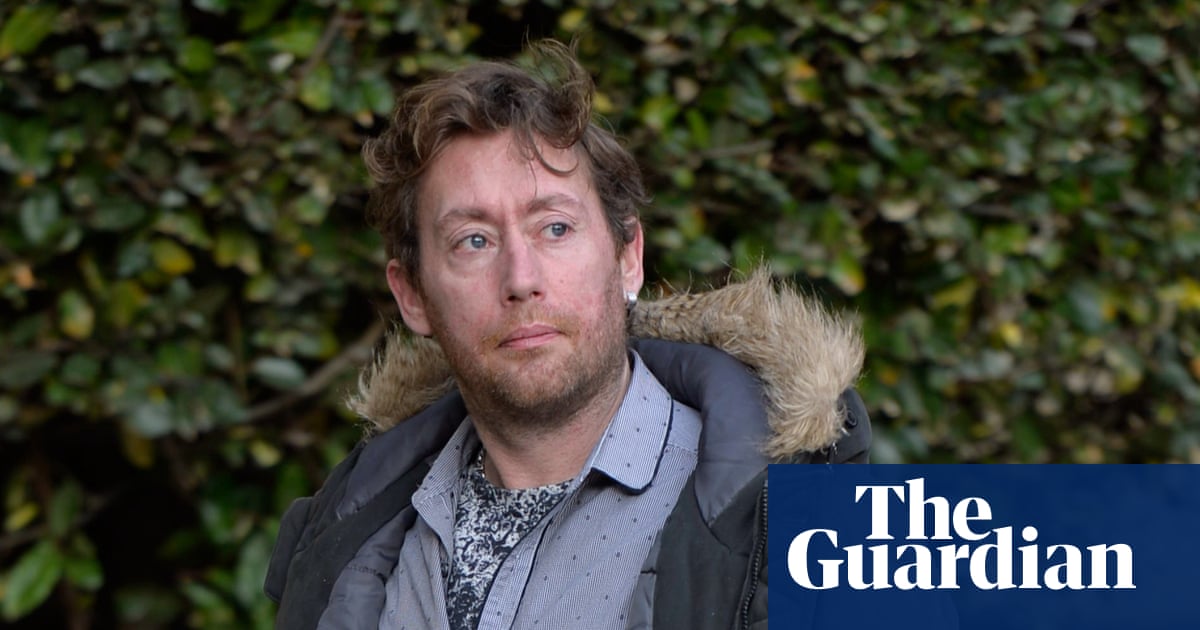
Now a familiar part of modern working life, the collective workspace, whereby small firms share office space and communal facilities, was the brainchild of the architect David Rock, who has died aged 96. He established a pioneering working community at 5 Dryden Street in Covent Garden in 1972, at a time when London’s famous fruit and vegetable market was in decline, and the wider area was resisting ambitions to terraform it into the West End equivalent of the Barbican. Characterful old buildings were available and ripe for conversion and Rock, in his role as an enterprising architect-developer, spotted an opportunity.
At Dryden Street, a collective of more than 30 independent, design-related firms was billeted in a remodelled 19th-century warehouse, with fashionably exposed brick walls and timber roof trusses. Rock recognised that it was often small outfits that exuded the greatest energy, potential and creativity, and that a communal workspace could offer a different kind of socially and economically supportive environment. After Dryden Street came a similar initiative in Chiswick, west London, where a former Sanderson wallpaper factory was converted into the Barley Mow Centre, providing workspaces for craftspeople, designers and architects.
In reimagining how people and businesses could work, Rock was a formidable force, channelling the power of collaboration to reinvigorate buildings and neighbourhoods. He also guided and supported others who recognised the value of the workspace concept and wanted to do something similar. He saw architects as more than just designers of buildings and encouraged them to be entrepreneurial and interventionist. This involved capitalising on new patterns of economic activity, and cultivating management, financial and other development-related skills. “It’s all to do with making things happen,” he said.
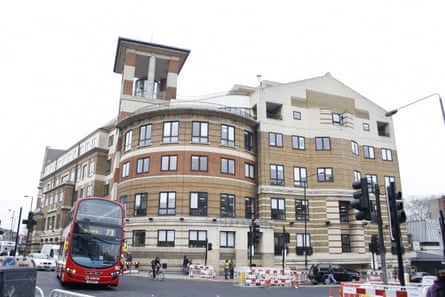
In 1971 he set up his own practice, in partnership with John Townsend, whom he met when they both worked for the multidisciplinary firm Building Design Partnership (BDP) in the 60s. Rock Townsend’s output included housing, factories, offices and educational buildings such as the Bounds Green campus for Middlesex Polytechnic (now Middlesex University). Adding postmodernist pizazz to a speculative office development, Angel Square in Islington was a florid and fruity confection adorned with an Italianate campanile-style clock tower. Completed in 1991, it was recently demolished to make way for a more sober successor, thus initiating Rock into the Rubble Club, limited to architects who have witnessed the destruction of one of their buildings during their lifetime.
Rock was born in Sunderland, and his early life was dominated by the gloom of the depression era and the privations of the second world war. His father, Thomas, was a shipwright, and his mother, Muriel (nee Barton), was a former light opera singer. Educated at the city’s Bede grammar school, in 1947 Rock took up architecture at Newcastle University School of Architecture, Planning and Landscape (then part of Durham University), where his tutors included the town planner Lord Holford and the brutalist architect Peter Smithson.
His talent was spotted by the leading modernist Basil Spence, for whom Rock worked for five years, moving from the north of England to London. He was then invited to set up the London office of BDP, becoming a partner in 1964 and, in 1969, a joint founder of the BDP Rome office, as the firm expanded internationally, growing to 500 strong. Over his 12 years with BDP he became interested in the many aspects of running a practice that impacted on the core function of designing buildings.
Throughout his career he was also actively involved in how architecture was promoted, regulated and managed through the Royal Institute of British Architects (RIBA). He served on its national council and was its president from 1997 to 1999, spearheading a long-term corporate strategy and overseeing the transfer of more than a million items from RIBA collections to the V&A, securing their preservation and making them publicly accessible.
He also championed underrepresented and experimental architecture, nominating the radical 60s collaborative Archigram for the royal gold medal, the highest accolade for a lifetime’s work, which they were awarded in 2002.
Avuncular and bearded, in his later years Rock resembled Father Christmas, with a twinkle in his eye, spreading general good cheer. Following his departure from Rock Townsend in 1992 he launched Camp 5, a consultancy concerned with a range of projects, including advising on building and master planning. At Rock’s urging, the Commission for Architecture and the Built Environment (CABE) established “town champions”, a group of architects and built environment professionals who pooled their knowledge to help revive rundown communities.
He set up and headed the Arts Council’s Lottery Architecture Unit between 1995 and 2000, and was a joint founder of the Construction Industry Council, a representative forum for professional bodies, research organisations and specialist business associations within the UK construction industry. He was also twice president of the Architects Benevolent Society, a charity providing advice, support and financial assistance to architects and their families.
Rock’s enduring penchant for drawing and painting saw his work regularly exhibited, both in solo shows and group exhibitions. The chairman of the Society of Architect Artists (now known as the Society of Artists in Architecture), from 1985 to 1995, he regarded hand drawing as critical to his – or indeed any architect’s – explorations of the built environment.
Rock was married firstly in 1954 to Daphne Richards, with whom he had three sons and two daughters. The marriage ended in divorce in 1986 and he married Lesley Murray in 1989. She died in 2023.
He is survived by four of his children, Felicity, Jacob, Mark and Alice, and eight grandchildren.