.png) 2 months ago
50
2 months ago
50
When Edward Enninful was scouted on the tube travelling through London in 1988, it changed his life. The Ghanaian teenager, newly arrived in Britain, was drawn into the capital’s creative scene of the 90s – as a model, then stylist and, by 18, the fashion director of i-D magazine.
“It was the height of the YBA [Young British Artists] movement – Jay Jopling, Tracey Emin. I met Kate [Moss] at a casting,” he recalls. “Then Naomi [Campbell] for a cover, and I knew we’d be great friends. We all hung out across disciplines. Friday rolled into Saturday into Sunday. I miss that rawness.”
If Enninful sounds nostalgic, he’s not the only one. Lately, wistful romanticisation of the 90s has reached fever pitch. But in the intervening decades Enninful believes something has shifted. “I feel like we’re less tolerant now than we were in the 90s,” he says. “It’s not even just this country – it’s everywhere.”
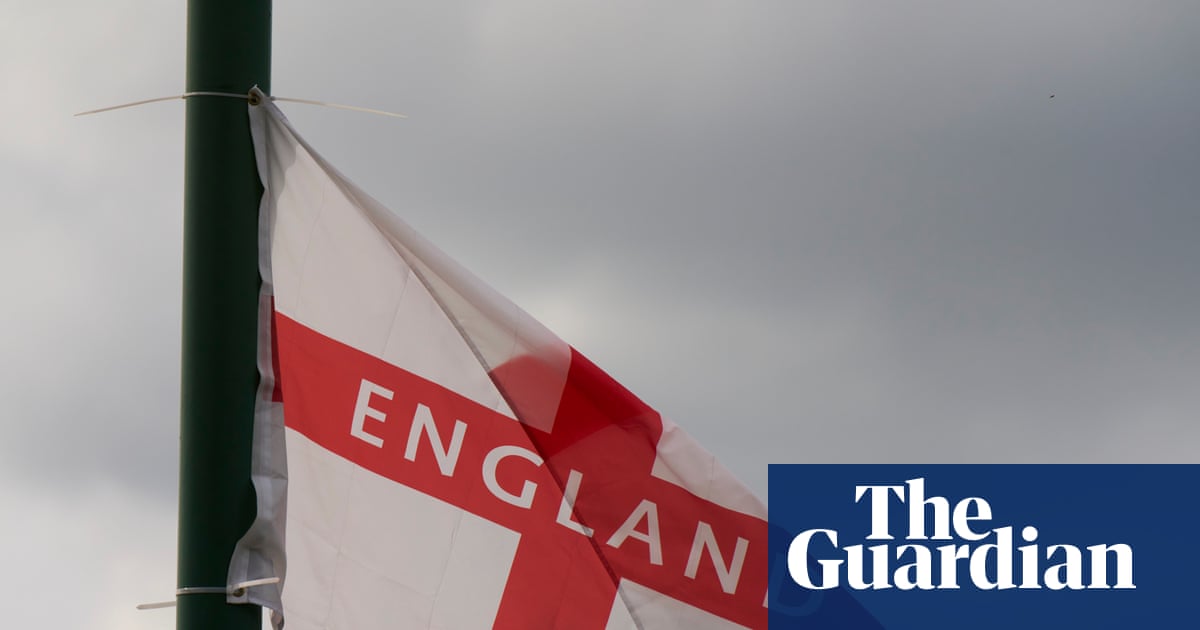
The regression is hard to ignore: the rise of the far right, the backlash against “wokeness”, and the reassertion of Eurocentric beauty standards. In place of the optimism of Tony Blair, today Nigel Farage looms as a potential prime minister. Even the union jack, once an emblem of Cool Britannia, has become contentious again.
For Enninful, the antidote has always been to celebrate culture in all its diversity. It was the guiding principle of his first issue as editor of British Vogue, back in 2017, which was a portrait of modern Britain that featured Sadiq Khan, Skepta, Steve McQueen and Zadie Smith among others.
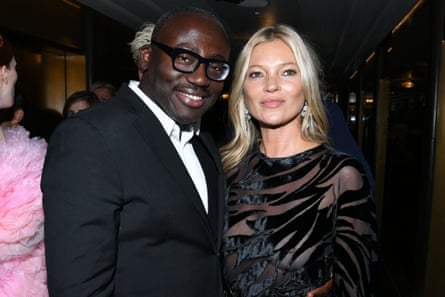
“People with a voice should use it,” he says, referring to those editorial calls. “Everyone talks about immigration, I wouldn’t be here if Britain hadn’t been a lenient country, if it hadn’t given my family a home and an education. That’s the Britain I always loved. I hope this moment will pass.”
He takes comfort in the younger generation: “They’re much more aware than we were. They talk about unconscious bias – I didn’t even know what that was.”
Enninful is at ease talking about the city he loves, when we meet at Kensington Roof Gardens as dusk settles over London. Enninful, dressed in his usual monochrome, used to party here in the 90s. He says there were once flamingos in the garden.
Those early experiences would shape a career defined by boldness and inclusivity. Enninful was the first man, black man, gay man, and disabled gay man of colour to take the helm at British Vogue. His covers featured models of colour, plus-sized women, an octogenarian, a model in a hijab, a woman with Down’s syndrome, key workers. And sales increased. “When you ignore huge sections of the population, it’s not just that you’re not being inclusive – it’s bad for business,” he tells me.
He recently launched his creative company EE72 and its magazine, 72, his first major project since leaving Condé Nast, and says he wants to continue being a “disruptor”. What does that mean to him?
“I’ve always questioned the status quo. I was born and raised in a place where everybody was black – the doctors, the lawyers, the president. Then we came to England, penniless, and I was a minority. I was very shy. My teachers said I’d never amount to anything. Me and my brothers were stopped by the police under the Sus laws … all that gave me a duality, a sense of being on the inside and the outside.”
Contrary to the popular depiction of fashion editors as brash and highly strung, Enninful is softly spoken and exudes calm. He has not been immune to adversity, having talked openly about bouts of depression and the 14 years he spent on an Alcoholics Anonymous programme.
He has had six operations on his eyes, including for a detached retina, and now has partial sight. “I was in such a dark place for two years, not working, fearing I was going to go blind,” he says. “It’s the same as PTSD, you just live in fear 24/7. I thought God, if this ever passes, I’m just going to do everything that I was so scared to do. I’m not going to restrict myself to just being an editor or a fashion person.”
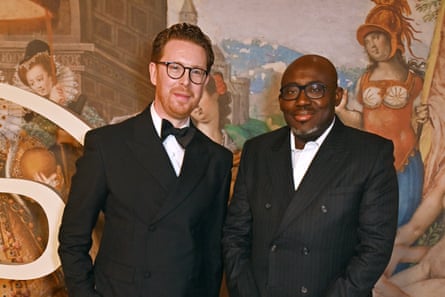
It is that refusal to be typecast that has led Enninful to move beyond the world that made his name. He is curating Tate Britain’s seminal 90s exhibition, bringing together work by Juergen Teller, Nick Knight, David Sims, Corinne Day, Damien Hirst, Gillian Wearing, Yinka Shonibare and more. The show, he says, is about capturing the decade’s creative cross-pollination – and spotlighting those who weren’t given enough attention at the time. “Institutions didn’t always shine a light on the right artists because they weren’t of the right pedigree.”
Enninful’s first role as curator was on the Robert Mapplethorpe show at the Thaddaus Ropac gallery in Paris. He also hosted a series of 90s-themed talks with artists at Art Basel. The second issue of 72, released this week, focuses on this year’s Turner prize nominees. He calls it “a whole new chapter for me, a whole new shift”.
It was his longstanding friendship with the Tate director, Maria Balshaw, that led to the 90s show. “We were both working-class kids who found ourselves in big institutions. We would always meet to compare notes.” After leaving Vogue, he suggested they do something together. “She said, ‘I’ve got something for you.’ I said yes immediately.”
One of the most striking features of 72 magazine is its lack of traditional advertising. Instead, the company operates on a collaboration-based model. At one launch party, guests could use Google’s technology to virtually try on a Moncler capsule designed by Enninful. “We ask, what can we do together? Is it an event, a podcast? The magazine is part of a greater ecosystem.”
Could that model be brought to cash-strapped museums and galleries? “100%,” he says, animatedly. “We have to think outside the box. We need these institutions. When I first arrived in the UK, walking into the National Portrait Gallery changed my life.”
Enninful was recently on the organising committee for the British Museum’s inaugural ball, its answer to the Met Gala, which raised £2.5m. “Nicholas [Cullinan, the British Museum director] called and said ‘I want to do something to help not just the museum, but also the country’.”
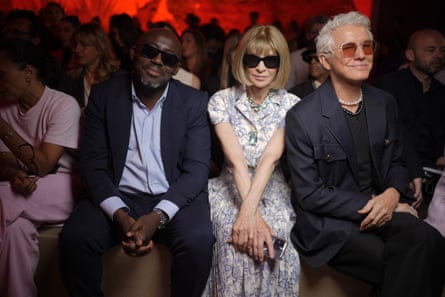
Today, Enninful is one of the world’s most influential creative power brokers. For 72’s launch, he called on friends including Julia Roberts, Gwyneth Paltrow and Oprah Winfrey. His company employs 25 people across London and New York, with aims to expand into podcasts and film. He relishes being his own boss – and despite previous reports of a power struggle, insists he and Anna Wintour are “good”.
His journey, he believes, is a testament to the power of pursuing your passions. After dropping out of Goldsmiths, University of London, to model, he didn’t speak to his father – a former military major in Ghana – for 15 years. They reconciled, and when Enninful received his OBE, his father danced with Madonna at the afterparty and went home with his son’s medal. His late mother, a seamstress, instilled his love of fashion and his instinct to always ask “why?”.
What would the Edward of the 90s think of the Edward of today? He laughs heartily. “He’d be in shock, but he’d be proud. Back then I was anti-establishment. I didn’t think institutions like Tate were necessarily for me.”
He pauses. “I never take anything for granted. We lost our home, we fled our country. I nearly lost my vision. So fear isn’t an option. People have underestimated me my whole career. But nothing can stop me once I’ve made up my mind to do something.”