.png) 3 months ago
71
3 months ago
71
An end to Russia’s war against Ukraine is still not in sight. The frequency of high-level meetings of Ukrainian, US and European representatives in recent weeks, as well as the intermittent US-Russia exchanges, have not changed this fundamental reality. There is no ceasefire in place, European and US military support is not confirmed and, most importantly, Russia does not want the war to end.
The latest talks in Paris managed to bring 35 countries of the “coalition of the willing” together. The core objective was to advance the principle, and implementation, of security guarantees for a future ceasefire. The participation of the US alongside European leaders and a wider coalition of partners was noteworthy. However, the actual result remains vague.
The actual ceasefire or peace negotiations have still not begun. This would require the active participation of Ukraine and Russia, and a willingness to compromise on both sides. So far, only Ukraine has signalled such willingness. Throughout these talks, Russia has continued and stepped up its attacks on Ukraine, targeting in particular vital energy infrastructure, thereby ramping up the physical and psychological pressure on the civilian population in the cold winter months.
The Paris declaration, which was announced at the end of the talks, is best described as a declaration of intent. It refers to the coalition’s participation in a US-led ceasefire monitoring and verification mechanism, support for the armed forces of Ukraine, a European-led multinational force for Ukraine, a commitment to support Ukraine in case of Russia breaching a ceasefire agreement and a commitment to long-term defence cooperation with Ukraine.
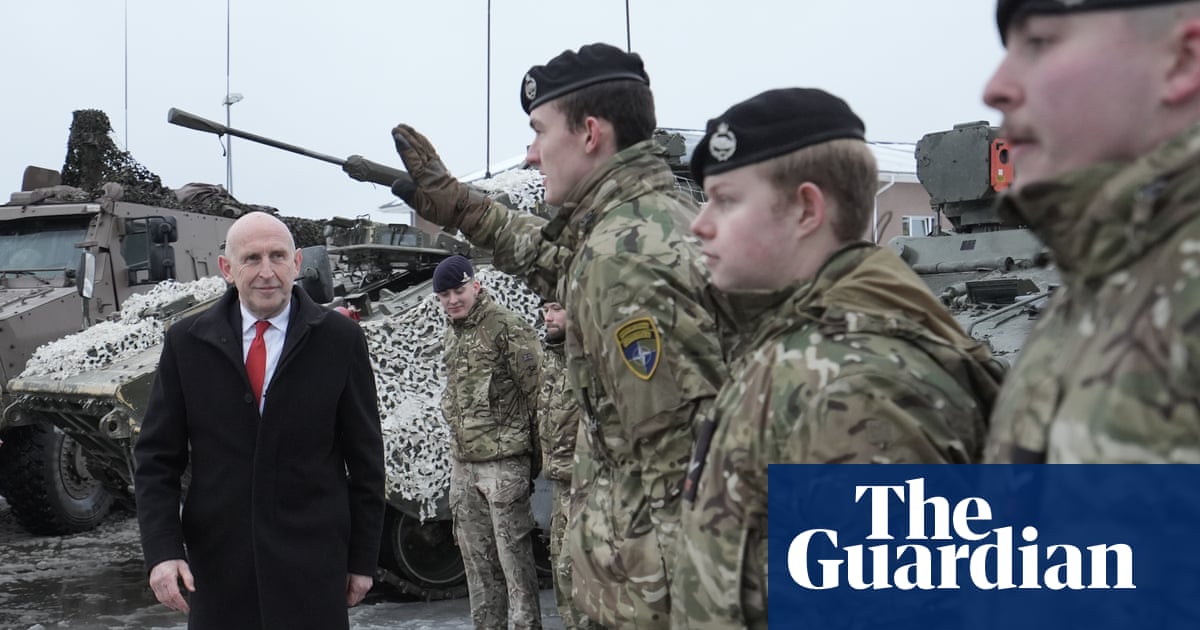
As part of the multinational force, the UK and France again stated their willingness to station troops in Ukraine after a ceasefire has been put in place, as a military backstop in the case of ceasefire violations. What counts as a violation, and what response it would trigger, would still have to be defined. The German chancellor, Friedrich Merz, for the first time spoke about the possible involvement of German troops in securing a ceasefire. He added that they could only be stationed in Nato countries bordering Ukraine and that any such decision would require the approval of the German parliament. He thus made a series of assumptions still to be tested, including the willingness of central and eastern European states to host German troops.
Of critical importance in the provision of security guarantees for Ukraine is the connection between European and other troops, a sizeable Ukrainian army and the involvement of the US. The record of the Trump administration to date does not instil much confidence in a durable commitment to any agreement on this link.
Of course, it is necessary to clarify who is willing to do what to secure a ceasefire, but the key issue remains the same as throughout 2025: there is no visible political will from Russia to engage in serious talks. President Putin thinks time is on his side, and feels emboldened by direct talks with Trump and his transactionally minded administration.
While the term “coalition of the willing” is unfortunate, as it brings back memories of the US-led engagement in Iraq, it clearly signals that we have moved into a period of ad hoc relations between states, outside existing international institutions and law. If and how the war in Ukraine ends will be decisive for this new path.
-
Gwendolyn Sasse is the director of the Centre for East European and International Studies and non-resident senior fellow at Carnegie Europe