.png) 3 months ago
78
3 months ago
78
European leaders have accused Hungary of sabotaging support for Ukraine on the eve of the fourth anniversary of Vladimir Putin’s full-scale invasion, after a defiant Budapest blocked fresh economic measures against Moscow.
Germany, France and other EU states failed to persuade Viktor Orbán’s government on Monday to approve the latest EU sanctions package and a loan meant to help Kyiv meet its military and financial needs. Poland’s prime minister, Donald Tusk, described Hungary’s actions as “political sabotage”.
The row threatens to overshadow a carefully choreographed display of solidarity between Ukraine’s president, Volodymyr Zelenskyy, and his key European partners. Several EU leaders are expected to visit Kyiv on Tuesday, including the European Commission president, Ursula von der Leyen.
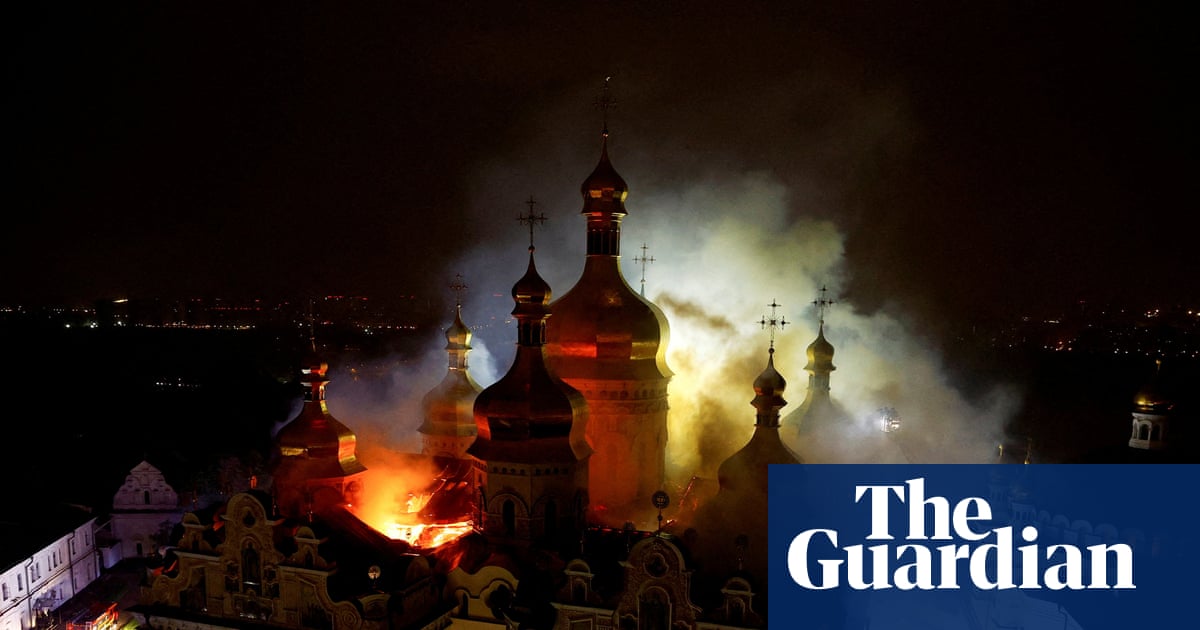
The anniversary follows a brutal and freezing winter in which Russia has systematically dismantled Ukraine’s energy infrastructure with drone and ballistic missile attacks, leaving millions without power. Kyiv, Odesa and Kharkiv have been badly affected.
Despite worsening conditions for civilians, the mood in the capital is surprisingly upbeat. In interviews this week Zelenskyy insisted Ukraine was “definitely not losing”. Since late January his armed forces have recaptured 400 square kilometres in the south of the country.
A further round of peace talks are expected to take place in Geneva later this week, Kyrylo Budanov, the head of Zelenskyy’s office, indicated. Budanov admitted it was no secret the negotiations with Russia, brokered by the US, “aren’t going smoothly”. “We are clearly moving forward,” he said.
So far, the Kremlin has refused to modify its original maximalist demands. It wants Ukraine to hand over the entire Donbas region including areas Russia does not control. Zelenskyy has ruled this out, despite coming under pressure from Donald Trump’s envoys to agree.
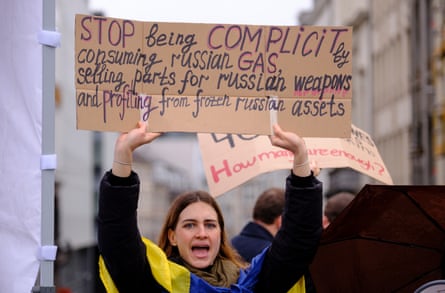
Speaking to the BBC, Zelenskyy said giving up Donetsk oblast would mean “abandoning hundreds of thousands of our people who live there”. He suggested Putin had “already started world war three”, adding: “The question is how much territory he [Putin] will be able to seize and how to stop him.”
European countries have stepped up assistance to Ukraine after the White House last year ended all direct military aid. But their efforts have been sabotaged by Hungary and Slovakia, close US allies and the most Moscow-friendly members of the EU. Both depend heavily on Russian oil imports.
Budapest says it will block further sanctions against Russia until Ukraine resumes the delivery of oil supplies via the Druzhba pipeline. On Monday’s Slovakia’s prime minister Robert Fico said he was cutting emergency assistance to Ukraine because of the halt in oil deliveries.
Ukraine says the Kremlin is responsible for the interruption. It claims Russian bombs knocked out the pipeline last month. On Monday, Ukrainian long-range drones damaged an oil pumping station in Russia’s Tatarstan region, which is part of the Druzhba network.
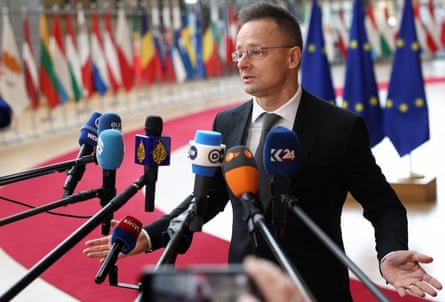
Arriving for a meeting in Brussels, Hungary’s foreign minister, Péter Szijjártó, complained that Ukraine was behaving in “a very hostile manner” towards his country. “Please ask Ukrainians why they have stopped the oil deliveries to Hungary,” he said, accusing the European Commission of siding with Kyiv.
Poland’s foreign minister, Radosław Sikorski, hit out at Hungary’s decision to block a €90bn (£79bn) loan to Ukraine. It was “shocking”, he suggested, given the fact that Budapest was itself invaded in the 20th century by Soviet troops. He said Orban’s anti-Ukrainian rhetoric was aimed at a domestic audience, before elections in March.
Sikorski added: “I would have expected a much greater feeling of solidarity from Hungary for Ukraine. Instead the ruling party has managed to create a climate of hostility towards the victim of aggression, and … now is trying to exploit that in the general election.”
Other senior European figures paid tribute to Ukraine’s resilience. Speaking at a pro-Kyiv event in Berlin, Germany’s chancellor, Friedrich Merz, said Tuesday’s anniversary marked “four monstrous years of war”. “I appeal again to our European partners – do not let up in your support, in our common support, for Ukraine,” he said.
Merz added: “We are standing at a crossroads that could decide on the wellbeing of our whole continent. No one can say today whether the weapons will fall silent in Ukraine in six weeks, in six months or even later. But we are working for them to fall silent as quickly as possible.”
The French president, Emmanuel Macron, described his country’s commitment to Ukraine as “unwavering”, during a meeting with Finland’s leader, Alexander Stubb, another significant Ukraine booster. Putin “is not winning the war” but is not ready to make peace either, Stubb said in Paris.
Valerii Zaluzhnyi, Ukraine’s ambassador to the UK and the man considered to be the best-placed challenger to Zelenskyy in a future presidential election, sought to downplay any immediate interest in the country’s top job – though he did not rule out running after the end of the war.
Following a speech in London, Zaluzhnyi said suggestions that he wanted to pursue the presidency amounted to “pub talk” – and said he did not have “the slightest chance to think about what happens after the war”. Only after the end of martial law in Ukraine could there be “discussion about my personal future”, he said.
In a report on Monday, the World Bank estimated Ukraine needs $588bn (£435bn) to rebuild from the destruction caused by Russia’s all-out 2022 attack. The figure is 12% higher than last year. The frontline Donetsk and Kharkiv regions would require the most investment, while Kyiv would need $15bn to recover, it said.