.png) 2 months ago
42
2 months ago
42
European leaders are being urged to decide whether to use Russia’s frozen assets to fund Ukraine’s defence at a time of unprecedented pressure from the US.
At a critical summit in Brussels on Thursday, EU leaders will be asked to make good on a promise to find urgently needed cash for Ukraine, with Kyiv under pressure to cede territory as Russia ekes out advances on the battlefield.
Speaking in the European parliament on the eve of the summit, the European Commission president, Ursula von der Leyen, said: “There is no more important act of European defence than supporting Ukraine’s defence.” She added that “the next days will be crucial in securing this”.
Von der Leyen said Europe must take responsibility for its own security in a world she described as “dangerous and transactional”, adding: “This is no longer an option. It is a must.”
Earlier this month, von der Leyen proposed two options to fund Ukraine’s urgent defence and civilian needs in 2026 and 2027: joint EU borrowing or a so-called “reparations loan” secured against Russia’s frozen assets in the bloc.
Belgium, which hosts most of the €210bn (£185bn) immobilised Russian assets in the EU, says it lacks sufficient guarantees that member states would come to its aid if the scheme were to fail, leaving Brussels with a multibillion-euro bill.
The Russian central bank announced this week that it was seeking $230bn (£202bn) in damages against Euroclear, the Brussels-based securities depository that holds most of Russia’s sovereign wealth in the EU. Belgium also fears courts in countries allied to Russia will move to seize western assets to enforce claims against Euroclear.
Italy has emerged as an important ally. The prime minister, Giorgia Meloni, said using Russia’s assets frozen in Europe to help Ukraine without a solid legal basis would hand Moscow “the first victory since the start of the war”. Like Belgium, Italy argues that joint EU borrowing would be a safer way of funding Ukraine.
“Italy, of course, considers sacred the principle that Russia should primarily pay for the reconstruction of the nation it attacked, but this result must be achieved with a solid legal basis,” Meloni told Italian politicians.
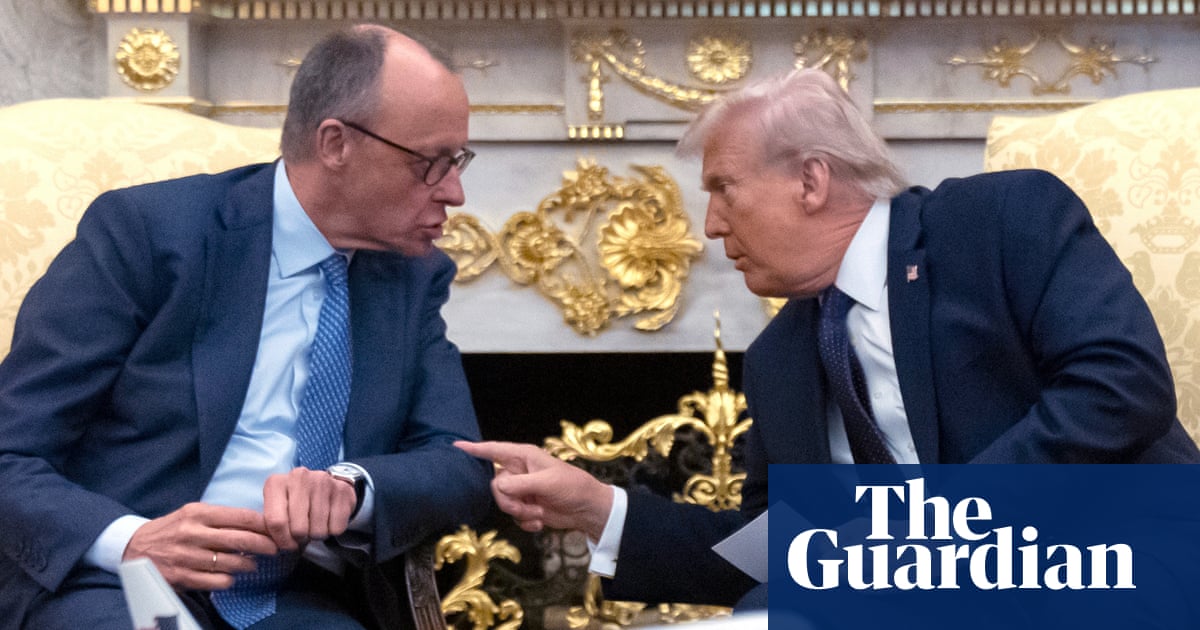
Germany’s chancellor, Friedrich Merz, said he would continue fighting to make up to €90bn (£79bn) in Russian assets “usable for Ukraine’s defence”. He put the odds of winning an agreement at “50/50” in an interview with public television on Tuesday.
Merz told lawmakers the sum would finance the Ukrainian army for “at least another two years”, while its use would send a clear signal to the Russian president, Vladimir Putin.
He said he took Belgium’s concerns seriously. “That is why I am trying with our partners to alleviate them,” Merz said – arguing the commission’s plan was “in perfect compliance with international law and international obligations”.
Under the scheme, the EU would provide Kyiv with a €90bn loan funded through borrowing from Euroclear. The loan would be repaid only if and when Moscow paid reparations to Ukraine.
EU officials say Russia’s claim on the assets at Euroclear, frozen soon after the full-scale invasion in 2022, would not be affected. Moscow, however, argues the move amounts to theft and has vowed to retaliate.
EU officials involved in preparing the summit have suggested the reparations loan is the only real option, as use of the EU budget would require unanimity.
Hungary’s government, which is hostile to Ukraine, has promised to veto any attempt to use the EU budget as collateral for a loan for Kyiv. By contrast, the reparations loan would require only a majority of EU member states, although some diplomats say it would be unthinkable to isolate Belgium.
“A very large majority of member states favour the reparations loan,” one senior EU official said. “Any solution that would require unanimity, I don’t think is realistic so we are back into the reparations loan.”
The EU last week used emergency powers to indefinitely freeze €210bn of Russian assets in the bloc, averting the risk of losing control of the funds if Hungary or any other Kremlin-friendly government vetoed the renewal of sanctions, which have to be renewed every six months.
Belgium has suggested that such emergency powers could also be used to generate an EU loan for Ukraine secured against the budget, circumventing the need for unanimity. But other countries say that would be a legal twist too far. “This is a non-starter,” said one senior EU diplomat, who nevertheless expressed sympathy for Belgium’s position.
Additional reporting by Deborah Cole in Berlin