.png) 3 months ago
81
3 months ago
81
It’s not easy, but let’s try to look at this war in the best, most charitable light. Let’s try to see the US-Israel conflict with Iran as its prosecutors and advocates would want us to see it.
They would say that it has two aims, both legitimate. The first is to weaken if not remove a regime that has done terrible evil to its own people. Who could mourn the supreme leader of a government that, according to one report, gunned down 30,000 of its citizens on the streets in just two days on 8 and 9 January? Listen to those Iranians who long ago reached the glum conclusion that the only way they could be rid of their tormentors was through external military action. As one exiled Iranian put it to me this week: “The Iranian people have been begging the world for help for so many years. They tried voting for change in 2009; they were killed. They tried protesting in 2019, 2022 and this year; they were massacred in the tens of thousands … They were out of all other options.”
The war’s advocates would say its second goal is no less legitimate: to reduce the regime’s ability to threaten its neighbours. Again, who could blame Israel for wanting to de-fang an enemy that has sought not merely its defeat but, explicitly, its elimination? Iran hoped to make good on that threat by arming and funding the proxies – Hezbollah, Hamas and the Houthis – that formed its much-vaunted “ring of fire” around Israel. After 7 October 2023, Israel resolved not to wait for its enemies to strike, but to rob them in advance of the means to do so. That, say Israel’s defenders, is why it is bent on destroying Iran’s ballistic and nuclear capacity and hitting Hezbollah in Lebanon.
Let us pass over the fact that setting out the war’s aims like this gives its chief prosecutor too much credit. The US has not been anything like so clear in declaring its objectives. The goals identified by Donald Trump have shifted daily, if not hourly. One minute he wants regime change, the next he seeks merely an end to Iran’s nuclear programme. At breakfast, he insists on unconditional surrender; by lunchtime, he’s open to negotiation.
Still, for the sake of argument, we’ll look past that rhetorical inconsistency and accept that these are the goals. We’ll further accept, in the same spirit, that those goals are legitimate. The question then becomes: is this war likely to achieve them?
This is where things become unstuck. Start with regime change, where the history is doubly discouraging. It offers vanishingly few examples of a dictatorship removed through the use of air power alone and, when US force has toppled regimes in the Middle East, the result has not been a smooth transition to democracy but rather the unleashing of enduring chaos and bloodshed: look no further than Iraq in 2003 and Libya in 2011.
Of course, Iran is not Iraq or Libya, but that provides even less solace. Scholars of the country warned long before the first salvoes were fired on 28 February that killing the top man, and even removing entire layers of leadership, would not be enough. After nearly half a century, the apparatus of the Islamic republic is too entrenched, too committed to its own survival, to be felled so easily. As one Iran expert I spoke to put it in January: “This regime will simply replace itself.”
Sure enough, supreme leader Khamenei has been replaced by supreme leader Khamenei. If the plan had been to repeat Trump’s Venezuela adventure, swapping out one dictator for a more pliable, US-friendly successor, so far it doesn’t seem to have worked. To distil what the former head of the CIA, David Petraeus, told the Unholy podcast this week: “We were hoping for Delcy Rodríguez … Instead, what we got is a young Kim Jong-un.”
And, of course, life has got no easier for the people of Iran, desperate to be rid of the despots who rule over them. The regime now says it will treat any protester as an agent of the foreign enemy, which means it has handed itself a licence to kill. Benjamin Netanyahu may be urging Iranians to “take to the streets”, but how exactly are they supposed to do that, with an internet shutdown that makes organisation close to impossible and in the face of security forces ready to machine-gun their fellow citizens?
What, then, of the second goal of this war, namely, to reduce the regime’s ability to threaten its neighbours? Of course, the US and Israel can point to all the Iranian military hardware they have destroyed, but that is to miss the fact that Tehran has, for all those losses, asserted its power more starkly. By effectively closing the strait of Hormuz, it has reminded the world of its chief deterrent: its chokehold over the global economy, its ability to disrupt the international oil supply, to drive up energy prices and therefore inflation, to disrupt the lives of hundreds of millions.
The big winner is Vladimir Putin, whose fossil fuels now bring in more money, further helped by the US’s decision on Thursday to temporarily lift sanctions on the sale of Russian oil. Putin now has more cash to fight Ukraine, already hurt by depleting stocks of drone interceptors, which are urgently needed in the Middle East.
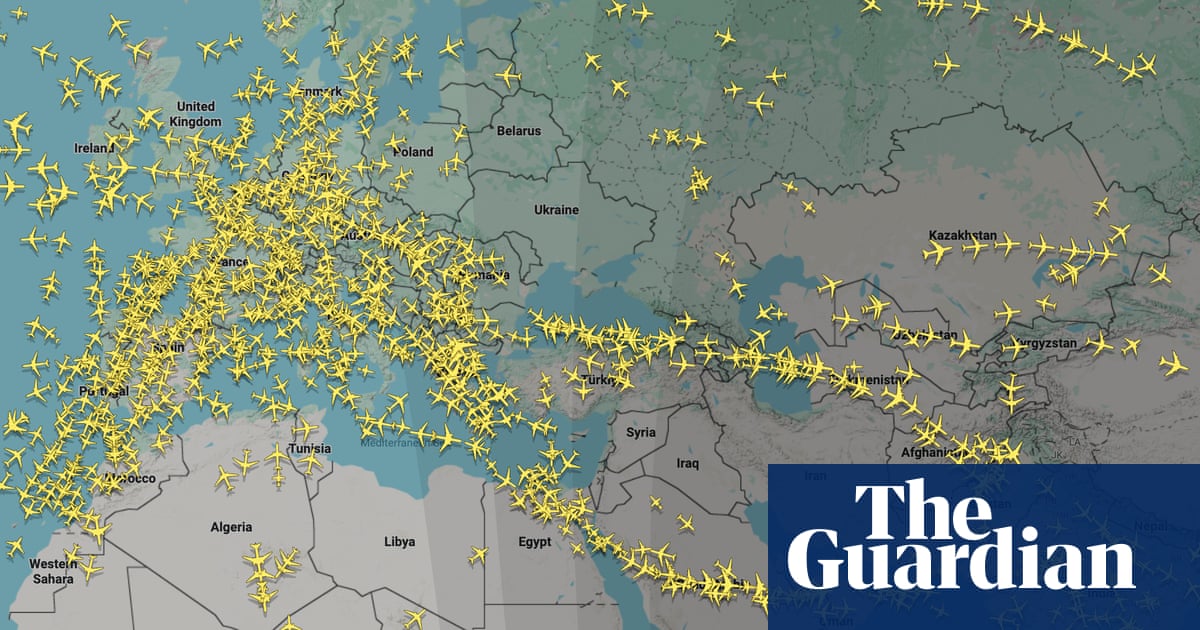
For two weeks Iran has not merely threatened but directly attacked its neighbours, firing on the Gulf states, exposing the vulnerability of their business model, their airports and hotels, and showing the high price they pay for their close ties to the US and Israel. This war will surely prompt a strategic rethink among those states, one that could lead them in a very different direction. As for Iran itself, if the regime survives, it will have every reason to double down on its nuclear ambitions, reasoning that the best guarantee against US attack is the bomb. Think of it as the North Korea principle.
Every one of these risks was predictable and indeed predicted, but the warmakers went ahead anyway. Which brings us to the strongest reason to view this war not charitably, but in a cold, harsh light.
Just look at the people in charge. Netanyahu has become the proverbial man with a hammer to whom every problem looks like a nail. He has long abandoned diplomacy or even the notion of translating military into political gains. And so, obsessed with the Iranian threat for decades and with elections looming in which he longs to pose as the slayer of the ayatollahs, he hits and hits and hits again, heedless of what comes next.
And then there is Trump. He entered this war with no clear aim, no clear plan and no grasp of even the most obvious consequences. He has been reckless, equally careless about the truth and about human life, most blatantly when making false claims on what every indication says was a US strike on a girls’ school that killed many scores of children. His White House releases war-porn videos that mix chest-beating clips from the movies, computer game imagery and genuine footage of destruction – and which are sickening to behold.
His “secretary of war” is a cable TV nonentity high on the smell of death, which he confuses for testosterone. Trump and his men make statements that they then have to withdraw; they announce new plans without having done even the elementary groundwork. They have the most serious responsibility imaginable, wielding the mightiest arsenal the world has ever seen – but they are not serious people.
To confront the Iranian regime was to walk, with a lit match, towards a tinderbox soaked in gasoline. If it were to be done at all, whether by military or other means, it had to be done with the greatest care. But Trump has blundered in, crushing and trampling all before him, making a bad situation worse. He does not deserve the benefit of the doubt. He does not deserve his war to be assessed charitably. He deserves our contempt.
-
Jonathan Freedland is a Guardian columnist
-
Do you have an opinion on the issues raised in this article? If you would like to submit a response of up to 300 words by email to be considered for publication in our letters section, please click here.