.png) 3 months ago
70
3 months ago
70
Chronic pain has a way of upending a life.
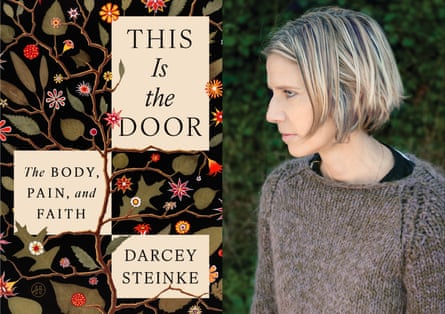
In her memoir This Is the Door, writer Darcey Steinke writes that “pain, like failure, breaks into our everyday lives and upsets who we thought we were and what we thought we could do”.
In her case, excruciating pain from a herniated disc forced a multitude of changes – sitting down hurt so much that she “basically had to stand up all day long”, she says. Emotionally, it was a rollercoaster: “I was roiling, anxious, fragmented,” she writes.
Steinke, who has written books including Suicide Blonde, Up Through the Water (Jacqueline Onassis was her editor) and Flash Count Diary: Menopause and the Vindication of Natural Life, wanted to investigate others’ experiences of pain, posting signs up in her neighborhood and soliciting interviews with friends. From conversations with about 80 people, and research about the history and artifacts of pain – rare 17th-century books, the cadavers analyzed by anatomy students – she distilled a series of reflections on pain’s effects.
“To be able to express your pain and to hear others’ pain is really hard,” she says. “But when it’s done with authenticity and generosity, it’s really amazing.”
Pain makes you more empathetic, she says. “When I see people with mobility issues on the street, I used to think, they have a little limp. Now I know they’re also in pain.” Similarly, in addition to their reports of loneliness and struggle, many of her interviewees said it “realigned their relationship with the universe”, and they ultimately felt “more connected with reality”.
I talked to Steinke on the phone about her book; our interview has been condensed for clarity.
**
How did you decide to write this book?
I had a herniated disc and about eight months of just terrible, terrible pain. It was at the height of the opioid crisis, so there wasn’t very good medication – basically just rosé and extra-strength Tylenol. I did physical therapy, but it was really, really rough. There were some times that I could barely think because it was so bad.
It was also kind of fascinating. Pain sort of pulls everything into it. I’m a novelist, and it kind of reminded me of narrative structure. There’s always this deep theme underneath.
The other part was that there was a general feeling in people I didn’t know so well, and also maybe the medical community, that this wasn’t a meaningful or valuable time … “you’ll be a viable person once the pain’s over”. That really isolated me, and surprised me too.
A lot of pain memoirs are about the cure, like searching for the doctor that can take away the pain, a search for wholeness. So I wanted to write a book which wasn’t just about trying to get over pain.
How did pain affect your life? What changes did you have to make and what kind of internal changes did you experience?
I couldn’t really sit down, so I had to teach standing up. I rarely went out, but when I met people, we had to eat at the bar. I know that doesn’t sound that bad – oh no, I had to meet people at the bar for dinner in Brooklyn! But it was quite different from my regular life. I do open water swimming at Brighton Beach. I’m a pilates freak. I’m really active, so it was really hard.
Internally, I really had to re-evaluate what was important – the things that you didn’t really want to do and are superficial, you’re not doing. And pain kind of has the sting of death, right? It brought on thoughts of mortality. I was thinking, I hope to live for a long time, but what do I want to do with the rest of my years? Who are the most important people; what do I want to accomplish? What do I want to give to others?
I was so worried that I was never going to get better. This is the weird thing about pain. It’s claustrophobic, but also free and opening in a way because it connects you with others.
In the book, you say that pain is a corporal experience, but it’s also a spiritual one. What connections did you draw between spirituality and pain?
When I say spiritual, I don’t necessarily mean in a Christian sense. Because I had so much time on my hands, I had this crazy project where I would stand for hours at the back window of my house, and I would try to distinguish between the squirrels. One had a little nip on his tail. I figured out that there were six of them. What they were doing, where they were getting food? In a way that doesn’t seem spiritual, but in a way, it is. I have the time to see what their lives are like.
For a lot of the people I talked to, when they were in intense pain, it was the beginning of the end of their conventional faith. Some do move closer to it, but most people did not. Pain has a way of giving you a more personal theology. No matter what your religion is, it brings it really close to home that you need these rituals. I interviewed people for whom their art practice was really important. People being more involved in their community or swimming in the ocean – things that made their pain seem like it was a part of something bigger.
My dad died of prostate cancer a few years ago, and he was a Lutheran minister. I don’t like to say that he lost his faith, but he sort of unfurled from a more conventional sense of Christianity as he got sicker and sicker. He had never been super dogmatic – more like a hippie minister from the 60s. But he said to me, in the little time I have left, I just don’t think it’s worthwhile thinking about God. He just was so much more fixated on his family. He got really interested in the birds at his bird feeder. He was reading poetry. I think that had to do with his own personal belief system, which had more to do with social justice and love.
You write about a lot of artists who experienced pain – Frida Kahlo, Franz Kafka, Carolee Schneemann.
In some ways, art practice is a pain reliever. When I was in my worst pain, if I could just concentrate on writing for like a couple hours, I would have some relief, because my mind was somewhere else.
But I also think it’s really inspirational. Frida Kahlo was in this terrible bus crash when she was 18 and broke a bunch of ribs, shattered her pelvis. She had over 30 surgeries. She was often bedridden and lived in constant pain. But she was able to make this incredibly big life for herself. She was one of the first in modern art to separate the sexy naked, nude female painted by men and say, here’s a female body that’s in pain, a real body.
I interviewed Kurt Cobain right before In Utero came out. He’s the rare rock star who, instead of putting forward sexiness, really centered his sick body. He immediately started talking about his back pain. He got down on the floor and showed me his back exercises – this is the biggest rock star in the world.
I never want to say that pain is good, and no one should seek out suffering. But everyone’s going to go through it. The artists helped me show that pain is a part of a life, and how you can make things that can be pain relievers for others.
You touched on this earlier, but it’s impossible to talk about pain in depth without talking about death.
People don’t want to think about it, but pain naturally makes people think about mortality. When you’re debilitated in that way, it’s very heavy, in the same way that grief is. I think that makes death even more hard to contemplate.
A lot of people said to me, particularly if they were in chronic pain that was going to lead to death: I don’t mind dying, but I don’t want to be in pain. Also, there’s a way in which you’re a little dead when you’re in pain. It’s hard not to feel in your somatic experience – with my back, I couldn’t move it the way I wanted to, like I was carrying around a little dead piece of me.
In my experience, when you’re youthful and if you’re lucky enough to have an experience of very little or no pain, you can’t really comprehend what decrepitude is going to feel like, even though it’s natural. And when you first get a touch of that and realize that ageing is irrevocable, and there’s not a lot you can do about it, that sets you on the path of understanding what it’s going to be like for your body to break down.
Now, everyone’s obsessed with longevity, and we have this resistance to the idea that we age. I think that’s chiefly because you start to realize that death is coming.
It’s very humbling and leveling. That’s what bodies do; this is a little taste of what that might be like. I can try to stay as active as possible, but [with pain], your activities are truncated. You’re not able to experience life in the same physical way that you were before. That’s true mentally too. I think I’m still extremely sharp, but I forget words more than I used to. That can be really disconcerting, for sure.
But Jane Fonda said old age isn’t as scary from the inside as it is from seeing it from the outside. That really helped me, because there is a way we can make peace with what’s happening to us.
You traveled to the pilgrimage site of Lourdes, in France, and participated in the healing rituals there. What did you want to convey about witnessing pain?
I thought Lourdes would be a good place to end the book, because it’s a nexus of pain and faith. Lourdes came to prominence because of this 14 year old girl, Bernadette Sobrirous, who had TB. She uncovered a holy spring in this cave. I’m a skeptical person, but I was really amazed how moved I was. Lourdes has no stairs anywhere. So any person in any wheelchair or rolling bed can move around there. The bathrooms are huge and they each have several trained attendants. There’s no place on earth like that. And then, the diversity of the crowd – there were goth girls in St Bernadette costumes, and cassocked priests.
I asked if I could watch while holy water was being administered to the sufferers. It was very moving. People would come all day long. They would talk about, you know, “I have arthritis. My husband is an alcoholic. My child was born with a birth defect.”
One day, the head of the baths said, do you want to go in and perform the ritual? I put on the apron and I could see the way they were actually suffering in their bodies, the way they moved. The thing that surprised me the most was how quickly people are moved to tears. They’ve been preparing for a pilgrimage, and the idea that they were in the presence of a faucet of God, they really felt like they were part of something bigger.
-
This Is the Door: the Body, Pain and Faith by Darcey Steinke is out now via HarperOne. To support the Guardian, order your copy of the UK edition at guardianbookshop.com. Delivery charges may apply.