.png) 1 month ago
34
1 month ago
34
‘One of my Hinge prompts is: ‘What’s the best book you read this year?’ and I swipe left on anyone who says a book I don’t like,” says 29-year-old Ayo*. “Someone once replied with a book by Jordan Peterson, which was a massive ick.”
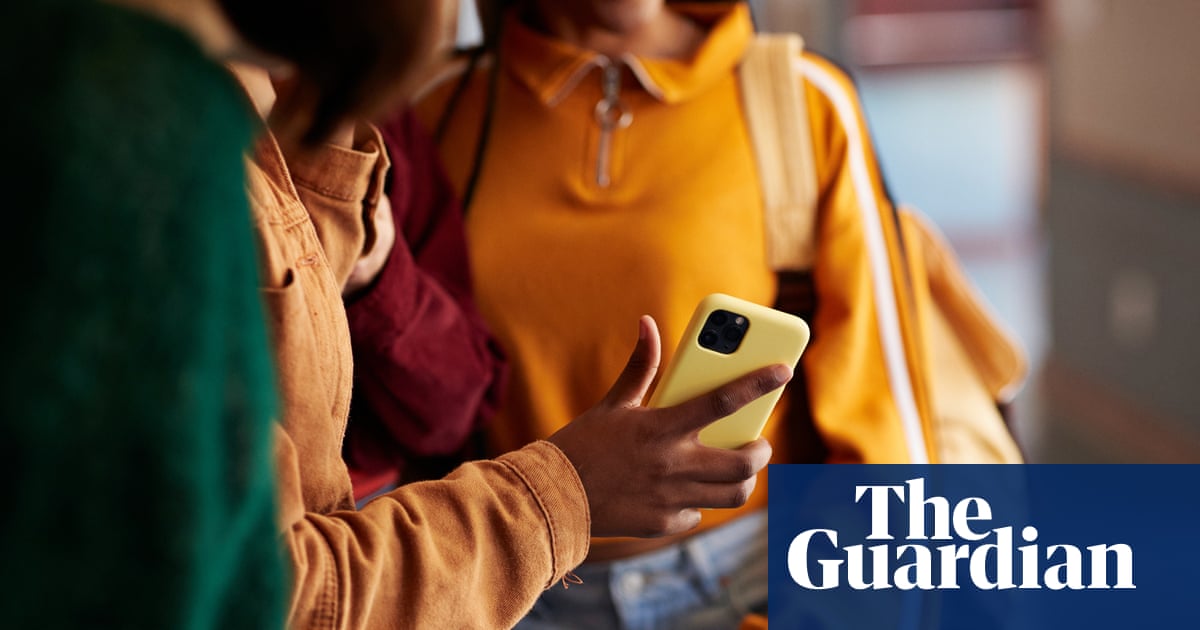
It’s a blunt approach to romance, but Ayo is far from alone. Books have long functioned as cultural shorthand for personality – signals of taste and worldview – but dating apps have accelerated and intensified that process. In an attention economy that rewards speed, these signifiers have to be legible at a glance.
“I prefer contemporary literary fiction or interesting classics in the broadest sense,” Ayo says. “Authors such as Ben Lerner, Sheila Heti, Annie Ernaux – if someone mentions one of those, I’ll be impressed and intrigued. And if it’s a Fitzcarraldo, I’m more likely to match regardless of whether I’ve read it or not.”
The modern dating profile is something of a compressed CV. Saying you love romance might hint at emotional openness; fantasy or sci-fi might suggest nerdiness; poetry gestures at sensitivity; modernism at seriousness (or at least the desire to appear serious). Plus, the thrill of spotting someone who loves the same novel as you can feel like fate.
Platform data shared with the Guardian suggests daters are increasingly leaning on book-based signals. In the last year, mentions of reading in Tinder bios in the UK are up 29% overall and 41% among women. On dating app Feeld, about 7% of UK profiles explicitly mention reading; users who connect with other readers are almost 10% more likely to report a “meaningful connection”. On Hinge, “book” is one of the most frequent words that daters around the world share in their responses to the prompt “My simple pleasures”.
Data from freelancer platform 99designs released this month showed that 42% of Americans want a partner who reads regularly, and 38% find profiles that mention books more attractive. The message is clear: books are doing some very heavy lifting in the dating economy.
“It’s not hard to see the appeal,” says Luke Brunning, a philosophy lecturer at the University of Leeds and co-director of its Centre for Love, Sex and Relationships. “The excitement of seeing someone who enjoys the niche book you love can be real, abiding and tell us something about their taste and character.”
Erinne Paisley, a researcher studying digital intimacy at the University of Copenhagen, agrees. “We live in an age of anxiety and some of this can be a connection to safety – we want to get a full picture of someone because the version of ourselves on dating apps is fragmented,” she says.
These signals are increasingly sorted into the language of “green flags” and “red flags” – a discourse turbocharged by social media, where certain titles or genres are treated as instant proxies for someone’s values, politics or emotional availability.
The paradox is that books are now both a badge of authenticity and a performance. That tension – between actual taste and strategic signalling – maps on to the “performative men” discourse: the suspicion that some men curate feminist politics or literary taste as a dating strategy rather than them being their authentically held beliefs and preferences.
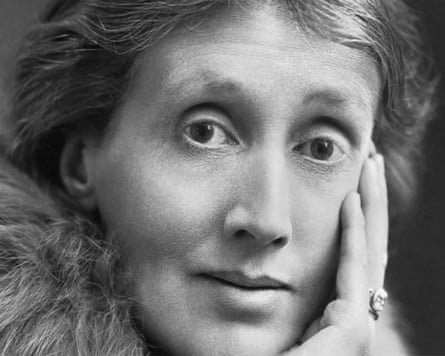
Caitlin, 25, has seen both sides of this. “At university I was in a life-shattering ‘situationship’ with a guy who ran a Ulysses book group,” she says. “Even at the time, when I really liked him, I thought it was a bit of an ick. I’ve still never read it because of that dating experience.” Dating someone a few years later, she was initially thrilled to see Virginia Woolf’s A Room of One’s Own on a man’s bookshelf alongside a host of books by women – a green flag, she thought, proof of feminist sensibilities. “And then he just turned out to be terrible, too.”
Others also describe the letdown when the performance collapses in real life. “I had a Ben Lerner Hinge prompt up for six months in the hopes that one day someone would reply, and they’d be the one,” says Ella*. The prompt did eventually get her a date: “Unfortunately, he wasn’t it – just a lawyer who lectured me on Tarkovsky.” Harry’s* worst date was with someone whose profile said she was writing a book, only for her to admit over drinks that she had completed an English literature degree without reading a single book and couldn’t name one she enjoyed.
But dating shortcuts can also risk flattening people into types, and can sometimes invite bias. A love of airport novels doesn’t preclude emotional or intellectual depth, just as a shelf of modernist doorstoppers doesn’t guarantee it.
“Classism is the major risk,” Brunning says. “There can be many reasons why some people cannot read, read less than us, read different material to us, or are hesitant to disclose their reading habits. We should be careful not to let our prejudices exclude these people as potential partners.”
Paisley also worries that there is a risk of turning dating into a consumer exercise, where people are discarded for minor mismatches in taste rather than engaged with as complex, evolving individuals.
“Red flag discourse can be helpful when referring to dangerous or harmful behaviour, but it also can be harmful in that it encourages us to find a partner who ticks every box, who we have an initial spark with, and with whom that spark never wavers,” she says. “This isn’t how relationships always work. Think about friendships – there will be times of growth and negotiation.” If books have become dating shorthand, then perhaps they should be taken as a rough translation at best.
*Some names have been changed