.png) 2 months ago
43
2 months ago
43
For a festival with childbirth at its religious heart, it is perverse how much of our traditional Christmas spread isn’t recommended for pregnant women. Pre-pregnancy, this was not something I’d clocked. I was the soft cheese supremo, canape queen – at my happiest with a smoked trout blini in one hand and a champagne flute in the other. Then one day in October, two blue lines appeared on a test result and everything started to change: my body, my future and most pressingly my Christmas.
Don’t get me wrong: no present under the tree can match the gift I’ve got in store. But as a food writer who loves this season, I can’t think of a worse time to be nauseated, exhausted and forbidden by the NHS to eat, drink or do my favourite things to eat, drink or do in winter. I have no alternatives for saunas, skiing and hot baths. I do, however, know enough chefs, bartenders, retailers and producers to create a Christmas feast that is full of wonder, joy and within the NHS guidelines.
It goes without saying that the NHS guidelines are guidelines, not gospel, and that you are a woman capable of independent thought and decision making. If you’d like to delve deeper into the data which drives dietary advice for pregnant women, Emily Oster’s Expecting Better is a great place to start. And if that feels overwhelming along with everything else pregnancy brings – well, that’s exactly what the NHS guidelines are for.
Champagne
The most important of festive drinks, many brands have gone to great lengths to recreate the pop, look and feel of fizz, and while there is no real McCoy, there are many palatable options. According to Olly Smith, author of WINE: Everything You Need to Know, Kylie Minogue No Alcohol Sparkling Rosé offers great (literal) bang for it’s buck. “It’s tremendous value for a celebratory glass of something which actually tastes decent, fruity and fun,” he says of the bottle, which is under £10 in all supermarkets. If you’re fan of kir royale, try Sainsbury’s Alcohol Free Blackcurrant Spritz. “It blew me a way at a recent tasting,” he says.
For those who prefer their bubbles bone-dry, there is the world of sparkling tea to discover. These are not “just like champagne” (so don’t let anyone tell you otherwise) but aren’t too sweet, the bubbles are fine, and they do a good job of feeling like a “proper” drink. Copenhagen Sparkling Tea Company supplies sparkling teas for Selfridges and Fortnum and Mason that are delightfully complex, as are those from Saicho. They’re not cheap – around £18.99 – but they’re cheaper than the more expensive non-alc sparkling wines.
That said, if you don’t like tea, or the idea of a cuppa in your champagne coupe, then your best bet is sparkling wine which has been produced the usual way, then de-alcoholised. That process makes them pricey, but the alcoholic fermentation means they aren’t tooth-numbingly sweet. Noughty Non-Alcoholic Sparkling Chardonnay is the best I’ve tried; Smith swears by Bolle Sparkling Rosé, which is double fermented “and doesn’t rely on pumping up the sugar to achieve its nuanced sense of grown-up balance”. And if you really love champagne and English sparkling, you might be better saving your money for when you can drink them – or having half a glass of the real stuff. That’s not NHS advice, but it’s what I’ll be doing come Christmas morning.
Wine
Former Guardian wine columnist Fiona Beckett now has a Substack called Eat This Drink That, Live Well which is basically a gospel of good times and deliciousness. So when she says she has “yet to come across an alcohol-free wine that matches up to the full-strength version” and that they are “by and large… infuriatingly expensive” I feel no need to do further research. That has also been my experience. There is, however, a consolation prize: “non-alcoholic wine does make a decent mulled wine, so much so that I found myself saying, when I first made this, that I shouldn’t really have a glass before I went out to dinner.”
The key, she says, is elderberry juice. “It gives the drink body, but it is quite bitter, so you do need to add [brown] sugar to taste.” For one bottle of non-alc red wine (I’m a fan of Wednesday’s Domaine, which brings body and heft), you’ll need 8 cloves, 2 unwaxed oranges, 330ml elderberry juice and a cinnamon stick, as well as sugar and optional orange bitters. Stick the cloves into the rind of one orange, place it in a small to medium saucepan (you want the liquid to cover the orange), add 125g (4½oz) sugar and the cinnamon stick as well as the bitters, if using. “Bring slowly up to simmering point over a low heat without letting it boil. Take off the heat and leave for 30 minutes to infuse.”
If you didn’t mull your own wine when you were drinking, and don’t intend to start now you’re not, there are some pre-made versions. Fellow food writer Olivia Potts swears by Ikea’s Vintersaga: a traditional Swedish Christmas drink commonly flavoured with spices like cinnamon, cardamom and ginger. “I begrudgingly drank it hot when I was pregnant,” she recalls, “and now I make special trips to Ikea every year to stock up.”
Oysters
I am no huge fan of oysters. But I have learned to respect their inimitable flavour and the ritual of sharing them with family and friends. There is no substitute for one freshly shucked, but recipes for cooked oysters abound and mean you can still join in on the occasion without fear of poisonous repercussions. Chef Roberta Hall McCarron of the Little Chartroom in Edinburgh actually prefers them cooked, under a gratin of sauteed spinach, wine, garlic and cheese topped with breadcrumbs. At Applebee’s, a family-run seafood restaurant in Borough Market, chef Frankie Van Loo tops Maldon oysters with chorizo jam (easy to make, even easier to buy from DukesHill) and bakes them in the oven. Rick Toogood, co-founder of Prawn on the Lawn restaurants in Padstow and London, favours deep-fried oysters with garlic creme fraiche. “Shuck the oysters, removing the meat into a sieve to drain any excess liquid (this will keep the oysters crispy),” he advises. The garlic creme fraiche can be whipped up with shop-bought garlic puree, lemon juice and chopped spring onion. Place a blob of that in the empty shells, top with a deep-fried oyster and garnish with more spring onion or herbs.
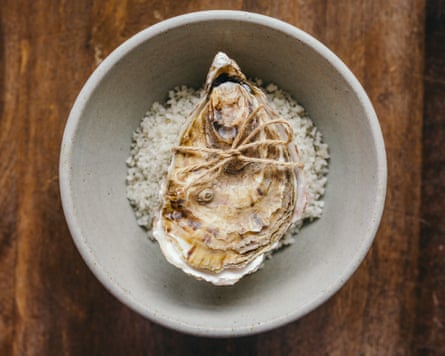
If you can’t stomach an oyster, or don’t feel confident enough in the cooking process, you can still join in with the ceremony with a vegetarian version. Ask your local fishmongers for some empty shells (or head to Etsy, which abounds with them) and follow the advice of Ben Rand, executive chef of Bubala, the cult Middle Eastern vegetarian restaurant in London, whose debut cookbook is out now. “Rather than trying to emulate an oyster, how about taking endive, filling it with some fresh citrus, crunchy nuts and a citrus puree. It has big flavours, it’s fresh, crunchy and saline, hitting all those touch points of an oyster without trying to be one,” he advises. Helen Graham, author of the forthcoming vegetarian cookbook Centrepiece, suggests roasting off aubergine cubes, tossing them with miso, agave, rice vinegar and ras el hanout, and spooning those into shells with a little creme fraiche and lime zest on top. You don’t need to all eat oysters to cheers shells and knock back something delicious.
Paté and charcuterie
Know when you’re beaten, is chef Emily Roux’s take on paté and charcuterie. Cured meats must be cooked before being eaten, according to the NHS. Fine on a pizza, not what you want from a charcuterie board. Paté – all types, including vegetarian and fish as well as meat – is off the NHS menu, unless it’s served piping hot which kills any potential listeria but rather defeats the point of paté. “It’s difficult to recreate the same levels of satisfaction,” observes the chef behind the beloved Michelin-starred Caractère in west London, so perhaps it’s something worth saving until after the baby’s born.
That said, there are some things that might work on melba toast in pâté’s stead. Roux recommends making rillettes with flakes of hot-smoked fish (cold-smoked is verboten), creme fraiche, lemon juice and dill. Graham makes a maitake or shitake mushroom paté that would be as delicious spread hot and fresh as cold. “Fry a load of onions until deeply caramelised, then fry your mushrooms in butter and deglaze with a splash of soy and vinegar (add baharat if you have). Blend it all into a silky paté,” she says. Spread on melba toast, white toasted triangles or whatever you’d spread your regular paté on – though bear in mind your vehicle may need more structural integrity when the paté is hot.
Smoked salmon blinis
“There are certain combinations of ingredients that seem as if they were made for one another,” Nigel Slater famously wrote in his book Appetite, and blinis and smoked salmon (or better from an ethical and environmental perspective, smoked chalk stream trout) is one of them. Mercifully, most smokeries produce hot-smoked fish as well as cold, which means the flesh has been cooked through in the process. That is kosher, for the NHS. “It’s fully cooked, has the same richness and gentle smokiness, and works beautifully on a blini with creme fraiche and a squeeze of lemon – you don’t feel like you’re missing out at all,” says Max Bergius, founder of the Secret Smokehouse in east London.
“If you get the big sides of hot-smoked fish, then the flakes in the middle are not dry, so use those” advises Roux. If you’d rather wait until you can have the classic cold-smoked, she suggests serving cooked crab. “It’s a real crowd-pleaser, so if you served that on a blini, or as a starter with bitter leaves and blood orange, everyone would be happy.” Likewise, serving spoonfuls of grilled prawn cocktail on blinis, a la Van Loo at Applebee’s. The most important thing for pregnant women is that they feel don’t feel on the outside, says Roux, who has been pregnant herself over Christmas. “So find something that works for everyone.”
Cheese
“But what about cheese?” many exclaimed when I announced I was pregnant, as if all cheese was banned for the next nine months. This is untrue. If cheeses are blue, or if they are soft and have a white coating on the outside (the NHS calls these mould ripened), they’re verboten, but hard cheeses (unpasteurised and pasteurised) and soft cheeses that are pasteurised but aren’t mould ripened – mozzarella, feta, ricotta, cream cheese etc – are fair game.
That leaves you with a lot of options, says Bronwen Percival, who runs the legendary Neal’s Yard Dairy and has been pregnant at Christmas. “Appleby’s cheshire (this was my pregnancy go-to) is a perfectly balanced light and crumbly texture with juicy acidity and a warm dairy freshness. Coolea – an extra-aged gouda-style cheese from West Cork – is a real crowd-pleaser, with burnt toffee sweetness and a chewy, almost crystalline texture.” Both are artisan cheeses, available in all good independent cheese shops. A good, aged parmesan deserves a place on the cheeseboard too; crunchy, savoury and nutty, it’s not just for cooking.
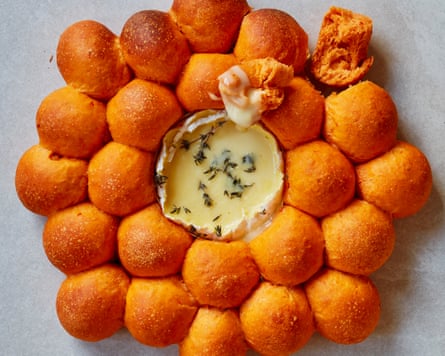
If you cannot bear the thought of Christmas without camembert, fear not: it just needs to be thoroughly cooked. “Stud with garlic cloves and rosemary, bake into boiling and serve with grissini. It’s super Christmassy,” says Roux.
Cocktails
Again, this is not something I’d clocked pre-pregnancy but many bars assume non-drinkers will want iced tea or spritzes. It’s winter. I want something strong and warming, not summery and full of ice. Step forward the no-groni, or faux-groni, or whatever you call a trinity of non-alc gin, non-alc vermouth and non-alc Campari. What it can’t deliver on booze, it can deliver on punchy flavours, and the look and feel of the real deal. Monica Berg of Tayēr + Elementary in London recommends Amàrico Rosso as the replacement for vermouth; in The New Bar, a zero-alcohol bar in San Francisco, they suggest Lyre’s Aperitif Rosso. Sanbitter or Crodino are like Campari, but they’re sparkling so you’d be veering into negroni sbagliato terrirory; better to use Aecorn bitter, Lyre’s Italian Orange or Monin Bitter Syrup if you can find it. As for 0% gin, I favour Tanqueray.
Not everyone is a negroni fan. The best non-alcoholic cocktail I’ve tried this year, hands down, is the pineapple picante from El Bar de Cavita, a subterranean Mexican bar and mezcaleria in London’s Marylebone. Limited experience has taught me the spicer the drink, the less noticeable the lack of alcohol, and this gratifyingly simple recipe really delivers. For one, it’s 50ml pineapple juice, shaken with 20ml each of lime juice, agave syrup and Crossip Blazing Pineapple and two slices of jalapeno, says founder and chef Adriana Cavita.
Though I initially dismissed Botivo as a summer drink, several cocktails have proved otherwise. At Barbarella in Canary Wharf, I enjoyed it in a white negroni instead of Suze, and I’ve even made their clove sour at home – though instead of the ginger clove tea, I used Mother Root. Mother Root is this fiery, gingery aperitif created by a woman who worked in wine and wanted something just as complex to drink while pregnant. It has been recommended to me by almost every mum-to-be I know, and for good reason. Being gingery and spicy, it’s wintery by default, and it adds kick to mocktails (I like their clementine coast and clouds and honey). It’s not cheap, though (none of these special alc-free drinks are) so if you’re the only one on the mocktails, you might want to buy pre-mixed. I like Black Lines non-alcoholic Shirley Temple. It’s fun, it’s fizzy, it’s laced with blood orange, ginger and bitters, and by the time you’ve placed a fun glace cherry on top everyone will be clamouring for a sip.
Baileys
I have nothing. They have nothing. Just think how sweet it will taste next Chrismas.