.png) 2 months ago
67
2 months ago
67
If you are trying to incorporate more beans and pulses into your diet, as I am, then this robust, one-pot feast, which food writer Edite Vieira describes as “a marvellous standby of the Portuguese kitchen”, is one to bear in mind. Though each region has its own variations, “basically”, she explains, “feijoada is a rich bean stew with pork and sausages”. The Brazilian version, often cited as that country’s national dish, is the product of the West African “love of beans”, according to the Oxford Companion to Food, with some suggesting that it’s a South American creation that travelled to Europe along with returning colonisers. Others insist with equal fervour that the dish was “born in the north of Portugal, and imported and adapted to what was available in Brazil”. Like so many such homely favourites, its precise history will probably ever remain a mystery; what’s important is that it’s simple to prepare, easy to adapt according to taste and budget, and very satisfying.

The beans
Unlike in Brazil, where black beans rule the roost, there’s no apparent consensus on the best variety here. David Leite, whose family hails from the Azores, uses white beans, Vieira butter or kidney beans in her book The Taste of Portugal, Leandro Carreira’s Portugal: the Cookbook calls for butter beans, while chef Nuno Mendes writes in Lisboeta that he likes to use “a combination of butter beans, red kidney beans and cannellini”. Though my testers, to my slight surprise, show a strong preference for the sweet, earthy kidney bean, go with whichever you prefer – and, most importantly, whichever look the freshest.
I say this because it’s increasingly hard to find decent dried beans and pulses in British supermarkets – the bag of butter beans I buy are cracked and several remain wizened and wrinkly even after soaking. Whether they’re not stocking them because we’re not cooking them, or vice versa, is an argument for another day, but if you don’t have a good source locally (a place with a high turnover of beans is usually a good bet), some truly excellent varieties are available online. For this reason, much as we all enjoy Mendes’ dish, I wouldn’t advise mixing beans, because they cook at such different rates that one is sure to end up mushy – you could, of course, cook them separately, but that’s a level of faff I can’t recommend unless you’re very committed.

Vieira and Carreira flavour their beans with the classic clove-studded onion, while Mendes opts for shallot, carrot, celery, garlic and bay – I’m going to use some of those ingredients in the finished stew, though, so I’ve confined myself to the onion, clove and bay leaf, and left out their lard or olive oil in favour of Mendes’ pork belly, which should do much the same job.
Márcia of the Plant Based Portuguese website uses tinned beans (kidney or white) and simmers them with aromatics. Though this won’t give you the same depth of flavour, it still makes for a delicious and substantially quicker stew. If you’d prefer to use them in the recipe below, leave out the pork belly (or substitute it for chunky bacon lardons and them alongside the chorizo), then add the beans and their liquid to the pan with the sauteed vegetables and tomatoes and simmer for 20 minutes or so before adding the cabbage, chorizo and black pudding. You’re unlikely to get as much cooking liquid from the tins, however, so Márcia suggests topping up the pan with vegetable stock spiked with white wine.
The meat
Márcia, of course, does not use meat (she substitutes tempeh soaked in soy sauce, garlic and paprika, plus optional vegan chorizo, which are two decent choices), but, to be frank, if you don’t eat animal products (and aren’t Portuguese and therefore invested in this dish in particular), there are better choices of bean stew out there. Feijoada is really all about the meat, even if you don’t use a lot of it. This is one of those agreeable dishes into which you can chuck just about anything, as long as it’s pig-shaped. Everyone includes chouriço, the Portuguese equivalent of its better-known Spanish cousin that tends to be lighter on the paprika and heavier on the garlic and wine or vinegar. I get mine from a Portuguese grocer in south London, but you can buy it online – or, if no Portuguese are there to witness the crime, substitute a chorizo, preferably a sweet, rather than spicy variety, if you have the option.

Morcela, or Portuguese blood sausage, is also common – dry cured, rather than fresh like Spanish morcilla, French boudin noir or our own black pudding, it’s more difficult to replace exactly (again, it can be purchased online), but as the flavour isn’t so different, you can slot in your own preferred sort (especially if, like the original, it’s smoked).
Leite and Vieira both use cubed streaky bacon, or pancetta, which, like the cured lard Carreira adds to proceedings, feels already covered by the pork belly I’ve cooked along with the beans, and with so much other cured meat in here, I’m going to stick with just the fresh stuff. As well as salted lard and farinheira (the description “smoked sausage” fails to prepare me adequately for this extremely unusual tangy flour pudding that’s said to have been developed by 16th-century Jews to help them pass as conversos, though, like many Portuguese foods, the modern version is full of pork fat), Carreira’s feijoada contains pork ribs, trotters and ears. If you’re a fan of such things, by all means cook them slowly in water until tender; you can then go on to use that water to cook the beans, if you wish, but be aware that, though they add textural interest, they also take ages and are certainly not necessary for success. (NB: Portuguese specialist shops often sell these things in a bundle for this very purpose.)

Vieira notes that “a larger amount or variety of meat can be added”, depending on your tastes, but more important than such specifics is how you choose to cook it. The pork belly adds richness to the beans and flavour to the stew (if you’re offered the ribs by the butcher, take them and add them to the pot, too). The cured meats are generally slow simmered as well, but, to my mind, this leaches all their flavour into the broth, leaving the sausages themselves bland and chewy. At the risk of horrifying generations of Portuguese cooks, I’m going to fry the chouriço first to render some of its fat into the pan, then add it before serving. If you’re using cured morçela, treat it the same way; if you have a softer, crumblier black pudding, however, I’d advise gently stirring it in with the fried chorizo at the end to avoid it crumbling into dust; it’s already cooked, after all, so it’s simply a question of reheating.
The aromatics and vegetables
Everyone starts their stew with onions and garlic, and Mendes, who describes his take as “fresher and more fragrant than the traditional one”, and Márcia both add carrots and celery, too, which does indeed help lighten what can be quite a heavy proposition, though I suspect they’re not strictly traditional. Tomatoes, however, whether in the form of Leite and Márcia’s puree or everyone else’s fresh ones, do seem to be, and give the broth a savoury depth. Unless you’re lucky enough to have very ripe, flavourful fruit on hand, use tinned.
Mendes, Leite and Márcia all season their dishes with paprika, a spice used less in Portugal than in neighbouring Spain, perhaps thanks to the national fondness for piri piri peppers, but which is welcome here as much for its rich colour as its mild heat. If you crave a bit more fire, Leite also pops in some dried chilli flakes, while a Portuguese poster on culinary forum egullet recommends including a Thai chilli in place of a malagueta pepper.

If you’re leaving out the meat, be generous with the olive oil, too; Márcia’s recipe is no doubt very healthy, but it’s all cooked without fat, so lacks the richness of the original, plus a drizzle of good oil is surely better for the body that all that pig fat, however tasty that is.
My testers and I do, however, like the cabbage that she and Mendes stir in, making this a one-pot meal, though you might prefer to have it on the side, particularly if you’re not planning to eat this all in one go. In fact, as Carreira points out, this is one of those dishes that really does taste better the next day.
Perfect Portuguese feijoada
Prep 25 min
Soak 8 hr+
Cook 2 hr+
Serves 4-6
300g dried beans (eg, butter, kidney, white)
2 medium onions
2 cloves
2 bay leaves
200g pork belly (or slightly more if it’s bone-in), or pancetta/slab bacon, cut into 1½cm-wide strips
Salt
200g cured chouriço, or chorizo (from a whole sausage, not a thinly sliced one),
150g morcela, or morcilla or black pudding (optional)
2 tbsp olive oil, or lard
1 large carrot, diced (optional)
1 celery stick, diced (optional)
2 garlic cloves, peeled and crushed
1 tsp sweet paprika (ie, not hot)
400g tinned chopped tomatoes, or 5 ripe plum tomatoes, diced
150g savoy cabbage, shredded (optional)
Extra-virgin olive oil, to serve
Soak the beans in plenty of cold water for at least eight hours, or overnight.

Drain the beans and put them in a large pan or casserole. Cut one of the onions in half, then cut one half in half again, push a clove into each quarter-onion and put in the bean pan.
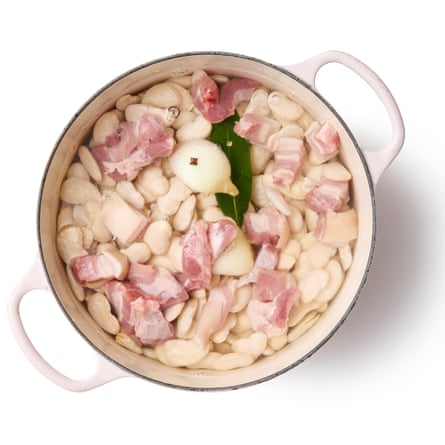
Add the bay leaves and pork belly, then cover with cold water, season lightly with salt and bring to a boil.
Skim, turn down the heat and simmer gently, keeping the pan topped up with water, until the beans are tender (softened but not falling apart). How long this takes will depend on the type and age of the beans, but reckon on at least an hour, and probably longer for butter beans, in particular. The pork doesn’t need to be soft at this point.

Dice the remaining onion and a half and cut the chorizo into chunks. If using cured morçela (ie, a hard cured blood sausage), cut that similarly (but if using black pudding, remove the skin, if necessary, then slice and set aside for now as you will cook that later).
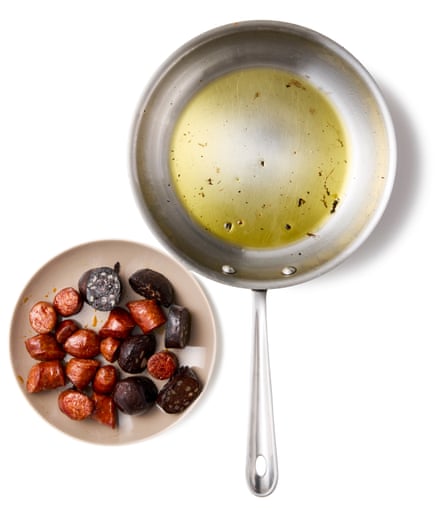
Put the oil in a wide pan on a medium-high heat, add the chouriço and morçela, if using, and saute until they begin to colour the oil. Carefully scoop out and set aside the fried sausages, leaving as much fat in the pan as possible, and turn down the heat to medium-low.

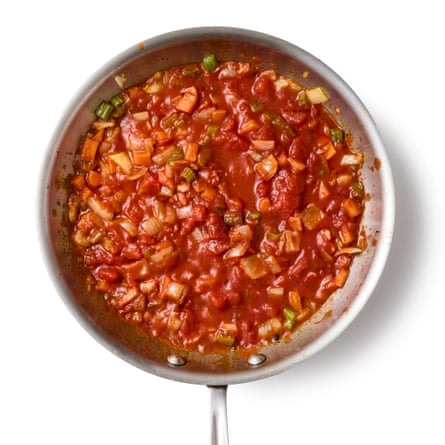
Fry the onion, carrot and celery, if using, in the hot oil, until soft, then stir in the garlic and paprika and fry for another minute. Stir in the tomatoes, and fry until most of their liquid has evaporated.
Once the beans are ready, drain them, retaining the cooking water but discarding the onion quarters and bay leaves.
Add the beans and pork to the vegetable pan, then pour over enough bean liquor to cover (keep any excess for now) and bring to a simmer.
Turn down the heat, partially cover the pan and leave to simmer gently, topping up with more bean liquor as necessary, until the pork is very tender.
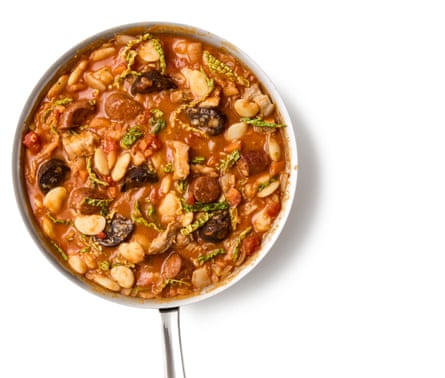
If you are using black pudding, now is the time to add it to the stew: poach gently for five minutes, then stir in the reserved fried chouriço (and morçela) and the cabbage, and cook for another few minutes, to wilt the cabbage.
Taste for seasoning, then serve with rice or bread and drizzled with extra-virgin olive oil.
-
Feijoada: do you prefer the Portuguese or Brazilian versions (and do you have an opinion on who should take the credit?), where serves the best, does it always need to contain meat, and how do you make yours?