.png) 2 months ago
51
2 months ago
51
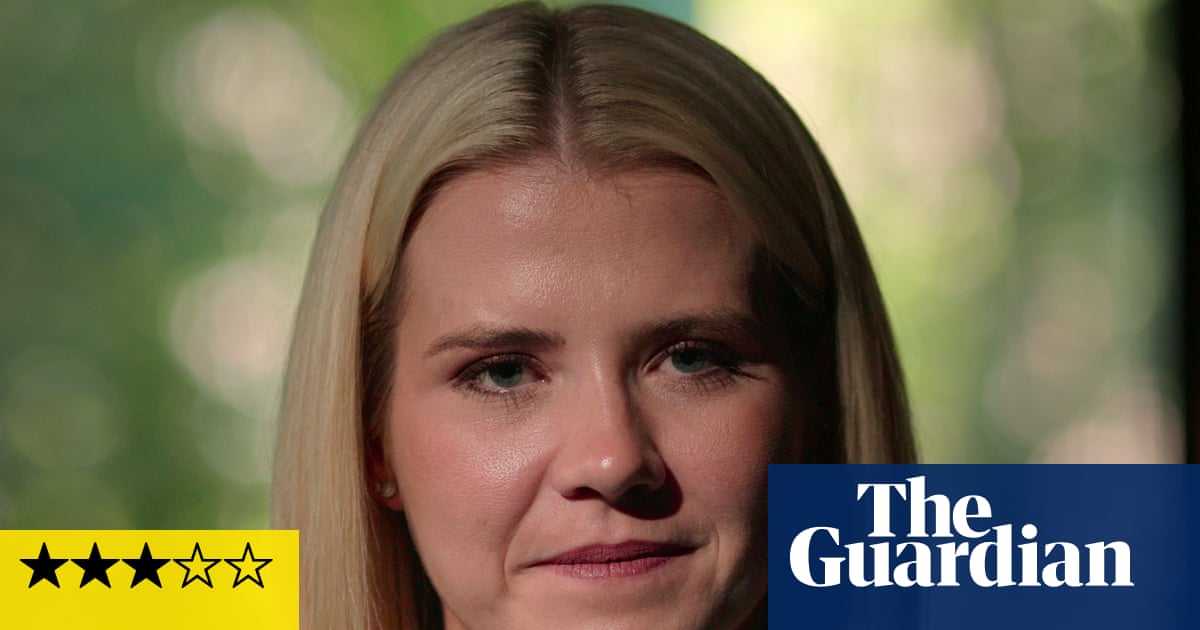
No one in pop has had a year like Addison Rae. She may not be the biggest star – that remains Taylor Swift – or even the most commercially successful breakout act. But the dreamy dance-pop haze of her debut album, Addison, made her into an artist’s artist, loved by the likes of Charli xcx and Lana Del Rey – the leftfield pop acts who paved the way for someone like her. Like a pre-Brat Charli, or perhaps Sky Ferreira, the 25-year-old is the pop connoisseur’s choice, justly earning comparisons to Del Rey, her fellow Louisiana girl Britney Spears and Ray of Light-era Madonna, while knowing her way around her R&B and Jersey club. She’s up for best new artist at next year’s Grammy awards – and with Addison and its knowingly anaesthetised single Headphones On placing in the Guardian’s top five albums and tracks of 2025 respectively, she’s our artist of the year.
So it’s crazy to flick back just two years to when Rae wasn’t just a flop, but a punchline. In 2023, she released her debut single Obsessed, a perfectly average Benny Blanco-produced single that attracted disproportionate hatred because Rae was then just a TikTok star whose breezy dance videos had made her the platform’s fifth most-followed figure. The song flopped. Five months later came the AR EP: featuring a Charli guest verse – she asked to feature on a leaked demo that she loved – it made Rae a cult favourite. Last summer, she returned the favour, guesting on a remix of Charli’s Von Dutch: “While you’re sitting in your dad’s basement … Got a lot to say about my debut!” Rae taunted.
Now, she says, she’s relieved Obsessed didn’t work out. “I wasn’t ready to stand in front of people and say what I say as concisely and straightforwardly as I am now. I’ve grown up so much in the past few years. Life happens to you at such a quick rate once you start realising how in the driver’s seat you actually are.”

She also has a compelling theory about why it took her a while to get here: earlier this year, she smartly posited that “taste is a luxury” – that when you’re trying to escape your circumstances, as the Lafayette girl born Addison Rae Easterling was, you’ll do whatever it takes to get out, rather than wait around for people to understand your truest self. (A playlist she made in 2021 featured tATu, the Cars and Sophie.) Hence dancing “in a way that the most people possible could understand” – the hypnotic, semaphore-like portrait mode style that TikTok made indelible. As soon as she got a talent manager, she asked to train in songwriting and acting. “I used social media as a way to get more stability, to have the opportunity to actually pursue the things that I want,” she says.
Released in June, Addison tracks the velocity of her six-year rise from dropout journalism student to first-gen TikTok superstar and mononymous icon: “My life moves faster than me / Can’t feel the ground beneath my feet,” she gasps on the trancey Times Like These. That speed has only intensified: it’s early December and Rae is calling from her Los Angeles home. She’s sometimes endearingly garrulous, but also sits in the Venn crossover where southern charm meets expensive media training. Her publicist and two managers are on mute, and she keeps her camera off. “I just look a little insane,” she says. “I’m so discombobulated. I got back from Sweden a day and a half ago and I’m just like, wrecked. I got my hair done – oh my gosh, my roots – then I had the Variety thing and a shoot.”
The “Variety thing” was the magazine’s annual Hitmakers Brunch, where Rae and her producers and co-writers, Elvira Anderfjärd and Luka Kloser of Max Martin’s Stockholm-based MXM stable, received the Future is Female award. Having three women in charge of a major-label pop album is basically unprecedented: a 2025 report found that a pitiful 5.9% of production credits belonged to women, down from 6.5% in 2023. “Luka and Elvira are two of the most incredibly talented women, in their 20s, in a space full of men,” Rae says. “As much as they’ve told me they feel like I took a chance on them, I feel like they took a chance on me. I can’t believe we made the album with just the three of us in a room. I try to downplay it, because I never want to force that idea into people’s faces. But I really feel like it is something so special.”
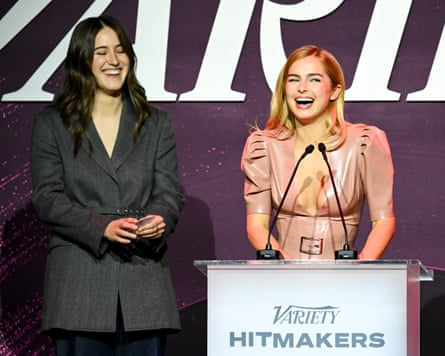
They wrote last year’s breakout single Diet Pepsi – think falsetto Lana, synths hissing like hot springs – the first day they met. Traditionally, aspiring female stars have been shoved in writing rooms filled with strangers. Writing the song, says Rae, “would never have happened had it not felt like such an accepting and safe space. That sometimes can’t be achieved when there’s an influx of people in the room that you don’t know, or maybe feel intimidated by or uncomfortable with.”
Famously, Rae went into her first meeting with Columbia Records with a folder containing her vision for her debut album – and not a note of music. You must be good at selling yourself, I tell her, and she laughs. She’s flicking through the folder as we speak, and says its contents ended up being “shockingly present” on the album. “I had photos of myself when I was little in pageants; one of me as a little girl of one year old, but I have a crown on. I always want to go back to this childlike inspiration and fulfil those dreams and goals and ideas.”
Recent pop lyrics have been heavily laden with lore and thinly veiled swipes at rivals, making the direct writing on Addison unusually refreshing. Rae sings of luxury, pleasure, fashion and fame keeping sadness at bay. You might call it superficial, but her unapologetic mindset reflects how many people her age feel when short-term highs can mollify a dire lack of long-term security. She also knows how voyeuristically appealing glamour is: “You got a front row seat and I / I got a taste of the glamorous life,” she sings on Fame Is a Gun.
“I am a very protective person when it comes to my life, and I don’t like it when people take things out of context,” she says of her straightforward style. “I want to write in a way that is direct and honest and clear, and leaves little room for misinterpretation, because I just don’t believe that my story or the things I want to say deserve to be treated that way.”
I read her something that the Washington Post wrote when they named Addison album of the year: “Why does this woman sound so alone?” “That is so interesting, I actually want to see that,” she says, typing in the newspaper’s URL before being surprised to hit the paywall: “I thought I was totally paying for that!” She gets why listeners would interpret it that way. “The album was [from] a very lonely perspective. I wanted to say it on my own and to communicate in a way that felt like I was speaking for myself. Life is lonely, and there’s something really powerful about taking that into your own hands.” That’s one of the most captivating aspects of the record, I suggest: the steeliness of her self-reliant perspective versus the enveloping softness of its sound. “That means a lot,” she says. “I am an introspective person and I love to look inside and understand why I feel the way I do. I think that is being alone in a very beautiful way, in a way that honours the stories I want to tell and the way I want to tell them.”
It’s immediately clear when you get Addison on something she’s less keen to share. She’s fairly guarded when I ask about whether being a sexual person, as she recently described herself, was challenging when she attended religious schools in Louisiana, or if she had to unlearn anything she was taught there. “I was never someone who was necessarily a rule follower,” she says. “If anything, staying in line was more of a way to avoid conflict.” She talks at slightly filibustering length about always wanting to understand why different people had different beliefs, and credits moving to California with showing her “so many ways of experiencing life that I was not questioning or I was so unaware of when I was living back home”.
Having control over her expression is one reason Rae thought touring wasn’t for her. Until her own debut tour this year, she had made only guest live appearances, including with Charli xcx (“she taught me so much and believed in me”) – and experimental producer Arca, who remixed her heady song Aquamarine. In July, she supported and guested with Lana Del Rey over two nights at Wembley. Their duet on Diet Pepsi provoked total delirium. “It was really, really insane,” she says. Performing the song alone on the second date, she realised she was doing “something that I love very fearlessly – not carelessly, but freely. I really felt that click. As planned and perfect as you want everything to be, there’s something so magical about surrendering.”
Rae’s own tour started in Ireland in August, to wild acclaim. Her staging was inspired by Alice in Wonderland and the Wizard of Oz, “this essence of unfamiliarity”, she says – though the abs-out choreo was pure Slave 4 U Britney and the million dollar bills with her face on, shot from confetti canons, very Richard Prince. (“It is deeply fun stuff,” wrote the Guardian’s Daniel Dylan Wray.) She could have sold out much bigger rooms. “I wanted to give myself grace and patience in finding what my purpose is on the stage,” she says, though she was unnerved by these smaller theatre venues not having big screens – another curatorial tool. Without them, fans were “really forced to look at the stage and every single moment, which I thought was very vulnerable”. It turned out she loved it. “You could see every transition, every breath. It even further takes away this sense of control, forcing myself to face the uncomfortability of that.”
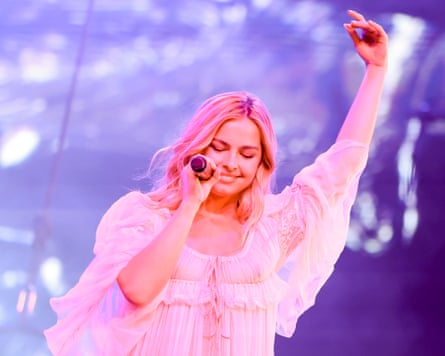
It’s both surprising and understandable to hear how much Rae obsesses over control. Her appeal comes from her unaffected, sweetly giddy persona: during her Variety awards speech, she appeared genuinely breathless with excitement. She is also one of several pop stars who has put the fun back in fame after several years of musicians stressing how painful it is, the newly minted insider making a gasp-face at the thrill of it all on the red carpet. She treats celebrity as part of her craft and is open about craving it: “Have you ever dreamt of being seen? / Not by someone, more like in a magazine,” she sings on High Fashion (winningly, also the song she has listened to the most this year). “I enjoy fame,” she says plainly. “I think fame is very exposing and raw, and it puts you in a position that not everyone gets to experience. I enjoy the luxury of it all, though of course there is a price you pay.”
That price is becoming an object of wild speculation. Her TikTok success led her to join the Hype House, an LA mansion where she and other platform stars, including Ordinary singer Alex Warren, lived and made content – and spawned endless gossip. Her parents, twice married and twice divorced from each other, became social media personalities and generated a lot of messy headlines. (“Wish my mom and dad could’ve been in love,” she sings on Headphones On, a rare moment of vulnerability.) Footage of her introducing herself to Donald Trump at a UFC fight in 2021 attracted allegations that she was a supporter, which she denied (she spoke out in support of immigrants during heightened ICE raids this summer). There is a lot of crazy commentary about her online, and finding her feet as a pop star has been an exercise in reclaiming and relinquishing control. “There’s a very magical space in between those two things that you can always strive to accomplish,” she says.
Rae’s new year’s resolution, she says, “is to share less. I’ve actually been thinking about this so much. No one needs to know anything!” She laughs. “Obviously I love to talk and to share, and I’ve done a great deal of that on this call already, but I think the less you share, the more in control you are.” As for the rest of 2026, although she just got back from writing in Sweden, there’s no immediate plan to follow up Addison. “When something’s ready and done, I want to put it out as soon as possible,” she says.
Going back to her maxim about taste as a luxury, this year she found a fanbase ecstatic at the prospect of a pop star who loves both Britney and Burial. She knows she can go further next time. “I trust that the people who indulge in my artistry treat it with kindness and acceptance and love and understanding, in a way that maybe I didn’t before,” she says. Other people won’t, she adds, “and that’s honestly the dream, that I’m never fully understood. If that ever were to change, I think it would be quite boring actually.”