.png) 2 months ago
52
2 months ago
52
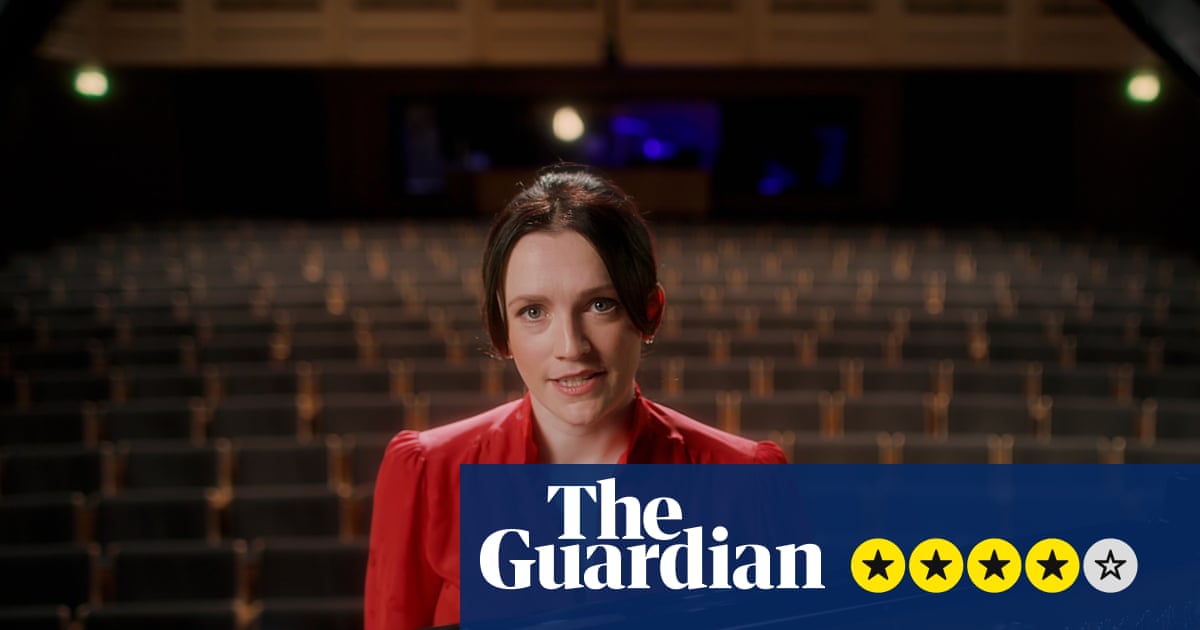
Film-making effects change. Director Rachel Dretzin, a former investigative journalist for Frontline, will testify to that.
“These films that I’m making,” says Dretzin, “that other documentarians are making, are often more effective than the legal system at effecting change; psychological change and also sometimes systemic and criminal change.”
But the impact film-making has in Trust Me: The False Prophet feels more immediate. The riveting four-part series follows a pair of documentary film-makers, turned FBI informants, who helped take down Samuel Bateman, a polygamous Mormon cult leader currently serving a 50-year sentence for luring minors into criminal sex acts.
Cult expert Christine Marie and her husband, Tolga Katas, embedded themselves among Utah’s Fundamentalist Church of Jesus Christ of Latter-day Saints (FLDS) community. They earned the trust of typically guarded followers, and were eventually invited into Bateman’s home, where he presided over 20 “wives”, many of them underage.
Bateman’s so-called wives were (and some still are) so heavily indoctrinated that they believed their spiritual husband was a prophet, a gateway to heaven and the heir apparent to Warren Jeffs. The latter is the notorious FLDS leader whose 2007 imprisonment for similarly abhorrent sex crimes left a vacuum Bateman was eager to fill.
The incriminating footage Marie and Katas shot, along with the witnesses they discreetly had a hand in turning, were essential to the FBI’s case against Bateman and other men charged with the crimes. That footage, and some of those compelling and heartfelt witnesses, also appear in Trust Me, a standout true crime series that transcends the genre’s typical sensationalism because it comes by its chilling revelations and white-knuckle thrills thoughtfully and honestly.
“I had at my fingertips some extraordinary material to work with,” Dretzin tells the Guardian on a video call. We’re discussing the Donnie Brasco-like story laid out before her, where moles walk an emotional tightrope, deceiving the very people they’re trying to protect, while working alongside a legal system with limited avenues into this fiercely insular community. “It had the elements of a thriller.”
Dretzin was already well-equipped to tackle the dense and delicate material. She navigated this terrain before in the Netflix docuseries Keep Sweet: Prey and Obey, where she was working on the ground in Utah’s FLDS community to weave together the story around Warren Jeffs’s crimes.
Trust Me is a sequel of sorts, or rather another chapter, as Dretzin prefers to call it. But this time she’s not just working with archival footage, witness testimony and after-the-fact talking head interviews. She’s got Marie and Katas’s on-the-ground, eye-opening footage of an unsuspecting Bateman, who often comes off as a bumbling and pathetically narcissistic figure. He preens for the camera, eagerly poses on his motorcycle and hatches preposterous schemes; like luring the Queen of England into being one of his wives with a music video that he convinces Marie and Katas to direct.
“One of the things that I relished the most was the comic relief of this guy,” says Dretzin, not discounting how harmful Bateman was. “It’s hard to believe somebody who’s such a terrible perpetrator of such terrible crimes is also this absurd character. But of course, he’s not the only one out there who embodies that tension.”
The footage doesn’t just feature Bateman, but also the young manipulated “wives” who he commands, who Marie and Katas befriended. According to Dretzin, the duo trusted her with the material because of her familiarity with FLDS culture after making Keep Sweet, and her sensitivity towards victims who naively defend the very culture and culprits that prey on them.
Marie and Katas couldn’t make the documentary themselves, of course, because the FBI informants were too central to the story. So instead, they lead what is ostensibly a documentary within a documentary, a probing set-up that has us not just witnessing crimes, but also how the crimes are witnessed.
Trust Me is constantly taking us behind the scenes as Marie and Katas plot and stage their shoots and interviews with Bateman and the girls, under the guise of making a documentary that will flatter the FLDS cause. There’s a meta-quality to these moments, folding the whole documentary apparatus into its narrative, and provoking questions about the form and the ethics around it.
“This series is about betrayal and trust, which are in many ways at the heart of documentary film-making,” says Dretzin. “Sometimes you build trust with people who ultimately don’t control the story you’re going to tell.

“Christine is in many ways a proxy for the audience – as she learns about the story, we’re learning about the story – but also for me as a film-maker. This film within a film, this question about witnessing, the ethics of witnessing, all of it was very alive.
“I understand a lot of what Christine was going through when she says: ‘I have to betray them to save them. I have to play this dual role. I have to sit here and pretend that I agree with everything [Bateman’s] doing in order to ultimately bring this case to justice’ … As a documentary film-maker these are issues that I wrestle with personally all the time.”
Marie is a colourful personality, a former Ms Michigan, escape artist and ventriloquist. You might initially suspect her of being a bit self-aggrandizing, perhaps only because that’s what documentary makers who insert themselves into their own films tend to be. But Marie’s conviction slowly reveals itself, as does her past life as a Mormon, which weighs heavily on her refusal, as Dretzin puts it, to look away as young women are exploited.
There are other compelling voices slowly emerging throughout Trust Me, like Julia, a mother who catches on to Marie’s ruse and becomes a pivotal and heartbreaking witness at risk of losing access to her own daughters. And then there’s Naomi, a young woman who at one point the authorities dub the ringleader among Bateman’s “wives”.
Naomi, or Nomz as she’s called, is the one who will catch your eye in every scene, because hers are ever watchful and calculating, the furthest from naive. According to her aunt Carole, who defected from the FLDS, it took years of aggressive manipulation, by the men Naomi trusted as a child, to finally break down any resistance to marrying Bateman and command her unwavering commitment to this predatory belief system that defines her life. In the end, it’s Naomi who is an even more captivating and unnerving presence than Bateman himself.
“We groomed our girls for this,” Carole says, in the series, her words landing like a gut punch while resonating far beyond the extreme circumstances within the FLDS. “We’re not teaching them to question authority. We’re not teaching them to be critical thinkers. We’re teaching ’em strict obedience.”
“This story, on many levels, has echoes in our ordinary lives and our political lives,” says Dretzin. “The idea that when an authority figure tells you something, it has an inherent rightness to it, it’s prevalent everywhere.
“This is the era of Trump. This is the era of a lot of realities that are closed systems in which you’re in an echo chamber, so truth becomes a very subjective thing,” says Dretzin. “Looking at these cultic systems, in which there’s a very closed system, no access to outside information, you’re just reinforcing each other, it’s touching something in us, culturally. We may not even be aware of why it speaks to us, but it speaks to us for a reason.”
-
Trust Me: The False Prophet is now available on Netflix