.png) 1 month ago
31
1 month ago
31
Fun fact: in the history of cinema, there has never been a single script. It is a pervasive myth that film-making requires “screenplays” – in fact, most scenes are made up on the spot. Performers simply do whatever comes to mind and hope the camera is perfectly positioned to capture it; they slap their colleagues or start to break-dance on a whim. Did you know that many actors are not even acting? The shock on their faces is real, because usually they have no idea what’s going to happen next.
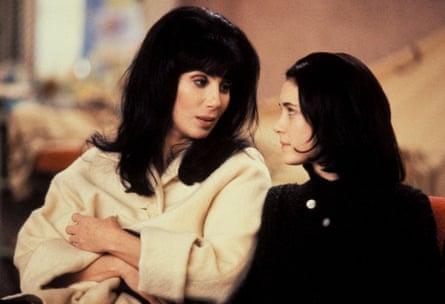
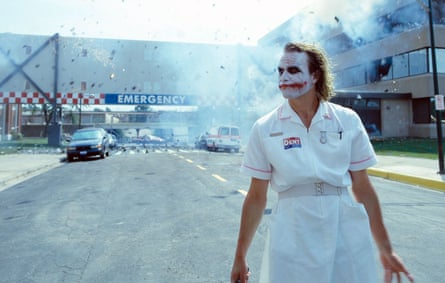
This is the world according to YouTube shorts, X posts and Instagram memes. Across the internet, content creators are falsely claiming that some of cinema’s most famous scenes were improvised. Al Pacino giving John Cazale the kiss of death in The Godfather II? Made up on the spot. Heath Ledger’s frustration at the delayed hospital explosion in The Dark Knight? His real reaction! And that mother-daughter fight in Mermaids? Winona Ryder “delivered a roast so lethal that Cher had to improvise the slap”.
The internet has always been home to misinformation, but these movie-related myths have ramped up in the past year. X users, at least, have noticed. “Hey did you know the actor didn’t actually mean to do that and the director didn’t actually plan that,” begins one exasperated parody tweet that was posted in January and has earned 37,000 likes. “The movie was actually just real this all really happened.”
In the improvised words of every character actor in an action movie: what is going on? Why is this particular flavour of lie spreading so rapidly across the internet? And should we start planning our outfits for media literacy’s funeral?
The accounts that lie about improvised movie scenes tend to have a lot in common – the word “history” often features in their X handles, while Instagrammers favour formulaic captions about how actors “turned a mistake into an iconic moment”. On YouTube, “improvised” movie clips regularly feature a pouty male content creator at the bottom, silently watching along with you. TikTokers employ narration and eerie music, telling their audiences things like: “This scene completely confused the cast, but they decided to go along with it!” and: “It was just so random that they decided to keep it!”
Sadly, none of the creators that regularly make these videos responded to an interview request – maybe because that request amounted to: “Hey, why are you lying on the internet?” Still, while we can’t hear their motivations first-hand, they’re not hard to guess.
When Elon Musk rebranded Twitter as X and enabled accounts to earn revenue, it encouraged some users to post “engagement bait” – quickly made, low-quality content that garners money-making likes, replies and shares. Meanwhile, one of the YouTubers who regularly creates videos about movie improvisations, Stone Face Memes, became the most-watched US creator in April 2025. Two months later, a similar account known as Eggdar Memes stole the crown. The data analysis website the Measure noted that these accounts bank on familiar films to “get people watching quickly”, adding that the “minimal production time” needed to make such videos allows creators to churn out large amounts of content for cash.
Even when commenters are savvy enough to point out that a dance routine was clearly tightly rehearsed or some seemingly spontaneous nudity was in the original book, they’re still helping creators to profit. And commenters are often more credulous than you would like to think. Under one TikTok video of a man watching the Friends scene in which Ross accidentally says the wrong name at the altar, a commenter has written: “It wasn’t even planned for him to say that. Davis [sic] Schwimmer kept accidentally saying the wrong name.”
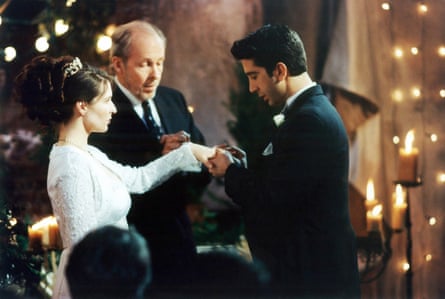
It has become common to hear people online bemoan that “media literacy is dead” – and comments such as this seem to hammer yet more nails in the coffin. Pray tell, how was this Friends episode – the finale to the show’s fourth season – intended to end? Did the writers decide the episode could just peter out? And why did no one step in to stop “Davis” saying the wrong name over and over again?
But there is a kernel of truth in the comment. The writers of Friends came up with the name “gaffe finale” after Schwimmer accidentally said the wrong name in a different scene. As much as we want to blame the internet, movie insiders have been spreading half-truths about spontaneous scenes for decades. “When we made Superbad, Jonah [Hill] insisted it was very heavily improvised,” the director, Judd Apatow, said in 2010. “Finally, we said: ‘Let’s look at the script and highlight every improvised line in the movie.’ It was so little, it was crazy.”
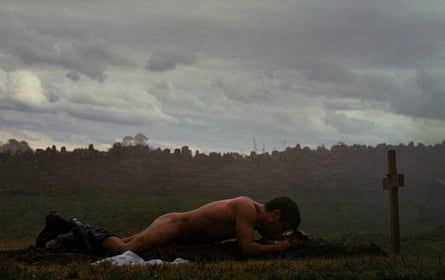
It’s not just moviemakers – we can’t let journalists off the hook. “Barry Keoghan reveals Saltburn grave sex scene was totally improvised,” reads an NME headline published in January 2024. In this context, “totally improvised” means the director, Emerald Fennell, had a conversation with the actor about a new idea the morning before shooting the scene.
In an environment where distorted stories like this spread easily, it is possible that some online content creators aren’t even lying deliberately – that they don’t know when they are spreading untruths. I’ve experienced this first-hand. In a YouTube short posted in October 2025, a creator claims that Jim Carrey forgot his lines while filming Lemony Snicket’s A Series of Unfortunate Events. Instead of stopping the shoot – the video claims – Carrey stayed in character and shouted: “Wait! Let me do that one more time, give me the line again,” thereby “turning the mistake into an iconic moment”.
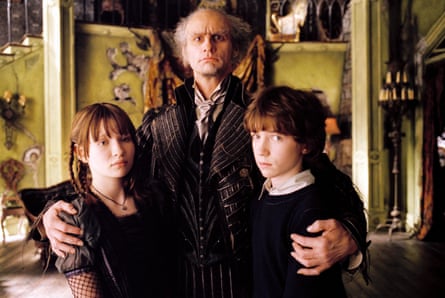
I felt a huge fizz of frustration when reading this – Carrey’s character in the film was a wannabe thespian and his baffling behaviour in this scene was a central part of his characterisation. But when I tried to debunk the claim, I couldn’t. The earliest source is a piece of IMDb trivia, but the original script isn’t available online and the director, Brad Silberling, said in the film’s DVD commentary that “about 80% of Jim’s material in the picture” resulted from early improvisation sessions. (Silberling did not reply to an interview request.) Then I discovered that, this year, the same scene and a similar caption was posted on the official Paramount TikTok account. Whatever the truth is, it’s clear that it doesn’t matter to many.
Audiences clearly crave these stories – but why? After all, isn’t a movie more impressive if it’s so well rehearsed that it seems real? Isn’t it better that an actor’s pained scream sounds authentic because they’re an elite professional, not because they stubbed their toe?
Perhaps it all stems from the myth of improvisation that arose around French film-makers such as Jean-Luc Godard in the middle of the 20th century: that while some critics saw improvisation as careless and even insulting to the audience, others started to valorise it. Marion Froger, an art history and cinema professor at McGill University in Canada, has written that detecting improvisation can allow audiences to “attain an intimacy” with actors and directors, enabling us to “feed our imaginary attachment to them”. In other words: we feel closer to Paul Rudd when we learn that he was really farting in This Is 40.
It is nice, as a viewer, to feel involved in a production, to know a behind-the-scenes secret or to be able to spot something others can’t. But – if you wanted to, and I’m sure many do – you could see this as a symptom of growing anti-intellectualism, with audiences valuing rule-breaking class clowns over meticulous, nerdy artisans. Neither idea tells the whole story; while this is a simple problem, it resists a simple explanation. The internet’s monetisation models incentivise the spread of nonsense, sure, but myth-making and film-making have always gone hand in hand.