.png) 2 months ago
50
2 months ago
50
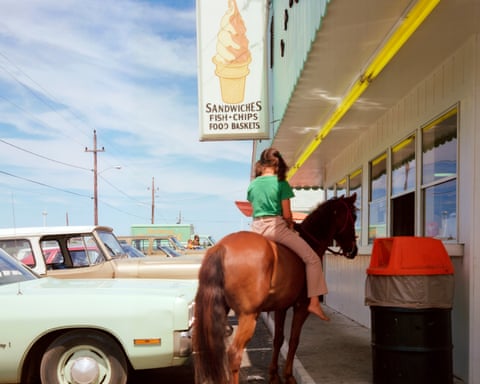
It could be the puff of steam from a manhole or a horse wandering into view – whatever the ‘moment’, the iconic US photographer has always had a camera in hand to capture it
‘That fleeting fraction of a second when something unexpected surprises you’ … Provincetown, 1976. All photos: Joel MeyerowitzSarah King
Tue 2 Jun 2026 08.00 CEST
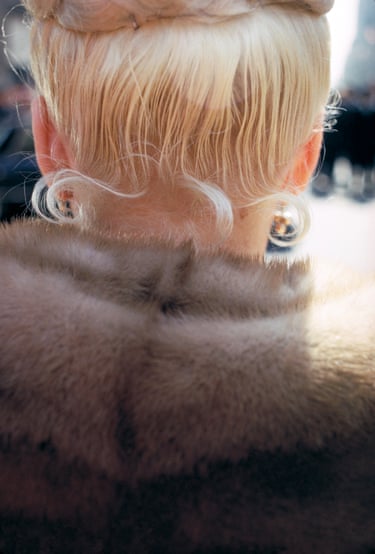
New York City, 1963
Photographic artist Joel Meyerowitz’s fourth solo exhibition at Huxley-Parlour in London brings together 25 works that span the breadth of his six decade-long career, examining the artist’s changing approach to photography and the shifts in his photographic voice. Joel Meyerowitz: Select Works, 1962-2019 runs at Huxley-Parlour, London from 5 June until 11 July. All quotes: Joel Meyerowitz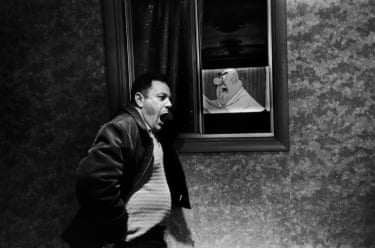
Man Cartoon Yawn, 1965
‘Giles Huxley-Parlour and I had an idea for an exhibition of photographs about “the moment”, that fleeting fraction of a second when something unexpected surprises you and – if you’re a photographer – the camera flies to your eye and you take it in while still not sure exactly what that something was. All of the works in this show have something of that unexpected quality about them, and many were drawn from deep within my archives and have never been seen before’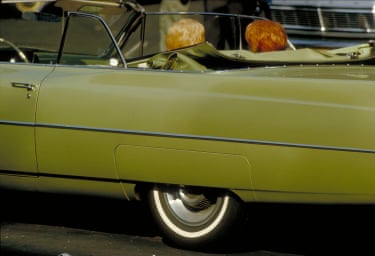
New York City, 1966
Meyerowitz’s photographs from the 1960s depicted the both the freneticism and inertia of New York’s streets. Visual matter is often multilayered within the photographer’s vision. The photographer’s alertness to phenomena, particularly those which he describes as ‘nearly invisible’, generates both a wit and a sensitivity to the world as it reveals itself to him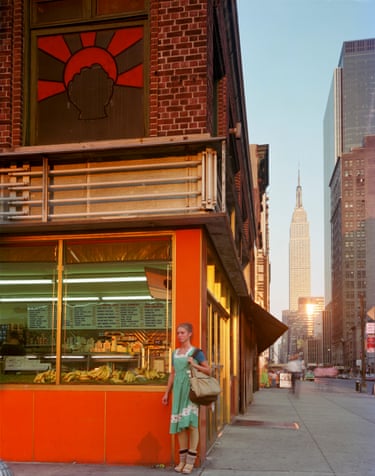
Young Dancer, Empire State Series, New York City, 1978
‘This is one of those pictures that has multiple layers. On the one hand, it’s simply a New York City corner with late afternoon sunlight on the Empire State Building. But the ballet dancer waits on the corner, next to a grocery store window with a crazy colour palette of orange on the outside. There are overripe bananas in the window, neon-green lights inside matching her green dress and the other greens seen down the street. Overhead, a crazy red sunburst and sets of naked florescent tubes hold a bit of the late afternoon light’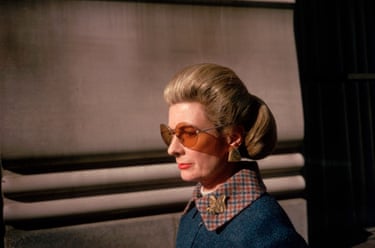
New York City, 1973
What Meyerowitz searched for in his explorations of the street were fleeting moments of harmony within the chaos, the same moments of unlikely clarity revealed in the music of Meyerowitz’s New York contemporaries Sun Ra, Pharoah Sanders and Miles Davis. There’s an instantaneity to these early photographs, attested to by slanting horizons and the candour of the people depicted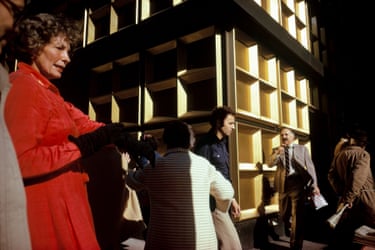
Gold Corner, New York City, 1975
‘Here we have a photograph with a lot of disconnected swirling activity set against a gilded and coffered wall – the kind that looks the worse for wear in the early years of its short life. From a photographer’s point of view, it was a great place to hang out, which I often did. The hard light, the glitter of plastic and gold, the intensity of that red outfit, none of it quite adding up, yet still expressing something, the something of the way life felt to me on that day in the 1970s in New York City. Ambiguity is a real asset in photographs’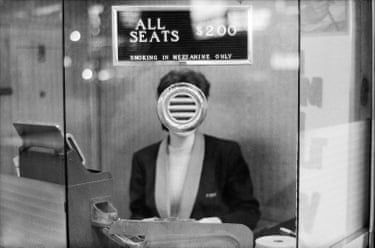
Times Square, New York City, 1963
‘A movie theatre ticket window, the faceless person who sells you your ticket in this instance really became faceless, and yet at the same time she became the real source of the surprise of this photograph. I was at the beginning of my life as a photographer and I felt the playfulness that came over me in the making of this photograph’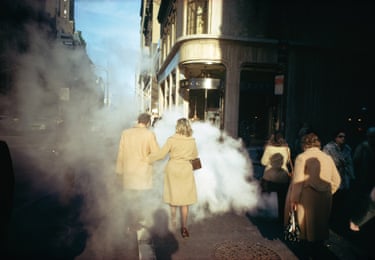
Camel Coats, New York City, 1975
‘What a surprise it was when a puff of steam exploded up and out of the manhole covers on 5th Avenue, a momentary backdrop for the scene we see here: two pairs of people all wearing the same colour camel-hair coats! It was an astonishing moment to witness, and if, like me, you carry a camera every day, these moments seem to happen often enough to ensure that carrying a camera is a life necessity’
New Jersey, 1966
Born in New York in 1938, Meyerowitz is widely acknowledged to be one of the first photographers – among others such as William Eggleston and Stephen Shore – to bring colour photography from the periphery to the centre of fine art photography. Historically, monochromatic photography was considered the only serious photographic medium, while colour was widely considered to be technically inferior and aesthetically limiting – occupying the realm of advertising campaigns, television and personal holiday photographs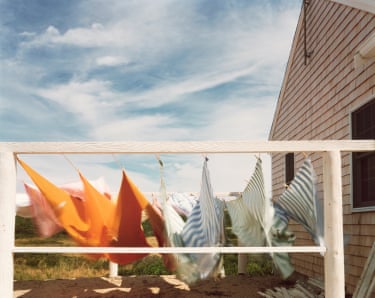
Laundry, Provincetown, Massachusetts, 1977
In his photobook Cape Light, published in 1978, Meyerowitz adopted a slower approach – with an 8x10-inch view camera, depicting undisturbed horizons and domestic interiors, showing colour and form. The work is characterised by its meditative qualities, its subtlety and its meticulously constructed composition. For example, the photographer explored the interplay between colour and wind in hanging laundry and how that interaction might be translated into a photograph. The jazz of the street has subsided here, replaced by something more symphonic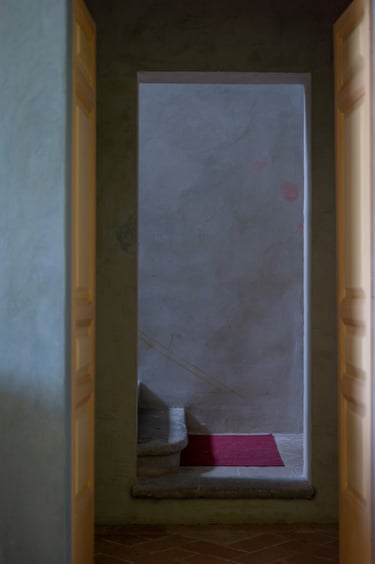
Doorway, Tuscany, 2010
Although the artist’s projects vary in tone, they often retain a certain tranquillity. But while much separates the various tones of Meyerowitz’s photographic voice, his sensitivity to the appearance of the world remains. Curiosity and wonder over the peculiarities of vision and the world itself cause the photographer to find in the near invisibility of habitual perception a strain of sublimity, and something that surprises him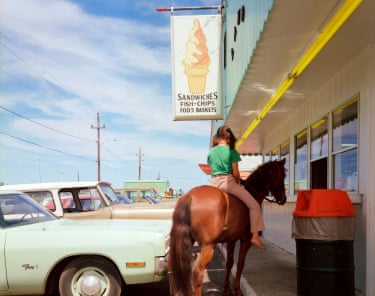
Provincetown, 1976
Meyerowitz draws from Robert Frost, particularly his 1939 essay The Figure of a Poem, in which the poet writes: ‘No surprise for the writer, no surprise for the reader. For me the initial delight is in the surprise of remembering something I didn’t know I knew’Explore more on these topics