.png) 1 month ago
44
1 month ago
44
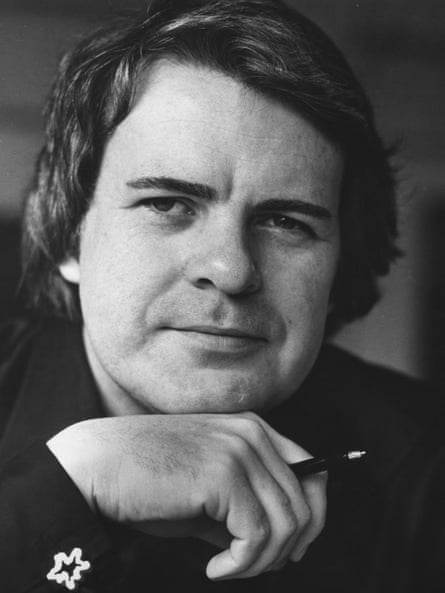
The writer Ian Kennedy Martin, who has died of pancreatic cancer aged 90, created one of British television’s most realistic, groundbreaking television police dramas. With action shot on the streets of London, the 1970s series The Sweeney featured screeching tyres, punch-ups, officers who could be as violent as the criminals, and lines such as: “Get yer trousers on – you’re nicked!”
It began as Regan, a 1974 story in the ITV Armchair Cinema series, starring John Thaw as Detective Inspector Jack Regan and Dennis Waterman as Detective Sergeant George Carter, members of the Flying Squad (known in cockney rhyming slang as Sweeney Todd), a Metropolitan police section tackling armed robbers.
Martin’s elder brother, Troy Kennedy Martin, had a decade earlier created Z Cars, which moved television’s depiction of the police on from the homely image presented by Dixon of Dock Green. But that portrayal of flawed officers in a modern world, along with its two Softly Softly spin-offs, seemed tame by the time Ian Kennedy Martin formulated a programme where knuckles are heard cracking and gunshots blast loudly.
He said Softly Softly: Task Force was “like a soap”, adding: “It just didn’t reflect what was going on in the police. At that time, drugs were becoming a big issue and armed robbery was the major crime in London. None of this was seen. It was all internecine rows at HQ and people talking about budgets. We needed two cops running on the streets.”
The Sweeney ran for four series, from 1975 to 1978, with two feature-film spin-offs. Complaints about the violence, bad language and rule-bending cops were just swatted away, at a time when the real-life Met was facing accusations of brutality and corruption.
Martin devised the part of Regan specially for his drinking buddy Thaw, having previously worked as script and story editor with him on the military police drama Redcap (1964-66).
However, Martin quit after the pilot, before the series went into production. His visualisation of a studio-based programme on videotape, with the emphasis on dialogue, placed him, he said, “at loggerheads” with that of the producer, Ted Childs, and the fledgling Euston Films, a division of the ITV company Thames Television. They wanted it shot on location on 16mm film, giving it a gritty, grainy look and faster pace.
“It was all about interpretation of the script,” Childs told me, “and it eventually came down to, ‘It’s me or him.’” Childs kept his job, while Trevor Preston, Ranald Graham, Roger Marshall and Martin’s brother were among those who scripted the series.
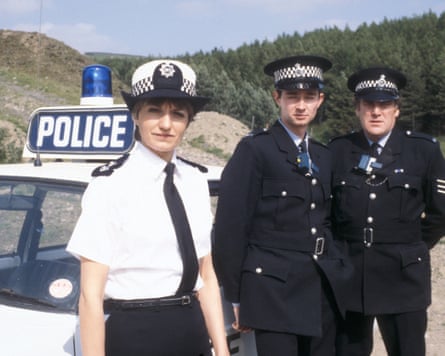
Martin firmly kept the action to a minimum when he later created Juliet Bravo (1980-85) for the BBC. Like The Gentle Touch on ITV, which beat it to the screen by several months, it was pioneering in featuring a female officer in the starring role.
The series was set in the fictional sleepy Lancashire town of Hartley, with Inspector Jean Darblay, played by Stephanie Turner, facing male prejudice after taking charge of its police station. The character was based on Superintendent Wynne Darwin, a real-life uniformed detective based outside Manchester, and, when Turner left, Anna Carteret fulfilled the same role, as Inspector Kate Longton.
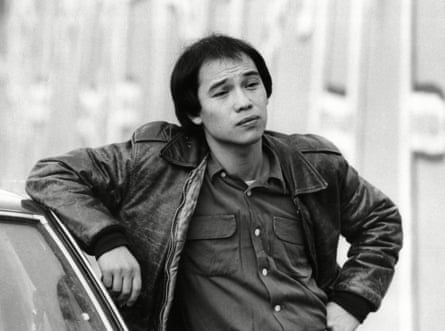
During its run, Martin’s third significant TV police drama, The Chinese Detective (1981-82), brought another dimension to the genre. David Yip played the maverick British Chinese officer Detective Sergeant Johnny Ho, a scruffy loner in London’s Docklands, and the issue this time was racism within the force.
Martin also left a legacy to the film world by dreaming up the initial idea for The Italian Job (1969), the heist caper starring Michael Caine and red, white and blue Mini Coopers. He scripted a play for the BBC about a robbery in Regent Street, London, involving a new computerised traffic system, but most TV drama was then studio-based, so it never went into production. Troy, aware of such a system in Turin, bought the story and rehashed it, set in Italy.
Ian was born in London, to Scottish parents of Irish ancestry, Francis Martin, a toolmaker and engineer, and Kathleen (nee Flanagan), a teacher, who died when he was 11. Both Ian and his brother, born Francis, had the middle name Troy - which Francis later used in his professional career.
In 1954, on leaving Finchley Catholic grammar school, Ian began a degree in history and political science at Trinity College, Dublin, but he admitted to being “kicked out” after immersing himself in the city’s theatres and spending time with writers such as JP Donleavy and Brendan Behan.
Encouraged by his brother’s early success, he scripted two television plays. Neither was produced, but in 1962 he joined the BBC’s writers’ pool for new talent, reading scripts and working with producers and script editors.
This led him to adapt Bridget Boland’s 1954 stage drama The Prisoner, set in a totalitarian state, for a 1963 BBC Sunday-Night Play. Then, he moved on to Redcap on ITV before becoming story editor on the channel’s shortlived rural soap opera Weavers Green (1966).
Having scripted a 1963 episode of The Saint, he concentrated on contributing episodes to other “production line” drama series such as The Troubleshooters (between 1966 and 1968), Parkin’s Patch (1969-70), Hadleigh (in 1971), The Onedin Line (in 1971) and Colditz (from 1972 to 1973).
Among his other television creations was King & Castle (1986), a drama with a light side, starring Derek Martin as a bent former police officer running a debt-collecting agency with a martial arts-proficient assistant played by Nigel Planer.
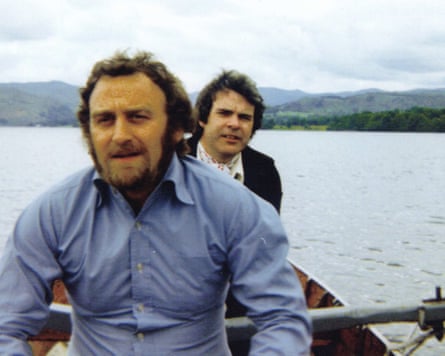
He continued as a writer-for-hire, scripting episodes of series such as Bergerac (in 1989), The Chief (in 1995) and The Knock (from 1996 to 1997), but a planned remake of The Sweeney in 1998 never made it to the screen.
Martin’s stage play The Berlin Hanover Express, a second world war drama about the issue of neutrality faced by Irish diplomats in Berlin, was premiered at Hampstead theatre in 2009. He also wrote more than half a dozen novels.
In 1970, Martin married Barbara Ohrbach, who survives him, along with their daughter, Lucy and son, Daniel, two grandsons, Joseph and Lucas, and his sister, Mo (Maureen).