.png) 2 months ago
52
2 months ago
52
As Britain approaches the 10th anniversary of its vote to leave the EU, the British are beginning to debate rejoining what they call Europe. But, as in most previous British debates about “Europe”, this is Europe with the Europe left out. The discussion is all about what would be best for Britain economically and the British politics of getting there. Little or no account is taken of what the rest of Europe thinks or cares about. The other day, the Treasury minister Lord Livermore became the first member of the government to publicly endorse rejoining the EU. “Of course,” he told the House of Lords, “the UK will re-enter the European Union because it’s absolutely in our national economic interest.” As if we had only to knock on the EU’s door and – abracadabra! – we would immediately be welcomed back in.
If you asked all sitting British MPs to say when the European Council is next meeting in Brussels, I doubt that more than a handful could give you the right answer. In fact, I wonder how many could immediately tell you what the European Council is. It’s instructive to look at the agenda for that top table gathering of the national leaders of the 27 EU member states, together with the union’s key institutional leaders. Between 6pm this Thursday and lunchtime on Friday, they hope to discuss Ukraine, the Middle East, the EU’s next seven-year budget, global economic challenges, European defence and security, migration and illicit drugs. So they have, to put it mildly, a lot on their plate.
If you follow European media, or listen to Germans talking about Europe with Poles, or Italians with Portuguese, our sceptred isle hardly features at all. On both sides of the Channel, “Europe” is again being construed as not including Britain. The only major exception is defence and security, where the British are still seen as playing an important role. Poland’s Oxford-educated and once-anglophile foreign minister, Radek Sikorski, now coldly describes the UK as a “security provider”.
As for countries wanting to join, the EU has no shortage of them. There are already nine acknowledged candidates for membership, including small frontrunner Montenegro and the very large Ukraine (UKR is more important than UK to Europe today). This August, Iceland is holding a referendum on whether to resume negotiations for membership. A debate has opened up again in wealthy Norway. And let’s be honest, there are some in the EU – a minority to be sure, but a significant minority – who would not welcome Britain back.
All countries think mainly about themselves, but if there were a World Cup for solipsism, the British would effortlessly carry off the trophy. A new BBC documentary revisiting the 2016 vote painfully reminds us of the poverty of the British European debate. Here, amid a procession of the scheming boys who gave us the biggest act of national self-harm in our recent history, we again meet Boris Johnson, his thoughts as disordered as his hair. He sums up the core issue thus: “You either want the country to be independent or you think that we should create a federal Europe.” Actually, the entire mainstream of continental European politics today is precisely about finding a middle way between those two extremes. On the most charitable interpretation, Johnson has learned nothing and forgotten nothing since his time as a Eurosceptic Brussels correspondent in the early 1990s.
If you look at how the world is likely to develop in the next 20 years – a world of competing great powers and empires, with a militarily aggressive Russia, an economically aggressive China and a United States that will never return to its exceptional post-1945 level of transatlantic commitment – it’s obvious that the best bet for a middle power such as Britain is to be part of a bigger grouping of countries that largely share the same interests and values. Tony Blair, when freshly minted as prime minister, once rather ludicrously declared: “Britain should be bigger!” Every other European country, starting with France and Germany, can tell you that this is how you become “bigger”. The strategic goal of British policy should therefore be for the UK to become a full member of what, by then, will be a different European Union. And, with all due modesty, a sober analysis suggests that it would be in the long-term interest of the EU as a whole to have, as one of its 30-plus members, a Britain whose settled will it was to be among them.
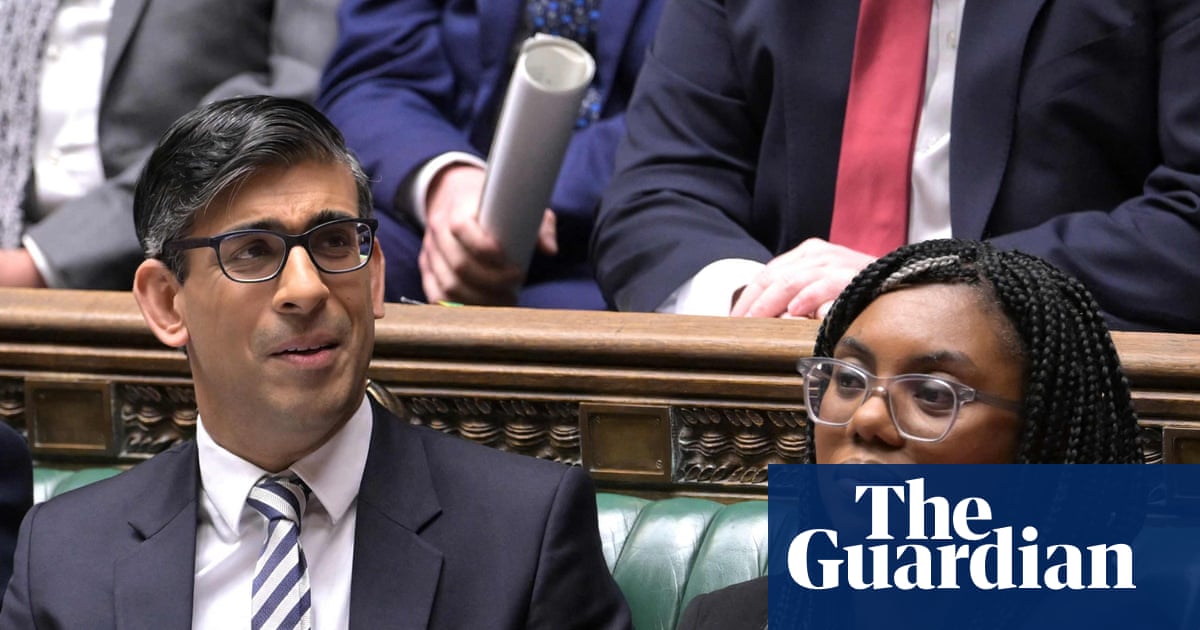
It will, however, take a marathon of democratic persuasion to get us there. That persuasion will be needed on both sides of the Channel. In British opinion polls, there’s already a steady majority in favour of rejoining the EU and an overwhelming majority for it among younger voters – 68% of those aged 18-34, according to Ipsos. So time will be working for Breturn. But the politics will still be complicated. The person most likely to succeed Keir Starmer as Labour prime minister this autumn is Andy Burnham, the mayor of Greater Manchester – if he wins the byelection this Thursday, the same day that the European Council convenes. He (or whoever succeeds Starmer) may still feel confined to negotiating within the party’s current red lines, which specify no return to the customs union, single market or freedom of movement. But the new government should immediately and boldly declare a much larger strategic ambition.
Labour should then fight the next election, due in 2029 at the latest, without any red lines, saying simply that it aims to achieve the relationship that will be best for Britain. Ideally, the entire emerging (very European-style) fragmented left-liberal block of Liberal Democrats, Labour, Greens and Scottish and Welsh nationalists would take that position. A lot is going to change in Europe over the next three years, and there may need to be some interim steps (membership of the single market, for example) in the next parliamentary term; but the democratic persuasion has to start now. In this dangerous post-American world, the best place for Britain is indeed “at the heart of Europe”, and the only way to be at the heart of Europe is to be a full member of the EU. The path is unknown, but the goal should be clear.
Yet every step will depend on the EU side, which holds most of the cards. So the British have also to understand where other Europeans are coming from, how their complicated union really works and what is, to put it bluntly, in it for them. And Britain’s elected representatives must learn to speak European, that unique multilingual language in which the advancement of national interest is subtly blended with the historically informed embrace of a shared European future. Is the current British political class capable of this? I hope it even more than I doubt it.
-
Timothy Garton Ash is a historian, political writer and Guardian columnist. His new book, Europe in 7½ Chapters, will be published this autumn