.png) 3 months ago
45
3 months ago
45
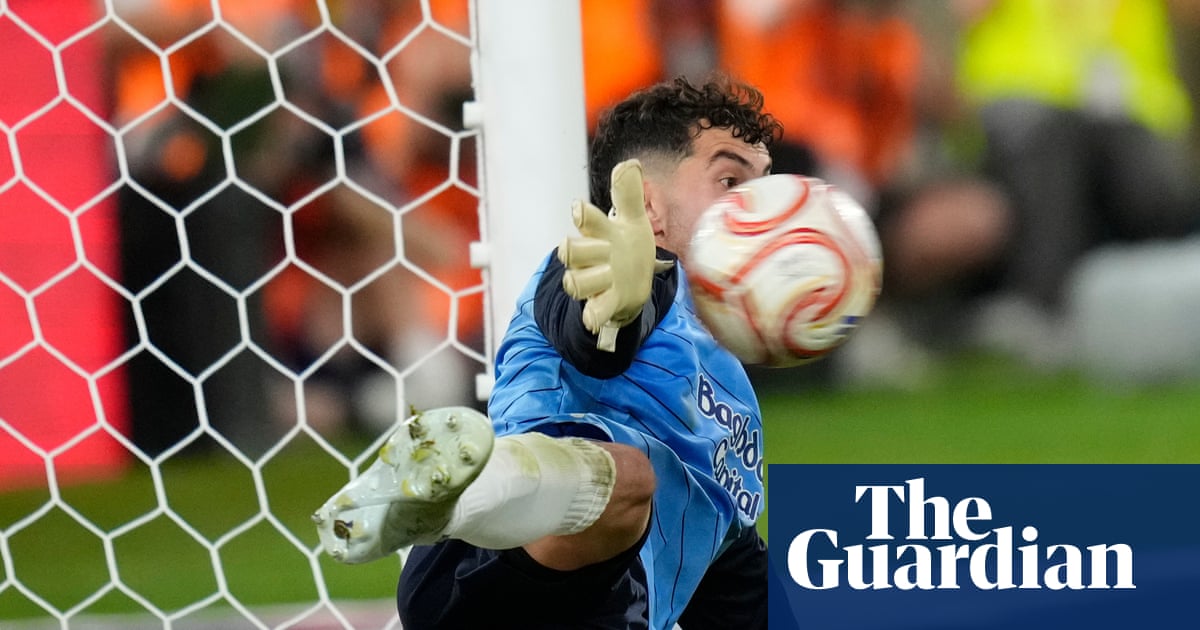
More than any other continental tournament, there is always a sense with the Africa Cup of Nations that it is a referendum on the continent’s football generally. Perhaps it’s because so many of the players are familiar to those who habitually watch the European leagues or the Champions League, but the question is less about individual quality of players – that is a given – than it is about organisation and structures. Somewhere in the background, perhaps, lurks Pelé’s notorious prediction, made in 1977, that an African team would win the World Cup by the end of the 20th century. Is a World Cup win for Africa any closer than it was half a century ago?
In Morocco at this year’s edition of the tournament, there has been an extra element: the country’s status as World Cup co-hosts with Spain and Portugal in 2030. What are facilities like? Is the infrastructure there? This question is readily answered: in terms of stadiums, pitches and hotels, Morocco is already well on the way to being able to stage the World Cup. All six cities hosting games at this Cup of Nations are candidates for 2030.
The stadiums in rural Rabat and Tangier are ready, with a new 115,000-capacity stadium to be built in Casablanca and renovation planned for the grounds in Agadir, Marrakech and Fez. There should be no qualms about any of them. The pitches have been uniformly excellent, despite unusually heavy rain, which may be one of the reasons for the predictability of this tournament so far (eight of Africa’s 10 highest-ranked sides made the quarter-finals).
The high-speed Al-Boraq rail service from Rabat to Tangier is exceptional and should be extended through Casablanca to Marrakech by 2030. The conventional trains are very good, though they would come under strain at a World Cup, and don’t yet reach as far south as Agadir. With internal flights limited, that is an obvious potential problem. Hotels have easily been able to cope with the influx of visitors for the Cup of Nations without absurd price increases, and Morocco has a developed tourist infrastructure. That may yet not be enough for the far greater stresses of a World Cup, but the foundations are there.
The biggest concern is access to the stadiums, with potentially dangerous crushes developing at games at the two smaller stadiums in Rabat and in Marrakech, where the stadium is located out of town with only one access road and no rail service. Even when it was just over half-full for Côte d’Ivoire’s last-16 win over Burkina Faso, there was chaos as fans tried to navigate the one road back towards the city centre.
The other question is both bigger and harder to answer. At the last World Cup, Morocco became the first African side to reach the semi-finals, finally breaking through the quarter-final ceiling achieved by Cameroon in 1990, Senegal in 2002 and Ghana in 2010. It’s never wise to read too much into the performance of one country at one tournament but, after years of the pyramid getting broader but not necessarily higher (seen in, for instance, the development of Cape Verde, Burkina Faso and Angola among others over the past couple of decades), it does feel that the continent’s elite are beginning to assert themselves once more.
That this version of Nigeria, who are playing with thrilling attacking verve, will not be at the World Cup (unless their appeal against the eligibility of certain DR Congo players succeeds and they then win the interconfederational play-offs) says a lot both about how chaotic their World Cup campaign was, but also about the quality of the teams who eliminated them: DRC and South Africa. Their bonus dispute at times feels like an infinite onion of ineptitude, with each day bringing a further layer of detail of who authorised what to whom and at what point, but the basic point is that players and coaches should be paid what they are due.
Short-termism still reigns: Sami Trabelsi has already paid for Tunisia’s last-16 exit with his job, and the expectation is that Vladimir Petković will pay a similar price for Algeria’s defeat to Nigeria. The Algerian reaction in general was disappointing, if not unfamiliar: flare-ups in the stands and in the tunnel, a mass berating of the match officials, and a fracas with Moroccan journalists in the mixed zone.
But quality on the pitch, in so far as it’s possible to determine in isolation, is improving. All four semi-finalists have had their moments. Senegal are still seeking a balance in midfield but have been comfortably good enough so far. Egypt, so cautious and inhibited over the past decade, are finally playing with self-belief and perhaps in the quarter-final found a way to get the best out of Mohamed Salah and Omar Marmoush. Nigeria’s attacking play, based around the passing of Alex Iwobi, the invention of Ademola Lookman and the aerial prowess of Victor Osimhen, has been exceptional. Morocco, while clearly feeling the pressure of expectation, looked in their quarter-final like the well-organised team that put Spain and Portugal out of the last World Cup.
Will any of the sides at this Cup of Nations reach the World Cup semi-final? Morocco and Senegal certainly have a chance, and with a fair wind it’s not impossible that Egypt or Algeria, perhaps Côte d’Ivoire, could win a couple of knockout games. The prognosis, generally, is positive.
-
This is an extract from Soccer with Jonathan Wilson, a weekly look from the Guardian US at the game in Europe and beyond. Subscribe for free here. Have a question for Jonathan? Email [email protected], and he’ll answer the best in a future edition.