.png) 2 months ago
48
2 months ago
48
The Israeli defence minister, Israel Katz, has said that Israeli troops would not withdraw from southern Lebanon, further complicating Iran peace talks as fighting in Lebanon continues to be an obstacle to permanent peace.
Speaking on stage in an interview in Tel Aviv, Katz said Israeli troops would remain in south Lebanon – echoing sentiments from the Israeli prime minister, Benjamin Netanyahu.
“The IDF is prepared … and we are not retreating. We announced that in any case we are not withdrawing, and as of this moment – and this is a political achievement – there is no American demand for Israel to withdraw from Lebanon,” Katz said.
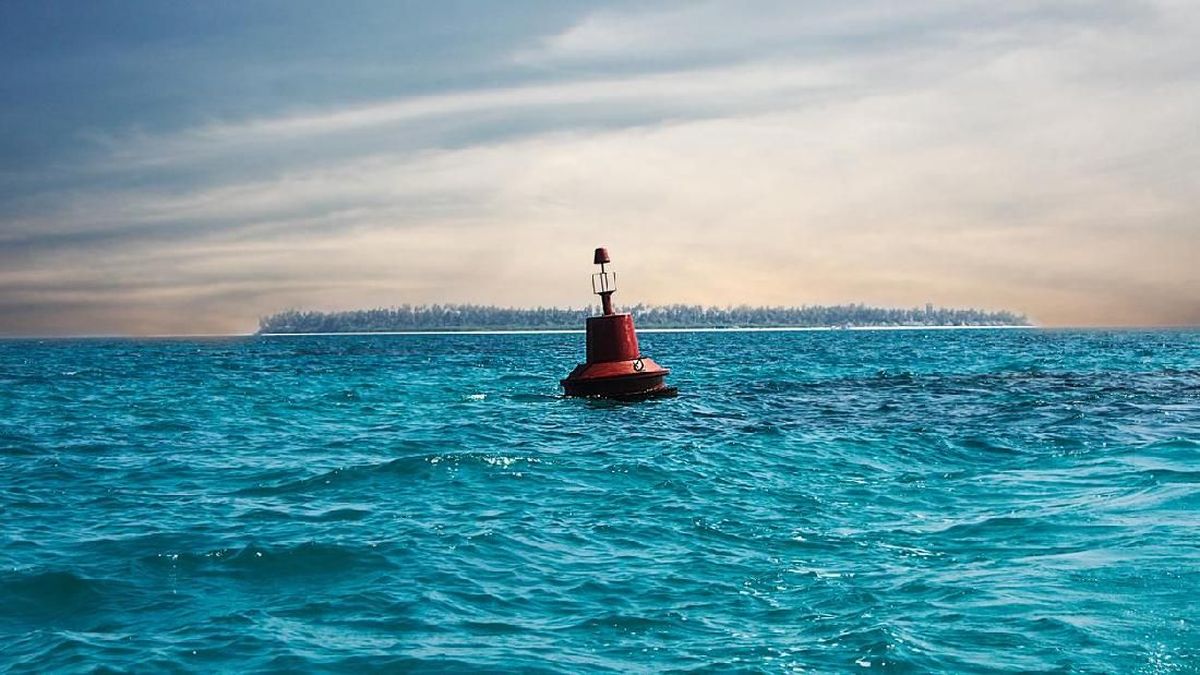
The US and Iran signed an accord last week extending a fragile ceasefire and setting the stage for 60 days of talks meant to lead to a permanent peace. The first hiccups to the memorandum of understanding (MOU) came last week after Israel continued its campaign in south Lebanon, leading Iran to threaten closure of the strait of Hormuz.
The US and Iran’s interpretation of the MOU has significantly differed, particularly over Lebanon. Iran has insisted that Israel needed to stop its war there and withdraw its troops in the south of the country. Israel has occupied large swathes of south Lebanon in what it calls a “security zone”.
Israel and the Lebanese government are engaged in US-mediated talks, which, among other things, seek to arrange an Israeli withdrawal from Lebanese territory.
Israel is seeking a phased approach whereby it will hand off territory to the Lebanese army, tasked with keeping the area free of Hezbollah fighters. These talks do not involve Hezbollah, however, calling into question how effective they can be.
Iran, which is not a part of the Israel-Lebanon talks, has worked hard to link a ceasefire with Iran to an end to fighting in Lebanon.
“For us, a ceasefire in Lebanon is as important as a ceasefire in Iran and, further, an end to the war in Lebanon is as important as an end to the war in Iran,” Iran’s parliamentary speaker, Mohammad Bagher Ghalibaf, said on Wednesday.
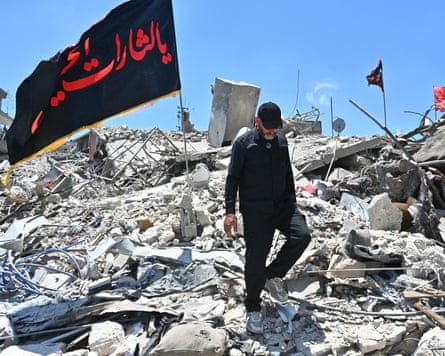
Fighting started in Lebanon after Hezbollah launched rockets at Israel on 2 March in retaliation for the killing of the supreme leader of Iran, Ayatollah Ali Khamenei, triggering an Israeli invasion. Israeli strikes have killed more than 4,200 people in Lebanon since then, while Hezbollah attacks have killed at least 36 Israeli soldiers in Lebanon and three Israeli civilians.
A ceasefire between Israel and Hezbollah mediated by the US on Saturday has stopped most fighting in the country, with some exceptions. Israeli drones struck a car outside the city of Nabatieh on Wednesday, killing two people, according to the Lebanese ministry of health.
The US secretary of state, Marco Rubio, was on day two of his three-day tour of the Arab Gulf. His visit to Gulf allies was his first high-profile visit to the region after the signing of the MOU last week, and was meant to allay concerns that the Iran deal was too conciliatory.
Rubio arrived in Abu Dhabi on Tuesday to kick off his tour of the Gulf, having lunch with the president of the UAE, Sheikh Mohammed bin Zayed Al Nahyan, as well as the foreign minister, Sheikh Abdullah bin Zayed Al Nahyan, and the national security adviser, Sheikh Tahnoun bin Zayed Al Nahyan.
Rubio is also slated to visit Kuwait and Bahrain. All three countries were hammered by Iranian strikes during the four-month war with Iran, bombings that Iran said were a result of their hosting US bases that were used to carry out attacks on Iran.
The Gulf countries, which are close allies of the US, are concerned that the proposed Iran-US deal is too conciliatory to Iran.
All countries faced civilian deaths and lasting economic damages from the Iranian attacks, particularly the UAE, which relies on tourism and expatriate labour for much of its non-oil revenues.
In particular, there are worries that a proposed $300bn fund to Iran and the waiving of sanctions on the country would allow for the reconstruction of its military and for future threats against Gulf countries.
Rubio emphasised the US’s commitment to the UAE’s security, as well as discussing the safe transit of oil and gas through the strait of Hormuz, during a meeting with the UAE president, a state department read-out said. The strait was mostly shut by Iran during the four-month war, disrupting shipping through the vital sea passage and sending energy prices soaring globally. Gulf states, which rely heavily on oil and gas exports, lost billions of dollars of revenues due to the strait’s closure.
Asked by reporters if he would address allies’ concerns over the Iran deal, Rubio told journalists that the topic would “most certainly come up in these discussions”.
“We want to hear from our partners,” Rubio said as he arrived in Abu Dhabi. “We want to make sure that their views are taken into account, and we understand their security concerns, their regional economic concerns as well.”

Views in the Gulf over Iran see-sawed during the war, with monarchies at first furious with the Trump administration for starting a war without prior consultation. As Iranian strikes ramped up on Gulf countries, some then pushed the US to take a harder stance on diplomacy with Iran, disturbed by the extent to which Iran was willing to bomb them.
The US has sought to reassure Gulf countries that the deal would not provide Iran with a windfall, nor would it allow Iran to control the strait of Hormuz.
The US president, Donald Trump, said on Wednesday no money had been given to Iran and any unfrozen funds would be used to buy medical supplies and food from US farmers – something that Iran denied.
Iran is also pushing for transit fees for ships going through the strait of Hormuz, a diplomat close to talks on the waterway told Reuters.
Trump said on Wednesday the US had been told by Iran that there would be no tolls charged on ships sailing through the strait.
Disagreements also emerged over inspections of Iran’s nuclear sites, after Trump said the country had agreed to allow inspections into “infinity” as part of last week’s MOU. The US said preventing Iran from reaching a nuclear weapon was one of its key aims when it attacked the country on 28 February, while Iran said its nuclear programme was purely civilian.
Iran’s deputy foreign minister, Kazem Gharibabadi, said no meeting had been held with the International Atomic Energy Agency’s chief, Rafael Grossi, despite his request, and there were no plans to conduct inspections of nuclear facilities until a final agreement had been signed.