.png) 1 hour ago
6
1 hour ago
6
In 2015, Kate Moss called an easyJet pilot a “basic bitch” and a catchy new insult meaning obvious and uncool hit the mainstream. Had it happened in 2026, Moss might have used the word “polyester”, reportedly gen Z’s new favorite diss, levied at cheap-looking videos on TikTok, and sometimes at other users’ taste.
But its use as a figurative insult also echoes a literal backlash against polyester, now the most-produced synthetic fibre on the planet.
Young people are pushing back against polyester, many of them expressing concern about cheap-looking garments, sweaty-feeling fabrics and concern about what wearing polyester may be doing to their health (though the science is still developing, studies suggest that the dyes, flame retardant and “sweat-wicking” chemicals frequently used on synthetic fabrics can leach into sweaty skin, a particular concern for workout clothes.)
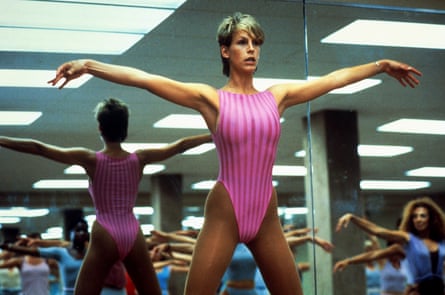
In gyms, the pilates princess aesthetic with its synthetic matching sets is waning while 1990s-style exercise gear is becoming fashionable once more as many lionize exercise garments displaying visible sweat – think Sylvester Stallone in Rocky, or John Travolta being sweatily hypnotized by Jamie Lee Curtis’s rocking pelvis in the 1985 movie Perfect.
Some of the pushback centres around polyester’s impact on the planet. Derived from fossil fuels, it does not biodegrade, and sheds microplastics when washed. Many anti-polyester influencers, however, talk about giving up the fabric in the same way they might talk about giving up sugar, sharing content with hashtags such as #naturalfibers, #antipolyester and #nontoxicclothing while posting videos of large shopping hauls of cotton and linen from Zara.
There is a Maha element too. The USDA recently launched a Plant Not Plastic initiative, attempting to revitalize American cotton, stating that US farmers have been “crushed by rising costs, unfair foreign competition, and a flood of cheap synthetic products” for too long. RFK Jr shared campaign imagery – featuring blue jean-wearing, horse-riding outdoorsy types – in May, along with the strapline: “Real Americans wear cotton.”
Much online backlash is about fakeness, a perception that fashion brands are catfishing their customers by selling good-looking garments online that look and feel nasty in real life, as was illustrated by a recent furore over a capsule collection inspired by Gap’s much-loved 1990s Happy Stripe sweaters. Part of its higher-end Gap Studio range, the garments, which that cost up to $128 sold out quickly online. But the backlash came when shoppers received their packages. Many had assumed the items were knitted, but instead, they featured a printed photograph of a knit that one TikTok user described as “fake knitting! It just looks horrible!” And with the fabric being 80% polyester and 20% elastane, she continued, you would be “literally wrapped in a sheet of plastic” during “one of the hottest summers on record”.
“Gives Shein unfortunately,” said another customer, in reference to the Chinese ultra-fast fashion company which is, indeed, very cheap and very polyester; looking at the fabric content of the first 10 dresses served to me on their site, nine were polyester.
Though Shein’s appeal may be waning – it was valued at $100bn in 2022 but is now preparing to list on the Hong Kong stock exchange for a quarter of that, $27bn – that decline seems to have less to do with any lack of demand for cheap clothes produced dubiously, and more to do with the rise of similar “polyester” (gen Z meaning intended) offerings at Temu, Amazon and other Shein-esque challenger brands, as well as its struggle to keep prices quite as low owing to Donald Trump’s trade policies.
One byproduct of Shein’s recent ubiquity, however, is that it has made other fast fashion brands – the kind that charge, say, $79.90 for a dress, as opposed to Shein’s absurd $9.22 – look mid-market in the eyes of young customers. Some gen Z – usually defined as those born between 1997 and 2012 (the oldest of them will turn 30 next year) – are vocal about expecting better than Shein when paying higher than Shein prices. And one of the ways they judge whether an item’s quality is higher is by checking whether it contains polyester.
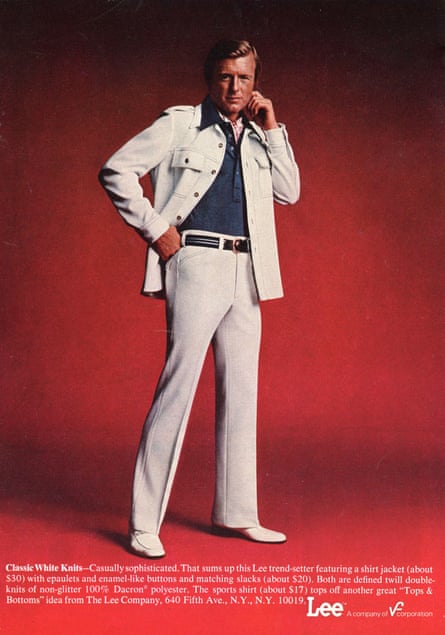
Gen Z may think they invented the use of “polyester” as an insult, but the word has potent previous form as a cultural diss. At Studio 54 in the late 1970s, for example, when the nightclub was the center of contemporary fashion and music culture, there was an anti-polyester policy.
“We didn’t want people with polyester shirts,” co-founder Ian Schrager remembered a 2018 documentary. His business partner, Steve Rubell associated it with “bridge-and-tunnel people” – meaning suburbanites sporting “the chains, the polyester shirts, the hairy chests”, he said. Their presence, Rubell said, would “kill the night”.
Polyester was already omnipresent in fashion, having found favor with American households in the 1950s, when it was heralded as a labor-saving miracle: the fashion equivalent of a TV dinner. It was easy to clean, didn’t require ironing because it did not wrinkle, was attractive to designers because it can be moulded, dyed and made to ape properties of other, more expensive, fabrics. It was intrinsic to the aesthetic of the 1960s for its ability to absorb bright dyes; it was infused with Lycra around the same time women abandoned their girdles.

In many ways it was perfect for the 1970s disco era of hot lights and dancing – but that era exposed its disadvantages too. Stories of polyester wrap dresses catching on fire on the Studio 54 dancefloor (or so Randy Jones, the Village People’s original cowboy, told the Wall Street Journal in 2008) and there was much talk of overheating. Gloria Gaynor said that polyester “was gross. It was horrible. It was just so cheesy,” and that she had to leave her polyester jacket open on stage to let in some air while she performed. John Travolta’s famous Saturday Night Fever white polyester suit, chosen, according to the movie’s costume designer, because it looked like something a working-class kid could afford, was so sweat-soaked he had to keep rotating between two identical suits, giving the other time to dry.
Polyester’s status as a byword for sweaty naffness was cemented with the 1981 release of John Waters’ cult hit movie of the same name, which was a satire of suburban life, featuring a polyester-clad loutish husband and a set dressed with “the ugliest polyester furniture we could find”, as Waters put it.
Though its image has been less than aspirational for decades, polyester has only grown more commonplace since.
Its versatility means that it has always been part of high catwalk style – Lanvin’s Alber Elbaz put posh polyester frocks for thousands of dollars on the catwalk in the mid-aughts, and you can buy a luxe 11% elastane and 89% recycled polyester shirt from Prada today if you have a spare $3,000 – though the real boom has been in cheap clothing.
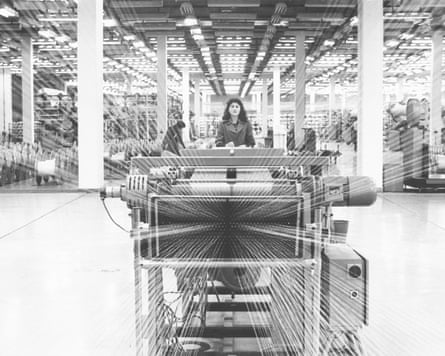
It first overtook cotton in popularity in 2000, according to one analysis, and it has mushroomed ever since. In 2024, a report found that fashion’s overall carbon footprint had risen, for the first time since 2019, fueled by a rise in polyester use, which was up from 71m to 78m tonnes in one year, owing to the boom of ultra-rapid fashion.
In reality, polyester use is so entrenched that the viral backlash is only going so far. H&M told the Guardian its polyester use has been fairly static over recent years (it uses 56% cotton and 23% recycled polyester) – though its use of recycled materials had risen and was at 100% recycled for polyester (which is better for the environment, as it is not made from virgin fossil fuels, though how much better has been debated).
Edited, a retail intelligence platform, analysed the new polyester offerings on the websites of Nike, Urban Outfitters and Zara at this time during the past three years. It found that polyester use was down by about 3% overall at Nike, but at Urban Outfitters, polyester was up 1% year on year. There was a similar story at Zara, which had risen 1.9%. (Meanwhile, recycled polyester was down 2.6% at Urban Outfitters and 0.5% at Zara, respectively.) The findings, said Edited senior retail analyst Krista Corrigan, showed that “mass-market fashion remains structurally reliant on polyester to maintain margins”. What is changing is the way “brands are actively highlighting natural fibres in product titles to appeal to material-conscious shoppers” with product names using the word “cotton” up 28% at Zara and 30% up at Urban Outfitters year on year, Corrigan said.
That shift suggests that the appetite for natural fibres is driving some customers to shop differently – a big reason the direct-to-consumer brand Quince, which was recently valued at $10.1bn, has flourished. Its entire USP is about fabric (its meta description on Google says it offers “luxury products like Mongolian Cashmere, Italian Leather, Turkish Cotton and Washable Silk to everyone at radically low prices”), which gives it an aura of sustainability, compared with, say, Shein, even if the Good on You directory of ethical fashion classifies it as “not good enough” because, while it uses “some lower-impact materials including organic cotton”, it does not release enough information about its environmental and labour policies.

The realities of ethical clothing production and use are far more complex than avoiding polyester. Choosing cotton and wool, for instance, may feel more natural, but they often have huge environmental impacts too, including astonishing water use.
Ione Gamble, founding editor-in-chief of the influential zine Polyester and author of The Polyester Book of (Bad) Taste, chose the word when she launched in 2014, partly in tribute to Waters partly from a desire to “rebut ideas about ‘good taste’”, she said. “I wanted to create a publication that celebrated the things we consider to be in bad taste while also interrogating the sociopolitical implications of why some things are labelled as tasteful and others as trashy.”
While she thinks criticisms of polyester are valid, she points how tempting and easy it is for people to parrot a line without fully understanding the nuance. “By all means I’m anti-mass-produced, cheaply made clothes but I think the hatred towards polyester is more indicative of everyone being dissatisfied with the choices available to them, rather than a full understanding of polyester itself.”