.png) 4 hours ago
4
4 hours ago
4
Every year since 1964, towns across the UK have bloomed with hanging baskets and brightly coloured flowerbeds planted by residents.
They wield their trowels in aid of the Royal Horticultural Society’s Britain in Bloom competition, a coveted accolade for the 1,600 communities that enter each year.
Now, the charity is launching a new award for railway stations to honour the volunteers who keep platforms planted with cheerful flowers and pretty shrubs.
Five of the best have been shortlisted for the RHS Railway Stations in Bloom competition, marked for their beauty but also for how well they welcome wildlife and withstand changing climate conditions.
The winner, announced this week, was the Cardross Community Organic Garden in Scotland. The RHS said: “The judges were especially impressed by how active the group was in including different members of the community in the station’s activities, from school children, Brownies to other volunteering and gardening groups”. But all of the railway gardens are impressive.
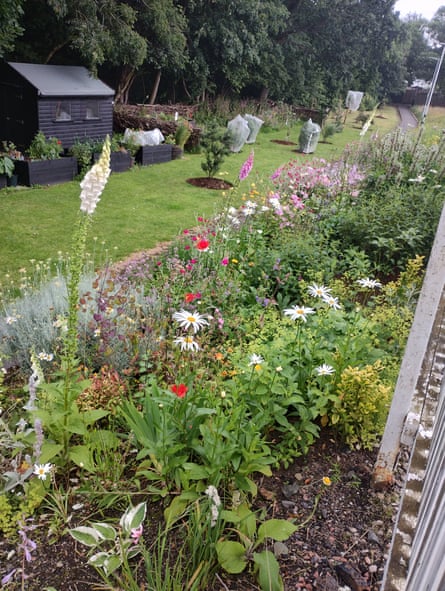
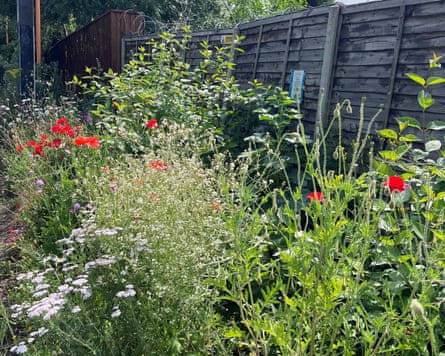
It has been an extremely hot and dry summer in Alresford, Essex, but the gardeners were prepared. Working hard to cut through asphalt to create flowerbeds, they have planted a “dry garden” inspired by the horticultural pioneer Beth Chatto, who died in 2018. Also from Essex, she managed to grow plants in dry ground that had never been cultivated.
“It’s transformed the centre of the village,” said the lead volunteer, Frank Belgrave. Ten years ago the station was described in the local paper as “rundown”. Now, the planting beds rival any at Chelsea flower show.
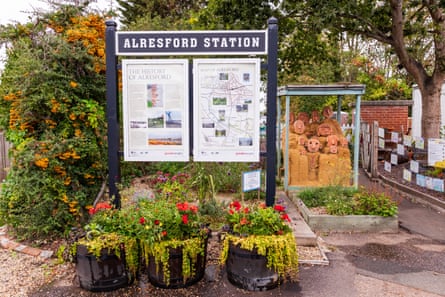
Belgrave said residents were very pleased their station had received the spruce-up: “It’s wonderful. People sometimes stop by with plants and compost to help us, and we are very lucky to have some lovely volunteers as the garden requires constant maintenance.
“We used to spend all our time watering. So we decided to seek advice and build a dry garden with drought-resistant plants.”
At a windswept station on the west coast of Scotland, commuters may be surprised to find trees heaving with fruit and a thriving vegetable patch. But Jane Connolly, who heads the Cardross station volunteer group, has found a way to create such bounty.
“Since March 2022, every bit of the station that can be changed, has been changed,” she said. “We do have harsh winters – we don’t take summer bedding plants as we don’t get enough out of them – we choose hardy shrubs. We put up windproofing on the shore side to protect the plants but in general we have had very few failures.”
Connolly and her fellow volunteers filled the station with plants from their own gardens and visit most days to tend to them.
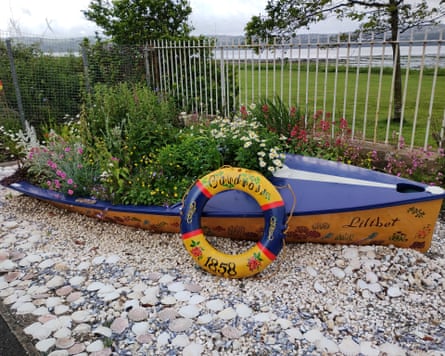
Having a pretty, flower-filled rail station rather than a neglected one makes a huge difference to the village, she said: “Every time we are down there, somebody will come along and peruse it and say how grateful they are with what we have done. I notice stations now wherever I go, even if it’s a window box. People come to our station just to see our gardens.”
Other shortlisted stations include Maghull in Merseyside, where the ticket office’s window boxes are full of pretty flowers and volunteers have planted a woodland. At Wylde Green in Birmingham, overgrown areas were cleared and replaced with pollinator-friendly plants, creating a “bee corridor”. The volunteers carry out an annual butterfly count and have seen numbers increasing.
after newsletter promotion
Keynsham station in Somerset on a hot day looks especially exotic because volunteers have filled it with a remarkable array of succulents, of all shapes and sizes. Like the Essex gardeners, they have selected plants that will withstand hot summers.
The volunteers at the stations have spoken of how social the job is and many have made friends. It also gives commuters a chance to chat. Belgrave said: “It’s very rewarding. Lots of people come and chat, they talk about plants, it gives them a social thing.”
He hopes to get funding for a community hub and coffee shop. “On the platform there is a very ancient station house, to the back of that there was an area which was neglected and used as a community rubbish dump. We have turned that into a garden. Now, we hope we can open a coffee shop on the site.”
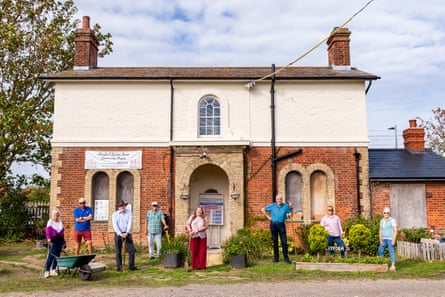
In Cardross, the gardeners have become fast friends. Connolly said: “We garden together and there is always laughing and joking and there is often more joking than working! We go out socialising together now as well. It is a very social thing.”
Wildlife has returned to Alresford station, according to Belgrave. “We have noticed incredible amounts of wildlife, bees particularly. Honeybees, solitary bees, butterflies. That has changed a lot, we have seen the return of hedgehogs, we have slowworms.”
The gardeners hope their example will encourage others to get involved.
Belgrave said: “There are lots of stations which aren’t in the scheme, so if people do get involved it would be really good. It would be nice to see more stations planted up.”