.png) 3 months ago
73
3 months ago
73
The longest managed coastal walking route in the world has been opened by the king at the Seven Sisters cliff walk.
However, large parts of the King Charles III England coast path are still closed to the public after objections from landowners, fears about coastal erosion and a disused ferry.
Natural England has received a range of complaints from landowners including from farmers concerned marauding cows would kill walkers and hotels that do not want the public walking on their lawns.
The 2,689-mile (4,328km) path has taken 18 years and involved seven prime ministers, but there is still no date for public access to be granted to parts of it. The project was initiated by Gordon Brown’s government and legislation brought forward by then environment secretary, Hilary Benn.
Natural England said that while a lot of the coast path had already existed, 1,000 new miles of paths had been added and those that already existed had been improved with resurfaced paths, removed stiles and new boardwalks.
Tony Juniper, the chair of Natural England, said: “Following 16 years of hard work from the Natural England team we are delighted to reach this landmark point for the King Charles III England coast path. It is testament to how public enjoyment, conservation, heritage, history and community can come together, helping make life better for millions of people.”
While the legislation passed during Brown’s government allowed the government to give legal rights to the public over areas of landowners’ property, the process has been slow and subject to negotiations and objections.
About 20% of the path is not yet open to the public. Natural England has said it aims to have much of it open by the end of the year.
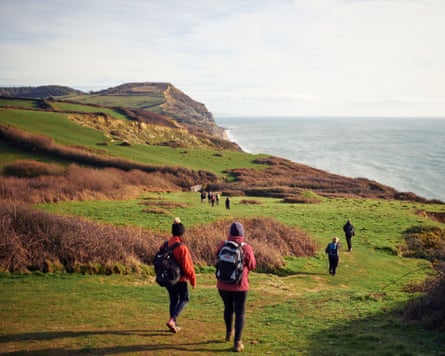
The striking Jurassic Coast in the south-west still has parts that are not open to the public due to objections raised by local people about the proposed path and its impacts on wildlife, as well as potential impacts on farming and tourism businesses. The proposed route has also been plagued by coastal erosion.
Also in the south-west the Hythe ferry, which connects Southampton and Hythe, was suspended in August 2024 after damage was found to its pontoon and supporting structure. This is part of the coastal path and is closed indefinitely.
Part of the north Norfolk coastline, from Weybourne to Hunstanton, is off limits while Natural England negotiates with landowners including a hotel. Natural England wishes to use part of the hotel’s grounds, which will enable ramblers to walk through a meadow rather than next to a road.
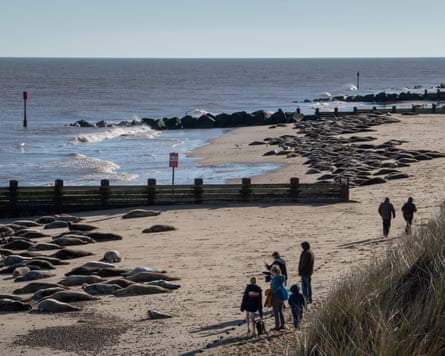
There have also been negotiations with local groups in the Norfolk area, who objected to dogs being walked near seals. Natural England agreed to ban dogs from parts of the north Norfolk coast path.
In Cumbria, parts of the route between Gretna to Allonby are being redrawn after objections from landowners caused the initial plan to be withdrawn. They said that the original route was dangerous and would cause disturbance to land management practices. They said there was a danger to the public due to the risk of startled stampeding cattle, depreciation of farm value and no compensation, and a risk of drowning in the marshland. Parts of the new proposed route will now be alongside a road.
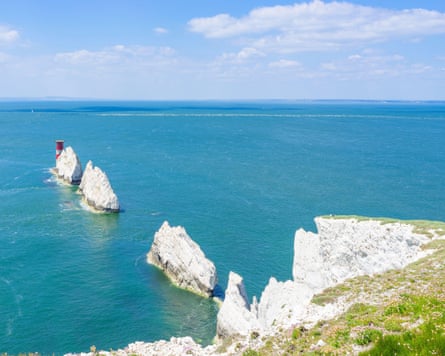
Most of the Isle of Wight path is still not open to the public. There have been issues with coastal erosion as well as a debate with English Heritage about whether the Osborne estate, where Queen Victoria lived and which King Edward gifted to the nation, can be used. The charity opposes the route on the grounds of security because treasures are housed at Osborne.
Tim Bonner, the chief executive of the Countryside Alliance, said the creation of the coastal path was flawed and alienated landowners. He added: “The idea that the English coast path is a success is farcical. Under the last Labour government ministers embarked on the long and expensive process of primary legislation which finally enshrined a massively complex coastal access scheme in law in the Marine and Coastal Access Act 2009. In Wales, the government decided on a different route and created a simple Wales coast path using existing legislation mostly by agreement with landowners and keeping compulsion as a largely unused back up. The Welsh coast path was declared complete in 2012.
“The legislation imposed ridiculous burdens and expense on those left to implement it whilst alienating landowners who are understandably concerned about losing their rights over large areas of land.”