.png) 2 months ago
47
2 months ago
47
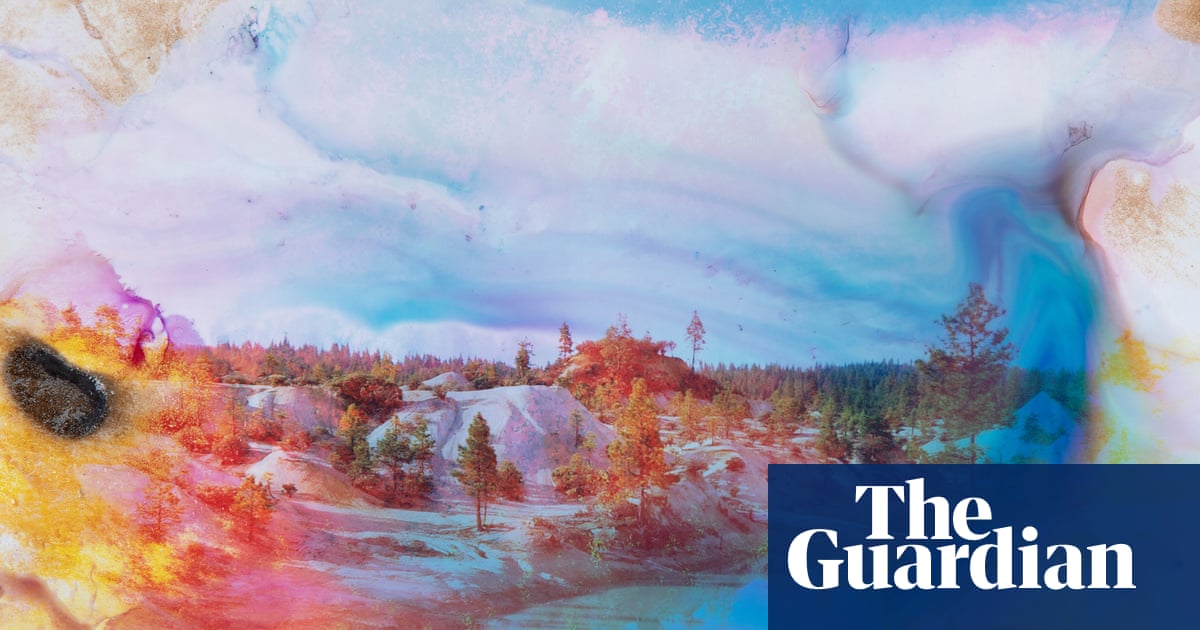
Halfway through this exhibition of the early 20th-century Estonian painter Konrad Mägi I had to take a breather. By which I mean I needed to breathe in some better art. I was worried my responses might be off. How could I be finding this artist’s colourful works, with their echoes of pointillism, cubism and other modernist movements, so dead? Was the problem in me?
A few minutes looking around Dulwich’s permanent collection reassured me that it wasn’t me. I found it more beautiful and beguiling than ever. This unique little art museum was founded more than 200 years ago as home to a collection originally intended for the Polish royal family – hence its huge ambition, spanning Rembrandt, Rubens, Piero di Cosimo, Poussin, plus a fine selection of British art.
I was instantly transfixed by Guido Reni’s Saint Sebastian, with his silvery flesh slung up in darkness, impaled by arrow shafts in a stark erotic masterpiece that rivals Caravaggio. I was haunted by the face of Venetia Stanley resting on her pillows, head on her hand, apparently asleep yet portrayed by Anthony van Dyck “the second day after she was dead”. Then there’s Rembrandt’s portrait of a young man, probably his son Titus, looking at you out of bottomless eyes.
The Dulwich collection, which stops around 1800, is an assembly of golden oldies that deal with sex and death, passion and loss. What more can you ask from art? Yet the gallery keeps putting on shows of 20th and 21st-century art, to tell its audience, I suppose: “We’re down with modernity.” But that doesn’t work if you select an artist as minor and derivative as Mägi.
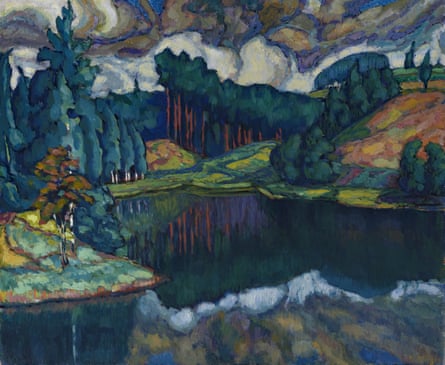
It was with real pain that I returned to Mägi’s plodding early landscapes of Norway. Painted in the 1900s, after he had visited Paris and discovered the insights of the avant garde, this work set his future pattern of random colour and blobby forms. In Norwegian Landscape, orange-brown dappled bushes are set against violet hills. If his contemporary Edvard Munch had painted this, it would be full of anxiety and terror, but Mägi makes it bland and decorative. This is expressionism without expression. The reason those old masters are so moving and unforgettable is they deal with urgent, serious matters. Van Dyck paints a woman dead. Rembrandt dotes on Titus, who would die when he was just 26. Where is the pathos and purpose in Mägi’s landscapes?
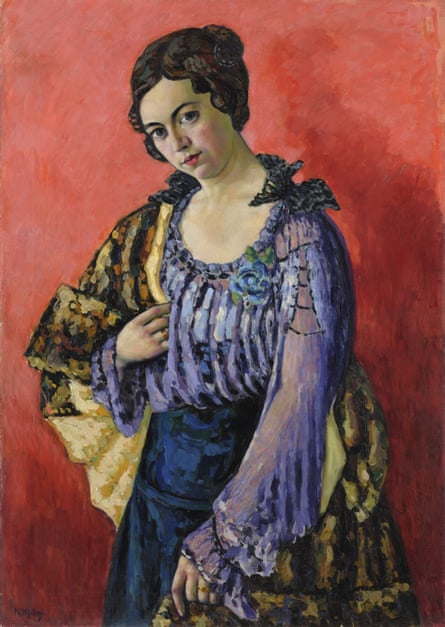
At least they’re not as bad as his portraits. There is a room full of these. Women with oddly similar faces and self-consciously bohemian men are painted in a style that knocks off some of the -isms Mägi had seen in Paris. His Portrait of a Woman, painted from 1923-4, has vaguely cubistic patches on her face and clothes – but these are so soft the result just looks quirky. Another portrait of a woman has hints of the expressionist Chaïm Soutine, but with a banal, hesitant ordinariness.
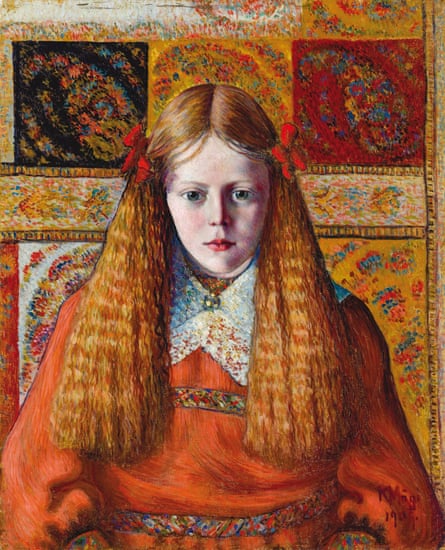
The more you look at these portraits, the more ugly and vulgar they become. This is a travesty of modernism. The modern movement in the early 20th century was not a relativist free for all. It produced geniuses such as Matisse and Picasso, Duchamp and Klee, idiosyncratic originals including Soutine and Chagall – and, inevitably, its followers and hacks, from London’s Bloomsbury Group to Mägi.
Mägi just isn’t that much of a modernist. He puts a chic veneer on what are really safe paintings of faces and places. As you walk past his cloud-puffed sunlit seashores and unmemorable purple hills, what is striking is the lack of energy, the drift into vacuous idylls. I even began to feel slightly nauseated about an exhibition of bright, colourful paintings from 20th-century Europe, that historically unequalled slaughterhouse.
Turning the 20th century into decorative escapism fits well with Dulwich’s ethos these days. Its grounds, once a simple green space that allowed you to contemplate the melancholic architectural beauty of Sir John Soane’s Picture Room, are now a popular place with two cafes and an adventure playground. Fair enough. But it all seems to evade and even shun the high art this gallery was founded to preserve. Is Dulwich betraying itself, losing its soul and purpose? It should ask itself what it is doing with such a pointless and contextless exhibition that wastes and mocks Soane’s pensive, poetic interior.