.png) 2 hours ago
3
2 hours ago
3
First came the blackmail and death threats to secure cooperation, then came a series of tasks, each more sinister than the last: to inform on fellow activists, to elicit personal information from protest-minded artists and – eventually – to help with a plot to kidnap and murder a Kremlin enemy.
That is how Rita Flores, a 29-year-old Russian artist, activist and former member of the Pussy Riot collective, described her recruitment and three-year handling by officers from Russia’s FSB security service, a cooperation she only broke when she fled the country last month.
Flores made details of her collaboration public in a video discussion with her lawyer, Dmitry Zakhvatov, published just days after she left Russia at the end of August. She explained she was coming clean in the hope that others in a similar situation might feel emboldened to break their ties with the FSB.
Now, in her first media interview since leaving Russia, she gave further detail on how she was recruited and run by the FSB. “For the first time in years, I feel calm. All this time I was dreaming about getting out and being able to talk about it all,” she said. The Guardian could not corroborate the details of Flores’s account, but there have been numerous cases of the FSB infiltrating opposition groups over the past few years.
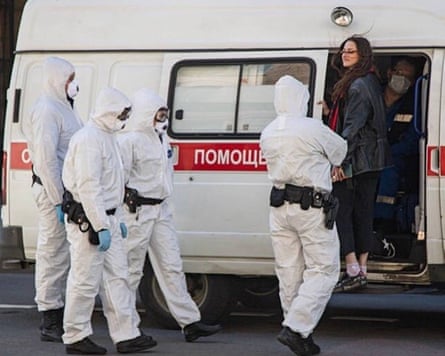
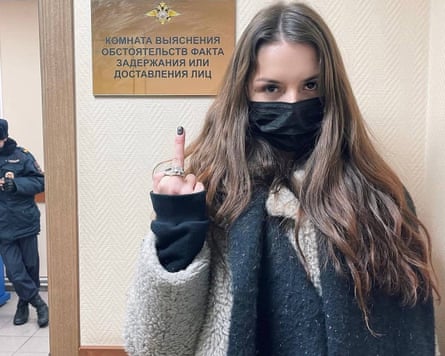
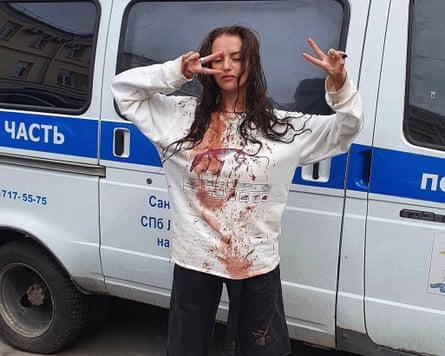
Flores, also known as Margarita Konovalova, has been associated with Pussy Riot since 2020, when she was detained after a performance near the Kremlin. She had served several short stints in jail and been subjected to surveillance and house searches on numerous occasions, which intensified after the domestic crackdown that followed the full-scale invasion of Ukraine in February 2022.
She was recruited after one of these police searches in February 2023, when two men stayed behind and introduced themselves as FSB officers, she said. They threatened to open a criminal case, under wartime censorship laws, over an Instagram post she had made criticising Russian killings in Ukraine. They also suggested they could arrange for her mother to be killed if she did not sign cooperation papers.
“I believed them. I believed they could do everything they said they would … My fear was too great. I was so worried for my family and also for myself,” she said. As a reward for signing, she was given a one-off cash payment of 30,000 or 40,000 roubles (£266 or £355), she said.
Her first tasks were to gather information about other opposition-minded artists in the same circles as her and report back to the FSB. The two FSB officers who recruited her became her regular handlers, she said, organising frequent meetings and largely sticking to a classic good-cop, bad-cop routine. She saw the senior officer only occasionally, a crude man in his late forties who introduced himself by a series of different names. In the end, Flores began calling him “the Jacket”, based on the shiny black suit he liked to wear. The junior officer, named Ivan, became her primary handler, and he often tried to be friendly and helpful, leaving direct threats to the Jacket.
“Whenever I met with Ivan and the Jacket together, Ivan was silent. The Jacket would be rude, threatening; he’d insult me as a woman. He was the devil incarnate. Then just me and Ivan would meet, and Ivan would be nice, friendly,” she recalled. “He liked to say, ‘The FSB will re-educate you, I will re-educate you, you’ll have a nice and calm life, and you’ll love Russia, have children and be an obedient wife,’” she said.
Flores said she was not supposed to tell anyone about her recruitment, but immediately told “about 20 people”, putting it down to the fact she is a “massive gossip”.
Still, she stopped short of telling the people from the art world she was meant to report on, instead claiming that she initiated conflicts with them on pretexts, designed to push them away from her and prevent them sharing sensitive information. Her two handlers kept up the psychological pressure by repeating their threats, and even the friendlier Ivan on occasion made it clear that the consequences for crossing him would be severe, she claimed.
“He tried to befriend me, but he could also be threatening. He’d calmly say, ‘they’ll kill your mother and you won’t be able to prove anything’ or ‘if you go abroad they’ll find you immediately and kill you,’ and then he would giggle, like it was all a joke. The Jacket, on the other hand, never joked. His threats were more direct.”
In time, there were fewer targets to inform on, as most of the protest-minded artists left the country. She described life in wartime Moscow as an exercise in cognitive dissonance. “Moscow is booming; restaurants, bars and clubs are opening and there are a huge number of events. But those people who understand things have empty eyes and speak empty words,” she said.
after newsletter promotion
Artists who stayed are careful not to produce any work that could be considered even tangentially political, she said. “People who have stayed in Russia have accepted the rules of a game. You go to a gallery and every artwork may as well come with a sign saying ‘we were forbidden from saying anything’ … there are artists who used to make strong statements, and in 2026 they are drawing flowers in a vase.”
Last May, Ivan and the Jacket first started asking her questions about Pyotr Verzilov, an activist previously linked to Pussy Riot who now lives in Ukraine and fights with the Ukrainian army against Russia. A longtime irritant to the Russian authorities, in 2018 German doctors said they believed Verzilov had been poisoned in Russia.
Flores said her handlers wanted her to get information from Verzilov, including his address in Ukraine. Then, they suggested she use her old friendship with him to arrange a meeting in Serbia. There, he would be kidnapped and killed by a waiting FSB squad, they claimed. Ivan began to pay her 50,000 roubles a month as an additional incentive to help with the Verzilov case.
Meanwhile, Flores said, she was plotting a way out. She married her partner last September, which she said was partly a way of worming out of the Serbia task, so she could claim to Ivan that her husband would never let her go on a trip to meet another man. Previously, her handlers had banned her from leaving the country, she claimed, and it was only when she contacted the lawyer, Zakhvatov, that she realised there could be a way for her to leave. The pair began scheming in secret over the details.
“They created a reality where she felt like they controlled everything, but actually it is not that hard to leave,” said Zakhvatov. In 2022, fellow Pussy Riot activists Lucy Shtein and Masha Alekhina fled house arrest in Moscow by dressing up as food delivery couriers to evade police and eventually leave Russia. Flores’s escape was less dramatic, but both Zakhvatov and Flores declined to give details, citing the need to protect methods for future cases.
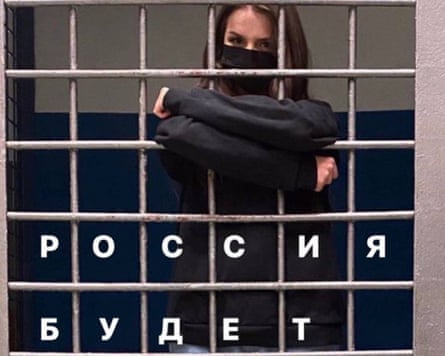
After Flores’s escape, Zakhvatov announced a secure line for people in similar positions to contact him if they need help. Flores said she would also like to work to help others, and added that she was certain that recruitments in activist circles are a “mass phenomenon”. She said there was at least one person in her own surroundings who had informed on her before she agreed to cooperate, a fact she discovered when it turned out that the FSB had possession of a sex tape featuring her, covertly filmed by the person. Earlier this year, Poland jailed an exiled Russian activist for seven years, after it emerged he had passed information about fellow exiles to an FSB handler who had recruited him back in Russia.
Flores’s video confession at the end of last month was met with praise from some parts of the exiled Russian opposition, who commended her bravery for speaking out and explaining how the FSB operates, but also some scepticism from those who criticised her decision to cooperate for so long. Since then, Flores has been making calls to people she informed on as well as other old friends to explain herself, and said everyone had been supportive in these conversations.
“It’s not a big secret that it’s not great to work for the FSB, but fear can change a person,” said Alekhina. “It’s important that she’s now out of the country and that she said what happened to her out loud. Nobody was killed and nobody went to prison [because of her], so that is good news.”