.png) 3 months ago
68
3 months ago
68
Imagine you are the director of football at a crisis-stricken Premier League club in a world where relegation doesn’t exist and the planet’s best teenagers become available for free in a draft every June.
In this alternate universe, you are also aware of something else: the 2026 Premier League draft is one for the ages. Barcelona’s Lamine Yamal and Pau Cubarsí are in it. So are Bayern Munich’s Lennart Karl and Real Madrid’s Franco Mastantuono. Sign one of them and the glory days will suddenly beckon again.
There is, though, one almighty curveball. Teams that finish in the bottom four of the Premier League have a 14% chance of getting the first pick in the draft. But with every place you climb, your chances of acquiring a top pick and turning everything around actually deteriorate.
So what would you do in this scenario? Tell your players to keep fighting and maybe edge up a place or two? Or would you discreetly try to lose for Lamine or collapse for Cubarsí by resting big names and letting sporting gravity take its course?
That, in essence, describes the bizarre, yet strangely logical, situation in the NBA with the discourse over how to stop teams “tanking” to get a better draft pick has spewed hundreds of theories, but no elegant solutions. It is not that the NBA isn’t trying. Last month, it fined Utah Jazz $500,000 (£373,000) for not using their best players at the end of one game, while Indiana Pacers were hit with a $100,000 penalty after removing some of their star players. Both teams continue to lose and they are far from the only ones.
Indeed, as I write this on Monday afternoon, there is one particularly illuminating stat: since the start of February, the NBA’s worst seven teams have a combined record of 20 wins and 87 defeats and 13 of those victories had come when two of those struggling teams faced each other. Not all those teams are tanking, but the players know it is an issue. The Brooklyn Nets’ Michael Porter Jr said: “I don’t like how teams are deliberately trying to tank to get a good draft pick.”
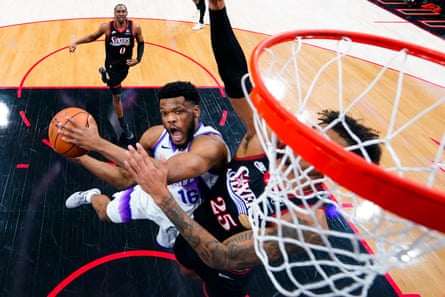
This is not a completely new problem. In 2021, academics analysed NBA games from 2006–07 through to 2017–18 and found empirical evidence that teams tanked for draft picks by resting healthy players and, unsurprisingly, that they tended to rest more players after being eliminated from playoff contention.
However, what is different this season is that more teams are losing more games earlier than ever and there is a far wider acknowledgment that something needs to be done about it. The NBA commissioner, Adam Silver,said over the weekend: “Are we seeing behaviour that is worse this year than we’ve seen in recent memory? Yes, is my view. There’s been a destigmatisation around certain behaviours … the guardrails have come off a little bit. We are going to make substantial changes for next year.”
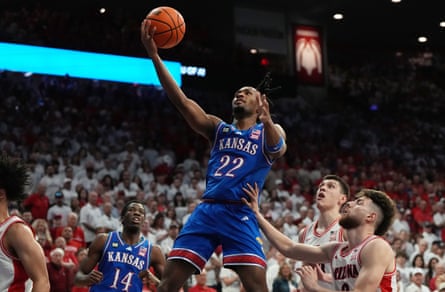
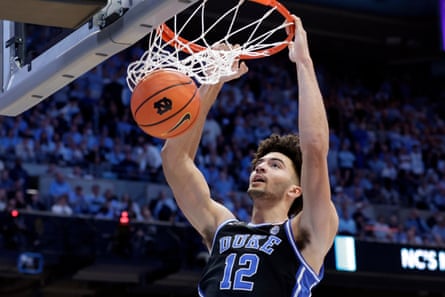
Silver acknowledged there had been a “perfect storm” this season because four college superstars are expected in June’s draft – the University of Kansas’s Darryn Peterson, BYU Cougars’s AJ Dybantsa, Duke’s Cameron Boozer and Caleb Wilson of the North Carolina Tar Heels. The pipeline for the following drafts does not appear as strong.
In theory, the idea of a draft is a good one in a league without relegation. It allows bad teams to acquire great players, creates greater parity and uncertainty and offers a beguiling dream to every failing franchise that they may be only two or three years from glory.
Just look at the San Antonio Spurs. In 2023 they finished with the second-worst record. Having acquired Victor Wembanyama, Stephon Castle and Dylan Harper in successive drafts they are now title contenders. In the NFL, the New England Patriots went from back-to-back 4-13 seasons to this year’s Super Bowl.
Some of this is also down to the salary cap that exists in the NBA and NFL. But can you ever imagine such a turnaround in the Bundesliga or Ligue 1? Even the Premier League, which is far more competitive, surely has only half a dozen teams that can win it in the next decade.
But the big problem is that incentives are stronger for teams to fail in the NBA than in the other major leagues. Because a team has only five starters, acquiring one or two superstars in the draft can change everything. Losing a lot of games can become a winning strategy.
Besides, being a middle-ranked team in the NBA is arguably the worst place to be. Because you are not good enough to challenge for the trophy, but also not bad enough to sign a generational talent to turn your franchise around.
So what should be done? Some have suggested the NBA should stop teams from having a top-four draft pick two years in a row – therefore discouraging losses year after year. Others have argued the lottery should be flattened out so no team had more than, say, a 10% chance of getting the first pick.
To European eyes, the 82-game length of the NBA season is far too long and encourages teams who have dropped out of contention to lose interest and games. A 58-game regular season, meaning teams play each other once home and away, would surely be enough, but commercial pressures mean that would never happen. Some form of relegation would also solve the issue, but that is even more unlikely.
Perhaps we should be honest with ourselves. Whatever the NBA does, as long as teams that lose are rewarded with higher draft picks, there will always be an incentive to tank. And if you were in charge of a struggling franchise, wouldn’t you be tempted to take part in Tankapolooza too?