.png) 3 months ago
74
3 months ago
74
Accident investigators have issued an urgent safety warning that the railway’s landslide monitoring equipment may not work when the earth moves suddenly, after discovering sensors did not transmit when a landslip derailed an intercity train.
The front wheels of an Avanti West Coast train from Glasgow to London came off the tracks on 3 November when it hit debris washed on to the track by heavy rain near Shap, Cumbria, while travelling at 83 mph. Fortunately, the train stayed upright and only four passengers were injured.
Network Rail had installed remote earth monitoring equipment at the Shap site, a known risk area in times of high rainfall.
Investigators have found that the sensors nearest the landslip picked up minor earth movements in the railway cutting, from four hours to two hours before the accident, below the level to trigger an alert.
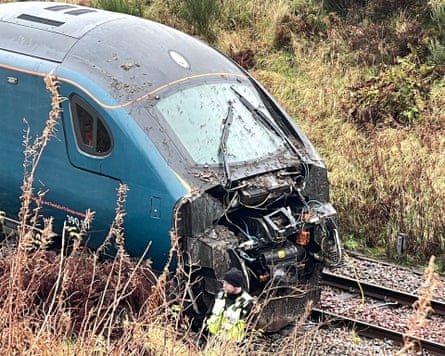
But when the landslip occurred, the Rail Accident Investigation Board (RAIB) believes, the sensors were tipped over too quickly for them to detect the movement. Wireless signals also proved unable to transmit when the sensors were buried in the debris.
The board has issued an urgent safety warning to the rail industry, saying: “Line-side monitoring equipment used on Network Rail-managed infrastructure may not be able to detect the failure of slopes in some circumstances.”
It warned that “this equipment may not provide data as expected to support safety decision-making, particularly during extreme weather conditions”.
The RAIB said Network Rail “should take urgent steps to consider and, if necessary, mitigate this risk”.
A spokesperson for Network Rail said: “We have one of the safest railways in the world, and the safety of passengers and our colleagues remains our first priority.
“With extreme weather conditions becoming more frequent for all infrastructure managers, Network Rail is increasingly using new technology to monitor and report on the conditions of our embankments and cuttings, assessing areas for further development.
“We fully support the RAIB’s report and will work with our supply chain to put the RAIB’s safety advice into practice, strengthening the performance of sensor equipment where necessary.
The board’s preliminary examination into the derailment found that a drainage channel was unable to cope with the amount of water after the rain, causing the earth in the cutting below to become saturated, leading to a landslip.
The UK’s worst rail accident in the past two decades occurred followed a similar landslide after rain at Stonehaven in Aberdeenshire, Scotland, where three people died after a train came off the tracks in 2020.
Network Rail has increased expenditure on stabilising and monitoring its tracks and earthworks in the face of extreme weather and the climate crisis.
Netowrk Rail said it had committed to spend almost £100m over the next four years on earthworks and drainage in north-west England to ensure the railway’s safety in adverse weather.