.png) 3 months ago
52
3 months ago
52
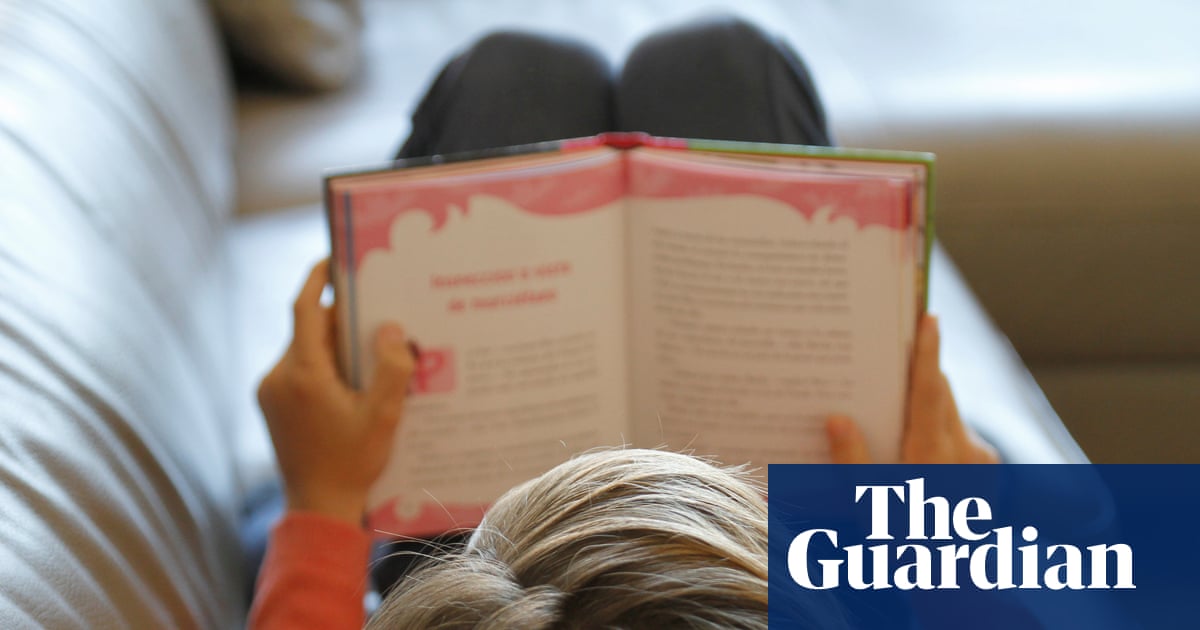
Most films are limited in how they display thought – often just through the facial expressions and actions of actors. Most novels, though, describe in great detail characters’ inner thoughts. So films, in a way, are more mysterious, because you don’t exactly know what people are thinking. So doesn’t that make them in fact more realistic? Ash Ahmed, by email
Send new questions to [email protected].
Readers reply
I’ve watched so many films and read so many books that I’ve lost all contact with what real life is. I just play scenes from the movies. Last Thursday, I menaced the librarian by threatening “I’ll be back” and today I stunned the congregation in church by shouting “You can’t handle the truth!” I’m sure this is going to get me in trouble at some point. But if they throw me in jail, I’ll just tunnel my way out, hidden by a poster of Rita Hayworth. Charismata
I’m telling you now that not all actors are thinking what you think they’re thinking. Fact. cheytz
Life is like a Sally Rooney or Jonathan Franzen novel. Full of annoying, neurotic people. RayG63
To be honest, I don’t want any fiction, film or print, to be too like real life. I have enough real life to deal with daily. To me, the point of fiction is that it’s fiction and something different in some way from my reality. Unfixable
Neither. Most like life is the Samuel Beckett play Waiting for Godot, where nothing happens, twice. Ben McPherson, Oslo, Norway, by email
Erm … well, to be devil’s advocate for a moment: Lord of the Rings the novel is less like life than La Règle du Jeu, but Normal People the novel is a lot more like life than Avengers Assemble.
The question assumes that there is a thing called a novel, that works in one way, and a thing called a film, which works another way. There are loads and loads of different types of novels and films, and they all create worlds and stories in a bewildering multiplicity of ways. Some set out to be realistic: some set out to be unrealistic; and most fall somewhere in the middle.
And that’s before we think about how we judge reality. For its original audience, Pilgrim’s Progress might very well be thought of as more realistic than a novel that showed an atheist living his or her life without divine aid or punishment. For film audiences 30 years back, shaky camerawork would be a flaw big enough to shatter the illusion of reality, or proof that the director was one of those avant-garde experimentalists; these days, we’re just used to it – from film and from TV.
So, really: there’s no way to answer the question. Ah well. I’ll go back to my reading; Gormenghast, at the moment. I can recommend it. It’s very good. profp
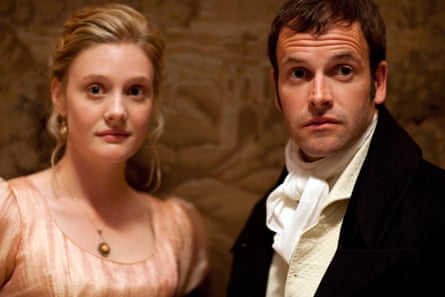
When we see film adaptations of novels we’re familiar with, it’s not uncommon I think to discover that certain very talented actors can give more depth and meaning to a character who was first depicted for us on paper. I give for example actress Romola Garai’s Emma in the 2009 TV series of Jane Austen’s novel of the same name. Garai’s hugely endearing, cheerful and animated depiction of one of Jane Austen’s amiable and gregarious women won me over so thoroughly that I’ve seen the film at least four times already. RPOrlando, by email
People are always saying “It looked like something out of a movie”, but I don’t think I’ve ever heard someone say “It looked like something out of a book.”
At one level I’d say films are more like life because the viewer only knows what they are shown and have to guess at motivations while a book can often give those things in great detail. We are also more sensorially engaged with a film.
However, unlike a movie, life doesn’t come with a curated sound track. TotallyTukTuk
Reader, I broke the fourth wall. EddieChorepost
Is it really possible to answer without first considering how we imagine life itself? Both novels and films depict lives we long for but have yet to fully live. They are attempts to make present, on pages and screens, the worlds and experiences we desire – through writing, imagination, and creation – because reality, as it stands, cannot fully contain them. In that sense, both forms are mirrors not of life as it is, but of life as we wish it to be. Musab Shreef, by email
Books are lived in your imagination, so you can tailor what you see in ways not possible in film. Books can be experienced in as many ways as the number of readers. You’re spoon fed film, you play a major part in how you experience books. LorLala
Neither, obviously. When I was a kid, various dolls, puppets and toys appeared “lifelike”. They are/were no more so than a continuous textual narrative or an episodic filmic re-presentation or comic book fantasy. Narrative, re-presentation and fantasy are all part of life. None is more “like” life than any other. Veraanthony

Do we even want art to be “like life”? We probably do want to reflect on the way its apparent likenesses touch what we know or do not yet know about life, and we certainly want art to complicate and deepen our experience of life, but realism in the sense merely of life-likeness does not necessarily answer the questions we put to art, may not as such help us to understand who we are and where we are going – complex needs we may not even know we had until they are made visible or audible to us, or until our encounter with a novel or film provides us with a name or image for them. iagoandco
In reply: The consistent failure of virtual reality to really take off is interesting in that respect. It’s as though we need distance – some level of awareness that we’re sitting comfortably while reading or watching a film. alexito
Both novels and films, in their different ways, are like life, but novels, especially those which boldly display experimentations with form and technique, are more adept at registering consciousness or states of mind.
Film’s use of voiceover can only go so far; greater is the freedom of the novelist to offer insight into the inner recesses of human thought. Interior monologues and streams of consciousness are modernist devices through which a novel/novelist can gain access to the swirling waves of the human mind.
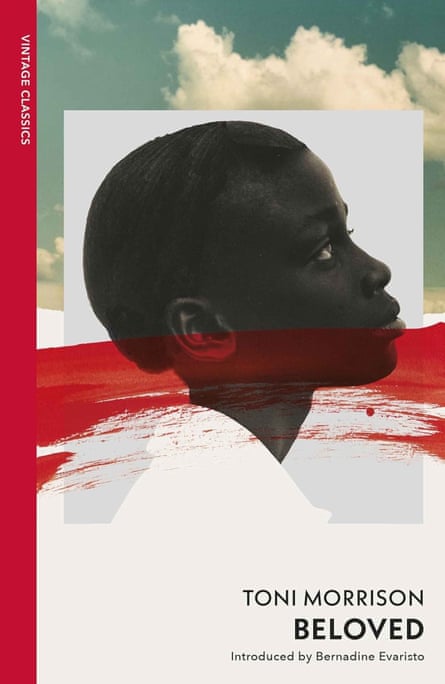
Besides, reading a novel, unlike watching a film, enables us to imagine or visualize a world through the mind’s eye. Reading Toni Morrison’s Beloved is an immeasurably richer, more rewarding experience than watching 12 Years a Slave. Idowu Omoyele, by email.
Novels are like eating a meal with friends. Films are like watching an Influencer with food inside a restaurant. dallastxhollywood
I’ve always thought that however hard we try we can never really, fully know someone as you cannot hear their inner voice, their true self. A comedian (Chris Rock?) once said that you never really meet a person, you only meet their representative. So, books for me, thoughts matter, actions are often for effect. PickleMan
Film by its very essence depicts external reality very well, but struggles to convey more complicated thoughts, emotions and ideas. Ideas and thoughts are naturally embedded in novels through the essence of language, and films’ challenge is to give these ideas a concrete, visual form. Mikko
It very much depends on what you mean by lifelike, which in turn depends on what aspects of a creative work you prioritise. For example, we can argue that Shakespeare, Dickens and Jane Austen all offer deep and realistic observations on human nature and character, but are unrealistic in terms of the stories they tell: life doesn’t generally follow the plot of Measure for Measure, or Great Expectations, or Pride and Prejudice.
Even more acutely, writers of speculative fiction – I think for example of Tolkien or Ursula K Le Guin – show a masterly grasp of character but place their characters in worlds that either do not or cannot exist.
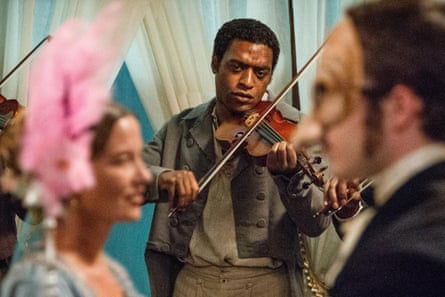
Film presents different aesthetic issues because there is a fixed mise-en-scène, whereas a novel tends to become a collaboration between the author and the imagination of the reader as to what the elements look like.
So immediately the purpose and the nature of film and prose “realism” begins to diverge and focus on different issues. Bochi
Film is very nuanced, framed by time and does afford the opportunity for art to imitate life, whereas a book affords itself greater space, time and interpretive paths to illustrate life. Additionally, a book creates its own rolling film in one’s headspace. As an example, I am reading Pat Conroy’s The Great Santini and for me the film was quite good in delivering its story and life message. The book, however, provided for me at least the opportunity to delve deeper into the characters, setting and themes and certainly to draw deeper parallels with actual life. transmitter14
Either format can be just as true to real life. A useful comparison is The Maltese Falcon, both the novel and John Huston’s film adaptation of it.
The novel is immersed in minutiae, down to a description of Sam Spade making sandwiches – but all of it illuminates the milieu of San Francisco at the time.
The film skips most of the little details (and accidentally blows one), but we’re never not convinced that everything taking place is happening in our regular world. Mariner70
It all depends whether a film or novel has its main characters sat watching reality/celebrity shows while ordering terrible food via an app. MoaningOldMan
I find reading a novel harder work than watching a film, and I mainly do it at home, and get distracted more easily – so novels. mekonista
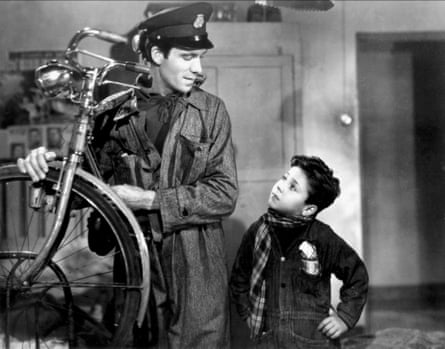
Biggles v Ladri di biciclette. Wuthering Heights v Police Academy. Depends on the film or novel, innit. slobberfest
In novels there is less of a compulsion for all the characters to be stunningly attractive. In lots of films, there is an unrealistic ratio of breathtakingly beautiful people to the normal-looking, and the only characters not required to be conventionally attractive are either villains or used for comic relief.
In novels, a non-visual medium, it is much more common for the main characters to look like most people do, and anyway we can imagine how they look rather than being told. By not imposing rigid conventional beauty standards on characters in the same way as films do, novels can come across as more lifelike. artisticallyinclined
A good novel is a reflection of how an individual author sees and thinks about the world. This is probably less so for films, being a more expensive, commercial undertaking (unless directed by a very distinct auteur). the_headspace
Why do you wish either to be “like” life? Surely art gives us a different view of the world, telling us other stories, letting us know, or glimpse, other lives. Serenissima6
Neither is real, so says this solipsist. StanEthel
There are both great and dreadful books and films, plus a huge load of stuff in between. SlowLoris
Novels are inherently more lifelike because when reading them we interpret their narratives in a way which makes unique sense to us. Films dictate what we see and hear, and the more the material deviates from real life – by planning or editing – the less lifelike they become. Ariadne_on_Naxos
There’s a false dichotomy in the question, surely? Not all novels let us into characters’ interior thoughts, and some films use voiceover to depict them. JohnUskglass
When a life is filled with exceptional circumstances both positive and negative, often the saying is, “I could write a book” or “You could write a book.” So I’d go with novels. Troublemakernot
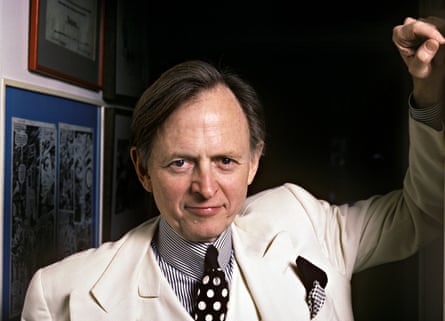
Novels. The Bonfire of the Vanities by Tom Wolfe is a brilliant book, and you come to understand the characters, horrible as they are. Then there’s the film of said book, starring Tom Hanks. It’s … not good. Though, to be fair to Tom Hanks, they completely changed the ending, and tried to make it comic. StephanieSteele
Films are not like real life, because they never show real life. They only show a sanitised version of real life in some, and just fantasy life in others. Books? Depends on the book, and the “visualisation” of it in the mind of the reader. So neither really, as others have written. DrJacobJacob
Turn it around. Is your life like a film or a book? Mine is neither, ergo films and books depict for me completely different worlds. BWildered
I bought The Godfather because the film had an X certificate and I was 14. I was lucky that books don’t have certificates. Or was I. Did the book haunt my dreams with dead horses? StephenSharp
I’m going to say neither … ;o) Zagradotryad
Films are not at all like life because all the actors have perfect teeth. MaryLO
In reply: And most of the actors would score 9/10 for good looks – not the sort of people in the local supermarket. PeteTheBeat
There are films set in supermarkets? The Horror … theseligsussex
Just when you thought it was safe to go back in the Waitrose … EddieChorepost
I used to [have perfect teeth], before life really kicked in for me. TerryBinney
Some people would perhaps add that the most unrealistic thing in films is people never having to hunt for a parking space. Erbium
It depends as much on the quality of authorship and film-making, respectively, as it does the reader’s own appetites.
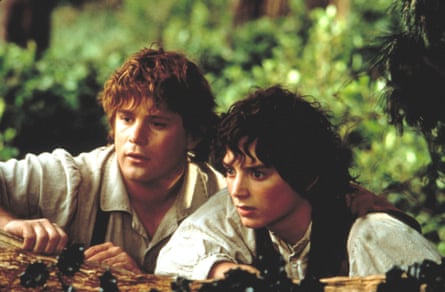
As a child and teenager I read vociferously, consuming for example Tolkien’s The Hobbit and Hawking’s A Brief History of Time. Both are tightly written, compelling and eminently readable, whereas Jackson’s celluloid Hobbit is slow and tedious and ABHoT had to be filmed as a Hawking biography rather than as a journey through cosmology. Dorkalicious
Not sure, but some of those Star Wars films certainly seemed to last a lifetime. sparklesthewonderhen
To me the most interesting films and books have characters that are not just one way or another but have pesky layers that may not be always appealing. Sort of like real people. kiramango
The vast bulk of (most) book content is narrative. What is … or what is occurring. A film has whole departments; location, scenery, clothing, props, effects, etc. devoted to that very task. Ditto, theatre. A script is essentially a book with all the mundane stuff left out.
Film does not have to explain everything … it’s in front of you, in photorealism. Thus, more time can be devoted to dialogue and overall characterisation. As to which is best … depends upon which one you prefer. FrankieandDexy
In reply: “… It’s in front of you, in photo realism …” But always as a third party. Literature allows you to be the character. HarrytheHawk
Novels can be far more flexible with the reality of life than films, which can be constrained by budgets, locations and running times. Sagarmatha1953
If “life” truly is a series of interactive, decisive moments, each influencing the next, then words will always have a more direct internal effect, beyond mere appearance.
The difference between the dynamic King James Bible and static ancient Egyptian pictograms. Biginabox
The consistency of narrative needed to drive a book along is a more accurate match for our individual internal monologues than bullet-point presentation needed to make a film watchable and coherent. A visual dialectic has to compromise on the detail that make a book worth reading. Othryoneus2482
One of the interesting things about reading novels is that we can try out various ways people have of thinking, feeling and being. kiramango
In reply: It’s the fundamental difference – a film can show what someone does and a good film will show their motivations. A novel puts you inside their head. HarrytheHawk
As pointed out already, films have voiceovers in them which is basically somebody reading a bit of the equivalent book out to you. At the extreme end a film could basically be an audiobook acted out in its entirety. MoreCheese
Inner dialogue [of novels] shows the processing depth behind the scenes. This depth makes it more realistic. They say there are three faces – that which you show to the world, that which you show to those closest to you, and that which only you see. By revealing internal dialogue, and getting the authors explanation for how the characters are thinking, the novel mirrors the complexity of life in a way films can’t.
The simplification of the visual media to account for attention spans makes the contrast to the book form even starker. Lawrence, Gothenburg, Sweden, by email
Every human on the planet experiences life uniquely. Films and novels represent a tiny TINY part of human experience located in the time and place of the ‘author’. Neither film nor novels represent anything beyond the authors’ experience. Stella Douglas, by email