.png) 5 hours ago
11
5 hours ago
11
Fetch the chair from storage. Deliver a message that causes disgust. Clean vomit in the afternoon and pour another glass in the evening. In Roman Sands RE:Build, you provide concierge service to delirious, broken people who couldn’t care less about the sweat on your forehead and the bags under your eyes.
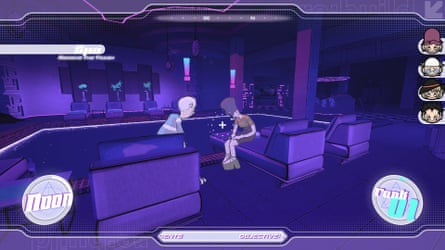
In this reimagining of the 2019 visual novel Roman Sands, crafted by the team behind the Americana horror road trip Paratopic, you’re trapped in a beach resort and tethered in a time loop. The task is deceivingly simple: fulfil menial directives from four gluttonous individuals, unlock tools and items to open more rooms and then do it all over again.
The loop is as monotonous as it sounds – and that’s the point. The visuals and sound work collide in flamboyant vaporwave-inspired story exposition. Reward animations are exaggerated to feed your lizard brain with dopamine, satirising the reward loops that make other games feel like a visit to a casino – some more maliciously than others. There’s gig economy commentary to boot.
Over time, I familiarised myself with everybody’s routine and needs. I was effective to the point of becoming uncomfortable about how entranced I was, squeezing every possible score multiplier out of every day so that I could spend fake money on stuff I didn’t need from a gachapon machine.
But this is only one half of Roman Sands RE:Build. Completing a series of (often obtuse) puzzles in the resort opens the cracks of the reality you’re trapped in, showing a tantalising escape route. In Act 2, the compulsive time-management is dimmed down in tone and rhythm.
Here it’s just you, your dead cow and a familiar voice on the radio, in the bowels of a subterranean research station. A parasite threatens to dismantle an already decaying refuge. Stuck in yet another loop, you must locate spare parts to fix an increasingly demanding machine, all while managing your oxygen level and completing small puzzles with barely enough light to read your PDA. It’s a stark contrast to the luxury resort, yet both acts have you navigating spaces where the walls (and their captives) are barely holding together.
Unfortunately this thematic cohesion is not matched by Roman Sands’ technical cohesion. The game froze multiple times, some button prompts didn’t appear until I restarted and occasionally a puzzle’s visual language was totally inscrutable, leaving me running in circles, unsure of how to progress. These problems frustrated me no end.
I’m glad I got to see the story through, however, with its not-so-subtle homages to the likes of Danganronpa and Evangelion. It remains one step away from its mysteries and doesn’t take them to extreme lengths. There’s a profound and alluring melancholy etched into this work, a broken and messy world that’s strange enough to foster questions, but smart enough not to provide every answer.