.png) 1 month ago
52
1 month ago
52
The chancellor of the exchequer and the IMF agree. Britain’s economy is about to take its greatest hit for decades. This is collateral damage from the US’s war on Iran and the closing of the strait of Hormuz – and will be made worse by sanctioning Gulf oil exports. Britain has already been weakened by four years of sanctions against Russia over Ukraine. Now its economic growth is to be crushed, its government’s popularity is plummeting and its prime minister may face removal.
This was what sanctions were supposed to do to the enemy, not to the UK. Their unprecedented severity was to teach Vladimir Putin the error of his ways. His friends were to plead with him to stop. Yet, in the years after sanctions took hold, Russia’s rate of economic growth was higher than Britain’s. Meanwhile, sanctions against Iran in the 2010s were meant to halt its nuclear programme. They appeared to encourage it. Now they are meant to undermine the Tehran regime and topple the ayatollahs. There seems to be little chance of that.
The US currently imposes economic sanctions on about 30 countries worldwide, often joined by other western governments. In addition to Iran, they include North Korea, Myanmar Belarus and Afghanistan. The one quality many of these states share is that they are still ruled by the same regimes as when sanctions were imposed; sanctions, in short, have not succeeded in destablising them.
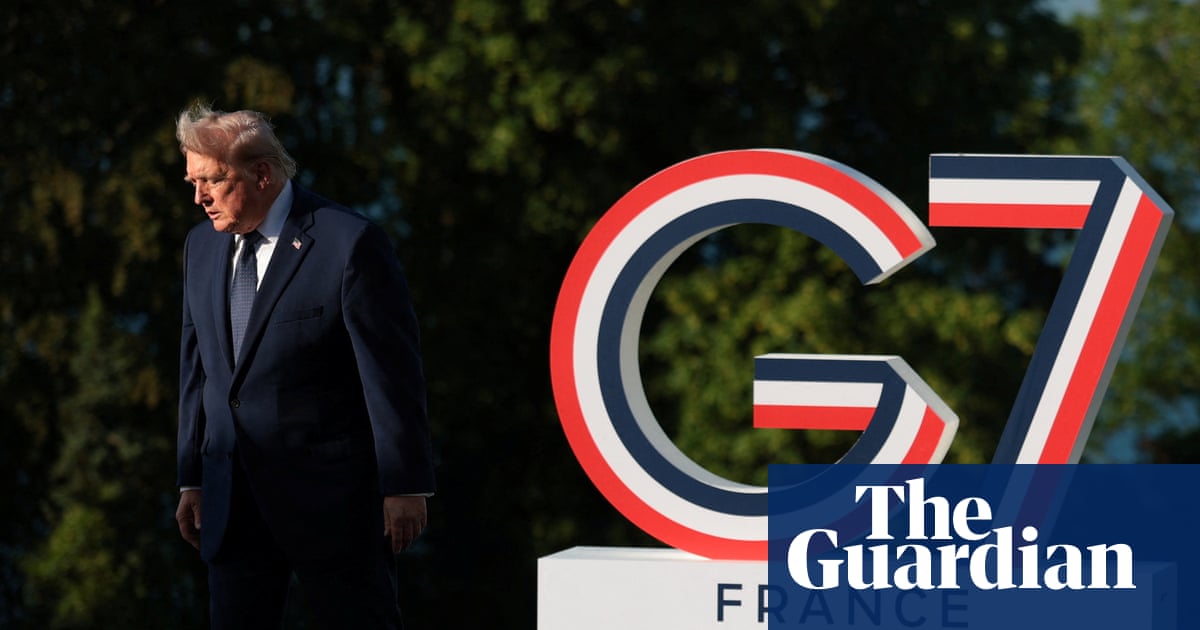
Sanctions have also strengthened the anti-western Sino-Russian trade alliance. They have caused many countries to embrace the Brics (Brazil, Russia, India, China and South Africa) partnership nations of the developing world against the west’s G7. They have been staggeringly counterproductive.
The Economic Weapon, by Nicholas Mulder, one of the few academic studies of sanctions, charts the historical futility of using trade to threaten an enemy. Except in the case of tiny states, trade always finds its own way out. Sanctions also have little impact on countries immune to internal democracy. They were ineffective against the fascist powers before the second world war, merely pushing them towards self-sufficiency. “The history of sanctions,” says Mulder, “is a history of disappointments.” Enthusiasts always reply that “this time it will be different”. It never is.
Defence thinktanks steer strangely clear of this subject. The reason is that, to the military mind, sanctions are an aggression that sounds tough but conveniently avoids actual force. Liberals like them as they seem a macho alternative to pacifism. Conservatives like them as they can be dressed in tough talk as “savage, swingeing, crippling” without sounding too bloodcurdlingly violent.
Above all, strategists espouse sanctions as preferable to bombing as a means of demonstrating power. They exhibit destruction and damage, while avoiding any need to show actual results. For decades, they have enabled the wealthy west to exert some sort of post-imperial reach, to look as if it cares, but not too much. If anyone gets hurt, it is mostly the silent poor.
In truth, sanctions have a far more serious consequence, and one that acts directly against the supposed objective of regime change. The impediments to trade and the freezing of contacts with target nations inevitably promote the exodus of their mercantile and professional classes. This is beyond any repression exerted by the regime. The flight of academics, engineers, scientists and the commercial community in general from Iran has been devastating.
Since Iran’s 1979 revolution, the country has lost millions of its citizens to emigration. As of 2021, more than four million Iranians were living abroad, and reports suggest that a large proportion of these are from the educated middle classes. This has immeasurably weakened the forces that might conceivably have replaced the existing regime. It may have sustained Europe and the US’s medical and other services and created a lively diaspora of expatriates, but sanctions have hollowed out the educated class, and the money that could bolster dissent and result in a refreshed democracy. These were the people who responded to Iran’s eight-year liberalising regime of Mohammad Khatami.
In Russia, similar groups came out of their shell in the 1990s, after the fall of the iron curtain. They welcomed outsiders to Moscow. They had the confidence to argue with them and with each other about their country’s future, and it was briefly exhilarating. All countries need such groups to help stir debate and challenge the seats of power. Those who did not flee Putin must suffer both him and the west’s ostracism – and now the fanatical Russophobia. We are like McCarthyites, demanding Russian performers denounce Putin before going on stage.
In both Russia and Iran, the soil in which dissent might take root has been rendered barren by emigration and embargo. If the west is sincere in wanting to change regimes in overseas states short of military invasion, it must be shrewd. It must exert soft, not crude, power. Political opposition needs aid and contact if it is to prosper. Not just trade but academic and cultural exchange should be promoted.
Sanctions are illiberal. They encourage victim nations to tighten their own borders and repress any opposition, which is why so many are still standing. Authoritarian countries usually change only when alternative elites see cracks widening in the armour of power. Russia and Iran are both countries with which Britain has in the past enjoyed a natural affinity. That affinity must be restored with friendship. It is a quality not found in sanctions.
-
Simon Jenkins is a Guardian columnist