.png) 1 month ago
55
1 month ago
55
Capitalist Realism: Is There No Alternative? was published in 2009 to critical silence. Journalists and academics initially dismissed Mark Fisher’s book, ignoring the cultural theorist’s requests for coverage and interviews, and even the then owner of his publisher, Zer0 Books, lamented that it was unmarketable. Fisher, also prone to self-doubt, questioned the relevance of his thesis and the gravitas of his personal approach after attempting, and failing, to write a traditional systematic work of theory. As of December 2025, more than 250,000 English-language versions of Capitalist Realism have been sold, with translations available in Spanish, Italian, Arabic Mandarin, German, Portuguese, Polish, Japanese, Hebrew, Korean and Danish. Fisher, unassumingly, had aspired to sell a few hundred.
Revered for writing honestly, if not brutally, the academic turned polemicist was adept at encapsulating the public mood. Fisher, who initially gained a following through his k-punk blog (2003-2016), popularised the notion that “it’s easier to imagine the end of the world than the end of capitalism”, first attributed to the American Marxist philosopher Fredric Jameson. Featuring essays centred on popular culture, work, mental health and education, Capitalist Realism – released just after the 2008 financial crisis, and created during the pro-business politics of Tony Blair’s New Labour – is a slim, comprehensible volume that challenges our profit-driven economic system and reflects on the endemic feelings of hopelessness experienced by many, then and still today.
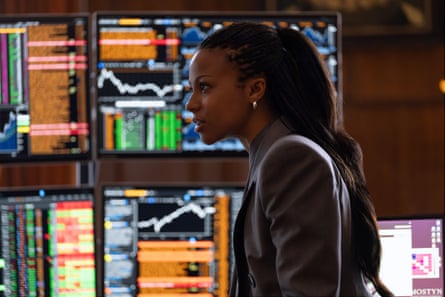
Konrad Kay, writer and co-creator of the Bafta-winning finance drama series Industry, tells me that he “always” recommends Fisher to people. “He’s unparalleled in documenting the subconscious human drives that underpin capitalism’s immortality, and the infernal digital panopticon we’ve created for ourselves to live or burn in.”
“Mark had great powers of empathy,” Tariq Goddard, his friend, former editor and co-founder, with Fisher, of Zer0 Books and its successor Repeater Books says. “I think his gifts were largely innate but were distorted, very interestingly, by his social experience.”
Fisher killed himself in January 2017, aged 48, having experienced depression intermittently since his teens. (His wife, Zoë, told the inquest that the NHS only offered a telephone chat with a GP; “We fell foul of a lot of reforms that have taken place,” she said at the time.) Born in 1968 to working-class, conservative parents, and raised in Loughborough, Fisher considered himself a perpetual outsider. The freelance writer operated predominantly in what he described as an “in-between space”, drifting between postgraduate study, temporary jobs and periods of unemployment. It wasn’t until his 40s, after teaching for several years at a further education college, that he was appointed as a lecturer in the department of visual cultures at Goldsmiths, University of London; despite his efforts, he never secured a job in the British media.
A recently released experimental documentary, We Are Making a Film About Mark Fisher, aims to disseminate the critic’s ideas further, including those less well known. The 65-minute picture describes itself as a “decapitalised” film, operating outside profit-metric-driven mainstream production. Artists Sophie Mellor and Simon Poulter self-funded the project, creating an Instagram account (@markfisherfilm) to recruit 70 volunteers, including composers, technical crew and graphic designers. Distribution was likewise formulated organically, on a request-by-request basis, with viewers even fashioning their own marketing posters. “It’s a space to think,” Mellor says, pointing out that Instagram, and unpaid labour, reinforces capitalism. “Is it actually possible to make a decapitalised film?” she asks.
By way of archival recordings, interviews and fictional performance, Fisher’s philosophy of “hauntology” recurs throughout We Are Making a Film About Mark Fisher, maintaining that modern society, as a result of “capitalist realism”, is haunted by futures that failed to happen: “the job, the house, the holiday, the life …” narrator Justin Hopper explains. Mellor and Poulter’s personal street footage, eerily evocative of urban surveillance, shows crowds of Britons demonstrating against the Iraq war in 2003; against an increase in university tuition fees in 2010; against military intervention in Libya in 2011; against US president Donald Trump’s visit in 2018; and against the genocide of Palestinians in 2025. The repetitive, cyclical clips create a sense of melancholia for lost, hopeful possibilities: a video shows a teenager shouting “fight back” into a megaphone at London’s March for the Alternative rally in 2011, attended by about half a million people.
The future energised Fisher, while the limitations of the present pained him. According to American artist Steve Kurtz, interviewed in the film, “Mark thought artists have never been given the assets and opportunity to bring forth the new.” His smart, idiosyncratic k-punk blog – which formed the basis of Capitalist Realism, followed by further collections Ghosts of My Life in 2014 and The Weird and the Eerie in 2016 – covered niche, experimental art, along with the mainstream. Analysing popular culture with an intense sincerity, Fisher employed criticism as a tool for political consciousness-raising, fostering public conversation in the process: he championed the art and ethos of grassroots electronic musician Burial; chastised Adele and Arctic Monkeys as examples of the music industry’s market-driven obsession with past aesthetics; and wrote about Pulp, Franz Kafka, HP Lovecraft, Christoper Nolan, Children of Men, Margaret Atwood and even the TV show Supernanny.
During his final years, however, Fisher shifted his mindset. The academic moved away from advocating for technological development and pushed a freer, artistic 1960s-and-70s-style future, focused on collective cultural production and arguing for a reclamation of the internet by the people. Journalist Andy Beckett, an interviewee in the documentary, explains Fisher’s repositioning: “He saw that some things from the past were OK, and digital technology, particularly automation, might be too close to neoliberalism to be as thrilling as he thought it to be when he was younger.” (While completing his PhD at Warwick in the 90s, Fisher became involved in the accelerationist thought movement bubbling up in the university’s Cybernetic Culture Research Unit.)
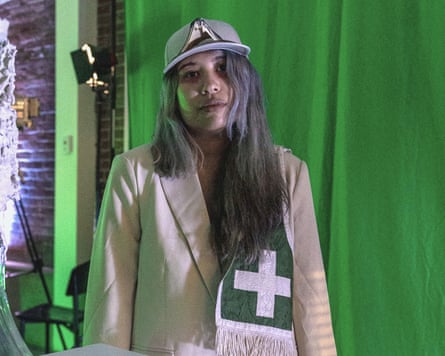
Today, Fisher’s ideas still resonate. “Acid communism”, the critic’s final, unfinished project building on his late-era ideas of a 60s-70s future, has been taken on by artists such as the Canada-based social sculptor Miki Aurora, who last year contributed to an interactive installation for Vancouver’s street community, offering uplifting visuals alongside free food and water, indoor resting and staff trained in overdose response. Likewise “hauntology” – which, though coined by French philosopher Jacques Derrida, was popularised by Fisher to illustrate that modernity is plagued by what could have been. Adam Curtis’s series All Watched Over By Machines of Loving Grace, screened on the BBC in 2011, highlights that technology has failed to democratise society, having been exploited by corporations and regimes to suppress dissent. Kay tells me that Industry’s season four portrayal of a call centre, televised earlier this year, was inspired by Fisher’s belief that the call centre is the perfect metaphor for neoliberalism: centreless, disembodied and unresponsive.
Yet, encouragingly, We Are Making a Film About Mark Fisher points to another way forward. Since October 2025, audience members have utilised Instagram with its £70bn ad revenue, to organise, coordinate and watch in-person group screenings in universities, back gardens, cinemas, living rooms and art galleries located everywhere from Coventry to Brisbane, Australia, via Malmö, Sweden. The collective endeavour to undermine capitalism continues, the feature concludes: “We are making a film about Mark Fisher and, now that you are watching, so are you.”
We Are Making a Film About Mark Fisher is at the ICA, London, on 19 May. You can find other screenings at closeandremote.net