.png) 3 months ago
52
3 months ago
52
Axel Rudakubana was able to carry out the Southport atrocity because of “catastrophic” failures by multiple agencies and the “irresponsible and harmful” role of his parents, a damning inquiry has found.
Sir Adrian Fulford condemned the “inappropriate merry-go-round” of state bodies passing the buck and their “frankly depressing” refusal to accept responsibility, saying: “This culture has to end.”
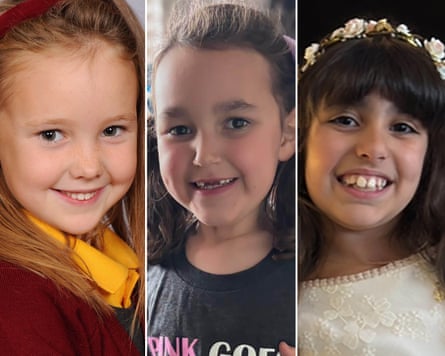
The inquiry chair said the murder of the three young girls – Bebe King, six, Alice da Silva Aguiar, nine, and Elsie Dot Stancombe, seven – and stabbing of 10 others was not “a bolt of lightning out of a clear blue sky”.
He added: “Instead, some form of grave violence … had been clearly, repeatedly and unambiguously signposted over many years.
“Indeed, several professionals who had direct contact with [Rudakubana] expressed serious fears, sometimes in stark terms, that he would go on to harm or kill.”
Rudakubana was jailed for life last year after his ferocious assault on young girls at a Taylor Swift-themed holiday club in the Merseyside town on 29 July 2024.
The teenager, who was 17 at the time, had been on the state’s radar for nearly five years by the time of his attack, which sparked racist riots in cities and towns across England.
Publishing his 260-page report at Liverpool town hall on Monday, Fulford said Britain’s multi-agency model for troubled young people had “completely failed” and that ministers should establish a new dedicated agency or structure to oversee complex offenders such as Rudakubana.
He said there was a “fundamental failure” by any organisation to take ownership of the risk Rudakubana posed, including a “disturbing lack of clarity” about who, if anyone, was the lead agency.
Fulford added: “Numerous systems that should have provided oversight, assessment and protection were ineffective or inadequately used. Some failed outright. The consequences were catastrophic.”
The inquiry said he had “profound concerns” about the “misguided and irresponsible” actions of Rudakubana’s parents, Alphonse Rudakubana and Laetitia Muzayire, who discovered in the weeks before the attack that their son was building a lethal arsenal of weapons but failed to report it to police for fear he would be arrested or taken into care.
He said: “If the full extent of [Rudakubana’s] family’s concerns had been shared with authorities in late July 2024 – including on the day of the attack – it is almost certain this tragedy would have been prevented.”
Fulford also criticised a repeated tendency of professionals to “excuse” Rudakubana’s increasingly violent and unpredictable behaviour on the basis of his suspected, and later confirmed, autism diagnosis. “This was both unacceptable and superficial,” he said.
Fulford said he accepted that professionals dealt with Rudakubana in good faith, despite many shortcomings. But he added: “The frankly depressing – and therefore urgent – matter requiring government attention is this failure, at an organisational and individual level, to stand up and accept responsibility for managing the risk that [Rudakubana posed].
“Far too often, [the killer’s] ‘case’ was passed from one public sector agency to another in an inappropriate merry-go-round of referrals, assessments, case-closures and ‘hand-offs’.”
To avoid a repetition of the attack, Fulford said, this “culture has to end”, adding: “This failure lies at the heart of why [Rudakubana] was able to mount the attack, despite so many warning signs of his capacity for fatal violence.”
Rudakubana was known to the state from October 2019, when the then 13-year-old made several calls to Childline admitting to having murderous thoughts about a bully. He said he had taken a kitchen knife to school on 10 occasions.

Two months later, he returned to his high school armed with a hockey stick and attacked another pupil, breaking their wrist. Police later found a knife in his backpack and arrested him on suspicion of assault and carrying a bladed article.
Fulford said these early risk indicators were not properly understood and that information was not shared between agencies.
“As a consequence,” the inquiry chair said, “the significance of subsequent events were seriously underestimated and opportunities to intervene were lost. This was a critical factor in [Rudakubana’s] risk never being properly appreciated.”
The most striking missed opportunity was in March 2022, when Rudakubana went missing from home and was found with a knife on a bus, telling police he wanted to stab someone. He also admitted to thinking about using poison.
Instead of arresting the teenager as they should have done, Fulford said, Rudakubana was returned home by two rookie police officers, who advised his parents to hide their knives.
Had Rudakubana been arrested, his home would probably have been searched, leading to the discovery of the ricin seeds he had bought and the terrorist material on his computer, the report found.
Fulford concluded: “Rigorously putting out of mind the so-called ‘benefits of hindsight’, I have no doubt that if appropriate procedures had been in place and if sensible steps had been taken by the agencies and [Rudakubana’s] parents, this dreadful event would not have happened. It could have been and it should have been prevented.”
Rudakubana was referred three times to Prevent, the counter-terrorism agency, over concerning remarks he had made or material he had searched online at school.
Prevent dismissed his case each time on the basis that he had no clear ideology such as jihadism or rightwing extremism. Counter-terrorism officers have accepted this was a mistake.
Fulford criticised agencies for failing to investigate Rudakubana’s “chilling” internet use, finding that his interest in “degrading, violent and misogynistic” content fed his obsession with violence and led him to build an arsenal of weapons, including knives, a crossbow, petrol bombs and material to make the deadly poison ricin.
The judge said he would consider in the second phase of the inquiry whether there should be a new power to monitor or restrict the internet use of young people who are believed to pose a threat.
Fulford said the “pervasive failure to act on [Rudakubana’s] dangerousness, with some notable exceptions, was a fundamental failure in this case”.
Before the publication of the report, Keir Starmer promised to act on the inquiry’s recommendations. “It’s absolutely right that we act on the findings of this, and we will act on those findings.”
Questioned on whether organisations should be held accountable, the prime minister added: “There does have to be accountability, there should always be accountability.”
Nicola Ryan-Donnelly, a solicitor at the law firm Fletchers which represented 22 of the injured children at the inquiry, said: “It is clear there is a need for whole-scale system reform across health and social care, education and policing.
“As Sir Adrian Fulford has said, the findings of this inquiry are disturbing and frankly depressing. These calls for organisational and individual accountability must be heard. They must be acted upon.”
Ryan-Donnelly added: “The families we represent have shown courage, strength and honour in the darkest of days. Their lives have been permanently altered by these heinous acts of violence. The physical and emotional scars inflicted on them are a daily reminder of something that we now know could and should have been prevented.”