.png) 2 months ago
36
2 months ago
36
Billions of pounds of investment, years of engineering works – and now, the moment of truth. On 14 December a revamped railway timetable goes live across Britain, with the biggest fanfare and radical changes for the east coast mainline, where passengers are promised more train services, faster journeys and a new era of reliability.
But the spectre of a previous, disastrous timetable change from May 2018 still looms over the railway. So will Sunday’s revamp be a great gift for passengers that the industry expects – or usher in a bleak midwinter ahead?
LNER, the leading intercity operator on the line from London to Scotland, will have 60,000 extra seats a week in total, and cut the fastest journey times from the UK capital to Edinburgh to shortly over four hours, and to Leeds to a little over two, with six instead of five trains an hour out of Kings Cross most of the day.
More TransPennine Express trains will run north of Newcastle upon Tyne and there will be more East Midlands services between Nottingham and Lincoln. Northern will start a new hourly fast service between Leeds and Sheffield, and more trains from Middlesbrough. At the southern end of the line, Greater Anglia and Thameslink are tweaking routes and adding extra seats.
With more than £4bn invested in track and trains over the last decade on the east coast mainline, the Treasury expected to see results sooner. A major revamp for the timetable initially was planned for 2021, before the pandemic upended assumptions. A full overhaul was then lined up in 2024, but concerns over the readiness led to plans being postponed for another year.
Timetables change every six months, but rarely to this degree. The railway still bears the scars of seven years ago, when no one pulled the alarm cord before a similarly sweeping timetable change, despite what became retrospectively evident: just how unprepared and ill-equipped the railway was to deliver the new services.
Overrunning track works in the north eventually led to hastily redrawn timetables, finalised just weeks rather than months in advance – while train operators, struggling already to provide drivers, belatedly admitted to not having trained enough people for all the new services.
Tony Miles, a rail writer and industry expert, remembers being with the then chief executive of Network Rail, Mark Carne, just before the fateful change. “Carne wasn’t anxious. He told me: ‘Everything will run perfectly on a good day,’ which is what he had been assured by his minions. But when I spoke to train planners, they said they didn’t have diaries that went far back enough to find the last good day,” says Miles.
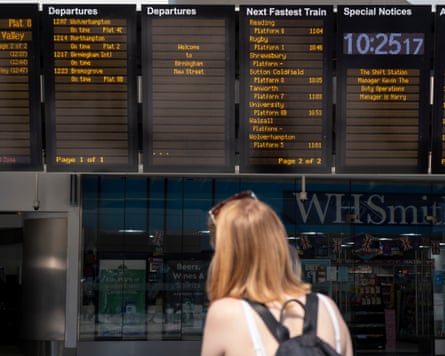
It was grim for rail and worse for passengers: widespread cancellations and delays over a calamitous few weeks led to a full review of the whole industry and ultimately to the fundamental changes that the government is bringing in, for a single “directing mind” to run an integrated Great British Railways.
So can the public be confident in the new timetable this time? It comes when rail punctuality is already erratic in many areas: the recent debacle of the 7am Avanti Manchester-London express service, which was due to run as an empty “ghost train” under the revamped timetable but was reinstated after a backlash, highlights nervousness over a capacity crunch.
With new open-access operations starting on the west coast mainline – First Group’s Lumo running from London to Stirling – the Office of Rail and Road had wanted a firebreak, or room in the timetable to minimise the fallout when things, inevitably, go wrong. Several more open access services will also use the east coast mainline in the new timetable.
There are, as one industry insider puts it, some “heroic assumptions about performance”. But with the timetable so long in the planning, and the key operators under direct state control, anxiety owes more to lingering trauma from 2018 than any of the danger signals that presaged that fiasco.
The rail minister Peter Hendy, who was chair of Network Rail in 2018, has signed this one off – and makes clear it is time for the railway to deliver on the investment, given the huge spend and scant reward for HS2, and Treasury scepticism surrounding other projects. As the government drags its feet over the funding of the Northern Powerhouse Rail programme, the railway needs to show money is well spent.
“The £4bn that has been put in was designed to increase the level of service, to create economic growth and better connect jobs and homes,” Lord Hendy says. “It’s taken several years to get any sort of agreement within the railway industry about putting this timetable in and we’ve finally done it. There’s been a lot of preparation.”
The major works enabling the changes, over the course of a decade, include: the remodelling of tracks at King’s Cross station and reopening a disused tunnel to reduce congestion; building a “dive-under” tunnel at Werrington in Cambridgeshire for freight trains to reach east England’s ports without crossing the main line; and new platforms at Stevenage and Doncaster stations to aid the swift passage of trains.
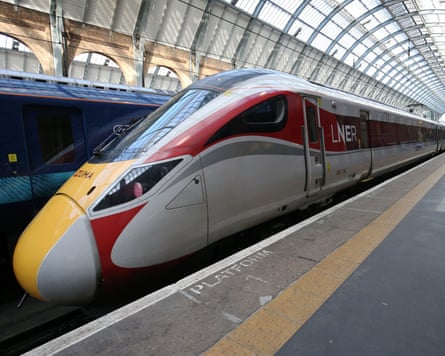
Alongside that, the government splashed out on Hitachi Azuma trains that started running for LNER in 2019. A separate, ongoing multibillion-pound programme to “digitise” the line – replacing the line side signalling with direct communications to the train’s cab, to bolster reliability and capacity – will not be finished until 2030.
Hendy says he is not taking anything for granted, heading to York this week to see the gold control in the regional operating centre “to make sure that I’m satisfied that everything’s been done. I’ll be watching on Sunday and for the days afterwards, but we’re pretty confident that it will work well because a lot of effort’s been put into doing it.”
LNER says it has used “cutting-edge technology to work through numerous simulations of the timetable” to refine its plans, with staff in the control room at York preparing for several years, working directly alongside teams from other operators and Network Rail.
A Network Rail spokesperson says: “The new timetable has been developed through a whole railway approach, setting us on the right path to provide further journey improvements in the future for the passengers and communities we serve.”
The timetable, Hendy says, “represents possibly the maximum amount of service for the moment that you can run … but the prize is really significant”.
Fundamentally, that prize is a better railway; but the east coast intercity service in its various guises has also long been a significant contributor to Treasury coffers, and annual revenues to the state-owned operator are expected to go up by tens of millions of pounds.
“It’s squeaky bum time,” says Miles. “This timetable’s pushing everything to the limits of perfection. It may be brilliant but a lot of people in the industry are saying the government pushed it through rather than the operators. The concern is, is this over-optimism again?”