.png) 6 hours ago
9
6 hours ago
9
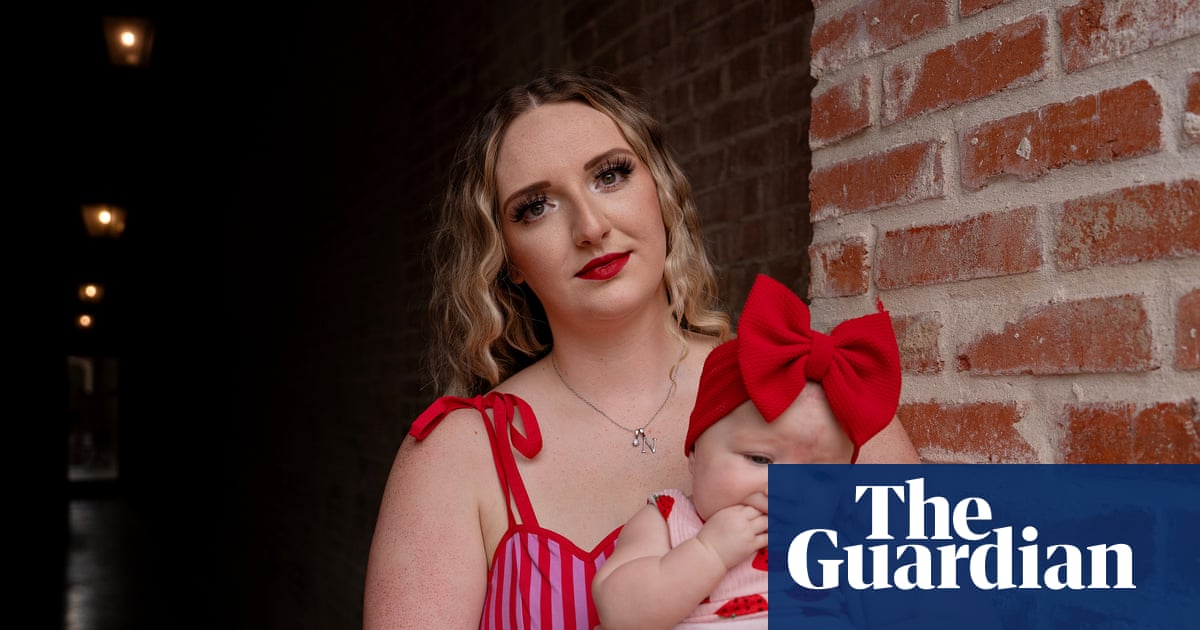
When Chamise Alston was ready to have a child, she connected her computer to her TV and scrolled through profiles with her best friend, dismissing people who seemed like the wrong fit. Unlike the average millennial on a dating app, Alston was scanning a sperm bank catalogue for potential donors. The Maryland-based therapist hoped to conceive a child through the assisted reproductive technology in vitro-fertilization (IVF).
That winter day in 2023, Alston and her friend chose a donor who would help her become pregnant with her now 16-month-old daughter. As a Black woman, she felt empowered taking control of her reproductive destiny.
“I always wanted to be a mom,” said 40-year-old Alston. “Once I realized that there was a route for me to be a mom, sans a relationship, that’s always been my mission.”
Alston is part of a growing number of Black women opting to be single moms by choice (SMBC) through IVF, intrauterine insemination and adoption. Studies show that SMBCs are most likely to be financially stable, educated women in their late 30s. While Black women who choose solo parenting fit a similar profile as their white peers, they face unique challenges. Along with navigating stigmas around Black single motherhood, they also contend with a limited number of Black and brown sperm donors, and sometimes face discriminatory experiences from hospital staff during labor and delivery.
Considering these hardships, many Black SMBCs work to assemble a strong familial and social village of support. The Guardian spoke to several women who said that they rely on a community of family, friends, neighbors and other moms who assist them in raising their children. In-person and virtual networks such as Mocha Moms Inc and Single Mothers by Choice also provide them with tips and camaraderie with other parents.
“I think we’re changing the narrative. We’re going in eyes open, understanding what the expectations are of us, versus going in with a partnership and then being left to fend for [ourselves],” Alston said. “It’s showing for me that you don’t necessarily need a man to fill that void and help create your family. It’s the family you make.”
‘Safe haven’
Support from a virtual and in-person community has helped Jennifer Cruz throughout every step of her parenthood journey. She’s a board member of Single Mothers by Choice, a national network for SMBCs founded in 1981. The organization’s Facebook has 15,000 followers, and local chapters offer virtual and in-person meetups where single moms share tips and experiences.
Cruz, an Afro-Latina based in New York City, originally joined the group when she was first considering single motherhood at 29 years old in 2014. Seeing other moms breastfeeding their children and attending doctor’s visits alone showed her that it was possible. When Cruz first joined the meetings, held at a performance art center in Manhattan, she was the only woman of color in attendance. But it became increasingly diverse when she led the New York City chapter from 2015 to 2020.
She’s shared with members everything from experiencing her baby’s first kick in utero, to raising a child with special needs. The special education teacher has an 11-year-old son conceived through IVF with a donor’s sperm, and a four-year-old daughter with her ex-husband. Cruz hopes to inspire other women who look like her to become single mothers by choice and to know that they won’t be alone.
“Hispanic women can do this too. Black women can do this too, and it may not be the easiest path, but it is doable,” 41-year-old Cruz said. “You don’t have to make choices of putting your career on hold or not being able to have kids because you can’t find someone. If this is something you truly feel is right for you, everyone should have that support to be able to do that.”
Jamila Galloway, a 44-year-old marketing executive based in Washington DC, is proud to call herself a single mom by choice. She decided to pursue solo motherhood while living alone in March 2020. Over the course of several years, Galloway completed nine intrauterine inseminations and eight IVF cycles that were covered by health insurance and a fertility fund through her job. After a long and complex journey, she welcomed her daughter through IVF six months ago. Alston and Galloway, who are cousins, have communed with each other through the joys and trials of solo parenting.
Galloway also finds camaraderie as a member of Mocha Moms Inc, a virtual and in-person national network for moms of color. She’s used the group’s Facebook page with 75,000 followers to research questions that she had during pregnancy and after delivery. Some of the members were acquaintances she reconnected with after seeing their profiles on the page. The group’s single-moms network with about 100 members nationwide meets twice a month on Zoom, and also hosts regional meetups once a year. Members discuss a range of topics including dating as a single parent.
“I call it a safe haven for you to be vulnerable,” said Clarice Doctor, the Mocha Moms singles network director, “and have the opportunity to talk without judgment.”
‘We always will find a way’
For Black women pursuing solo motherhood, their journey is sometimes filled with hurdles from conception to delivery. Since Black men make up less than 3% of donors at sperm banks, Galloway conceived her child with sperm from a white donor. “When it comes to other ethnicities, I don’t think they have the same struggles in continuing to build the family that they envision for themselves,” Galloway said. “Black women don’t always have agency over the options that we have available, but we always will find a way.”
Over the past few years, Galloway has developed a passion for increasing the supply and access to Black and brown donors. She helps market her friend’s cryobank, Reproductive Village Cryobank, which specializes in Black donors.
Cruz found only three donors who matched her Puerto Rican heritage when conceiving her son. Her family, adhering to traditional expectations in Hispanic culture, also opposed her pursuit of motherhood without a husband. Her father stopped speaking to her when he found out about her plan. When Cruz gave birth to her son, hospital staff insisted that she fill out an application for Wic, a federal nutrition program for low-income families, even though she made too much money to qualify. A social worker also came into Cruz’s hospital room to ask her if she wanted to put her child up for adoption. “If I had been white coming into the hospital, would they have done this?” Cruz said. “Especially here in the Bronx, going into these hospitals, when you hear ‘single mom’, there’s just this preconception that that means you don’t have money, you don’t know what you’re doing or that this was unplanned.”
Black single mothers in the US have long been negatively portrayed in the media and in government policy. In the 1965 federal report The Negro Family: The Case for National Action, Daniel Patrick Moynihan, the former US assistant secretary of labor, wrote that the rise of single mothers helped drive poverty in Black communities. And in the years since, the trope has continued in countless TV shows and films, such as the characters Mary in Precious, Lytia in The Single Moms Club and Wilhelmina in Ugly Betty.
In her recent book Black. Single. Mother.: Real Life Tales of Longing and Belonging, the writer and cultural critic Jamilah Lemieux spoke to 21 moms to push back against some of the harmful narratives. Lemieux, a Los Angeles-based single mother who co-parents her teenage daughter with her former partner, said that “single mom by choice” is a complicated term, because it creates a hierarchy that places moms who chose to be solo parents on top.
“It implies something that’s not necessarily true, that the vast majority of single mothers had no agency in their position,” Lemieux said. “So many mothers are single mothers because they left an unhappy, unhealthy or unsafe relationship. They don’t get the same credit or respect that we would give to somebody who conceived via IVF or adopted a child.”
‘No hood like motherhood’
Despite their negative portrayal in the media, Black single mothers have long banded together to help each other. It’s taken Galloway by surprise to see how enthusiastic her community has been to offer companionship, advice and meals. “If my daughter could really understand what’s going on, she’d probably be like: ‘How many aunties do I have?” Galloway said.
Alston has also connected with other single Black moms who exchange hand-me-down clothes with each other. She recently hosted a water play-date for several of her friends’ and relatives’ children, including Galloway’s daughter.
“Until I became a mother, shortly after giving birth, I just didn’t realize how beautiful the motherhood community was. People were checking in, giving tips on breastfeeding, sleeping,” Galloway said. “Someone has said there’s no hood like motherhood, and I couldn’t agree more.”