.png) 1 month ago
46
1 month ago
46
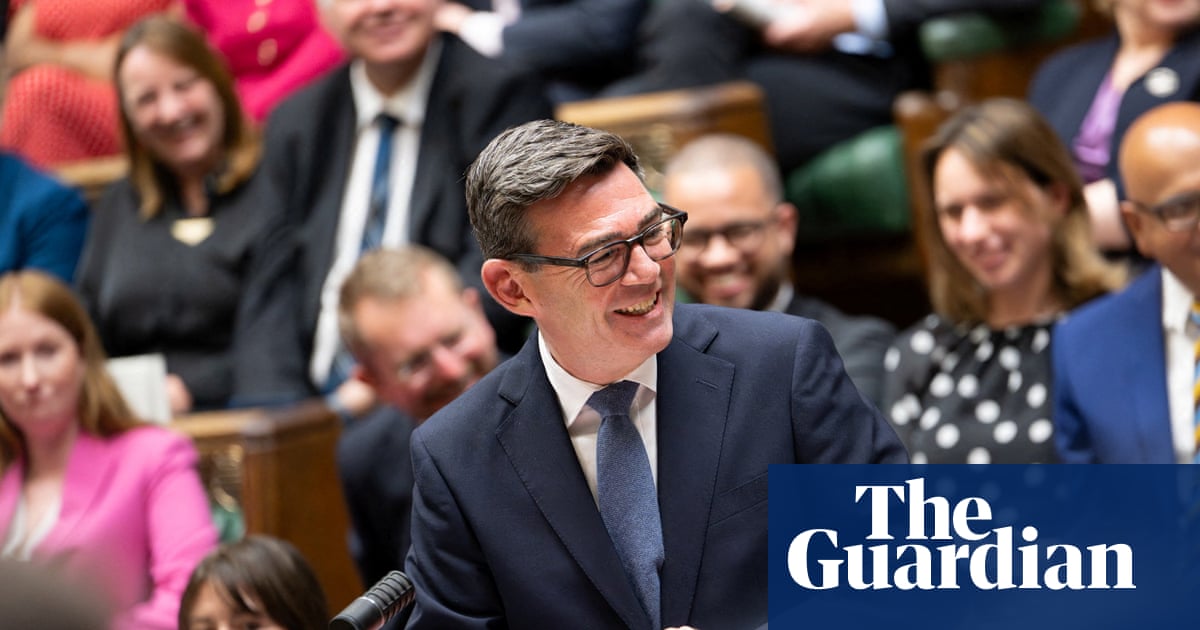
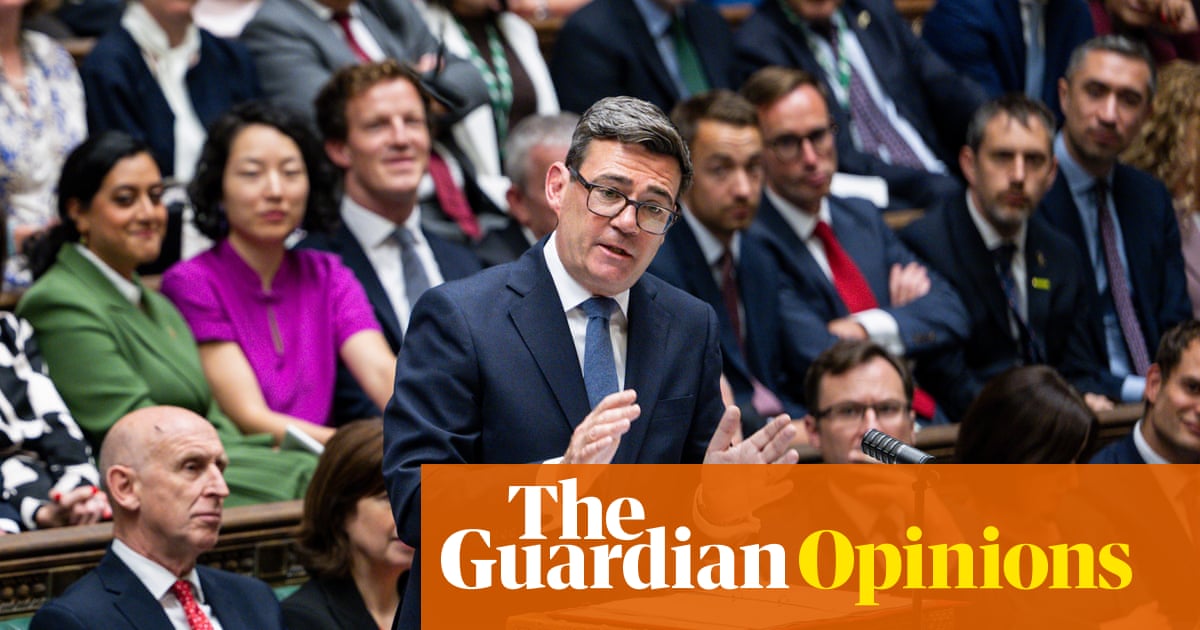
The first piece of unsolicited advice I would offer to Britain’s incoming prime minister is: don’t take unsolicited advice. Don’t be one of those leaders who’s swayed by the last person in their ear. That’s what they used to say about Boris Johnson, that he was a cushion that bore the imprint of the last person who sat on him. Instead, Andy Burnham should study closely the experience of Johnson and the rest of his recent predecessors – and, let’s face it, there’s plenty of them.
He might start by thinking about the period that will begin the moment he steps into Downing Street on Monday. How he handles this opening phase of his tenure is crucial: you never get a second chance to make a first impression, and all that. To many voters outside Greater Manchester, Burnham is still a relatively unknown quantity. The view they will form of him will be largely shaped by what he says and does in the next few weeks. For much of the electorate, it will be the overture that decides their verdict on the show.
The obvious precedent is the most immediate. Keir Starmer ruined his own honeymoon by promising that things would only get worse. The gloom that set in during the summer of 2024 never really shifted. Admittedly, Burnham arrives without the slate-cleaning magic of a fresh mandate won in a general election, but voters do seem ready to give him a chance. There’s a recognition that seven prime ministers in 10 years is not sustainable and that, for the country’s sake, Burnham needs to succeed. That translates into a goodwill that must not be squandered.
It’s not quite the same as optimism, which, after the past decade, is in short supply. Perhaps it’s closer to hope. Either way, Burnham has to nurture it, staying true to what he said, in a speech today formally assuming the leadership of the Labour party, was his defining mission: “To bring back hope.” It helps that he has an easier, sunnier demeanour than the man he follows, but he needs to learn from Starmer’s early mistake. If there are sober warnings to be delivered about, say, the economic outlook, he should leave those to his chancellor. For now, the PM needs to persuade people that the future can be brighter.
If it works, and Labour’s poll numbers improve, Burnham has to avoid what proved a fateful error for one of his former bosses. There can be no talk of an early election, not so much as a whisper of it. As Gordon Brown learned to his cost, such speculation rapidly develops its own momentum, until the decision is effectively made for you: you have to go to a snap poll, because to do otherwise looks like you’ve bottled it. The only time to allow chatter about an election date is about an hour before you announce it.
Burnham insisted today that he’s not yet made what will be among his most significant decisions: the composition of his cabinet and his Downing Street staff. A maxim of the Ronald Reagan administration was that “personnel is policy” and it’s true. Burnham cannot do every job himself, so who he puts into the key positions will determine the competence and ideological direction of his government. That Starmer’s first chief of staff, Sue Gray, lasted only three months in the job, replaced by the very different Morgan McSweeney, was an early warning of the uncertainty at the core of his administration.
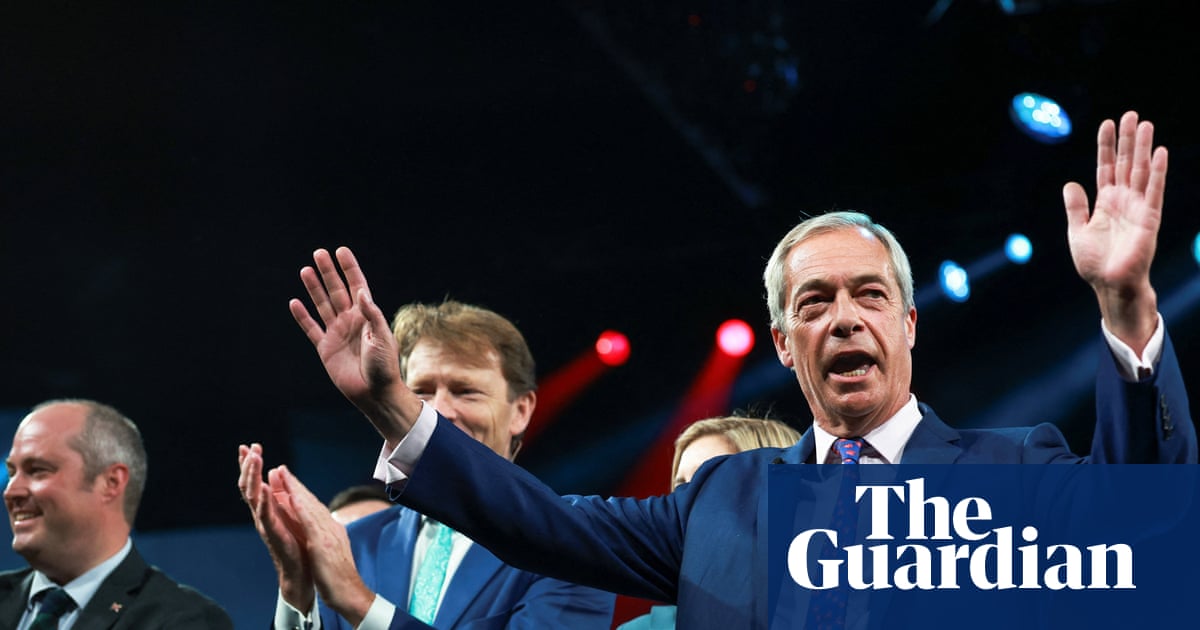
In that same spirit, Burnham has to be sure about his opening moves. His aides say there will be a burst of policy announcements next week and that’s good: there can be no repeat of those Farage summers, where Labour inactivity allowed the Reform UK leader to dominate the news agenda. But those announcements have to be the right ones. Burnham will need no reminding of the lasting damage caused by the 2024 move to reduce the winter fuel allowance, subject to one of many eventual U-turns. Public patience for policy reversals is exhausted, all used up by Starmer and Rachel Reeves. The new team will have to get it right first time.
That’s easier if a PM has a clear plan of action. Tacitly contrasting himself with the outgoing prime minister, Burnham was adamant today: “I know what I believe … I know what I want to do … I have a plan.” That’s essential for multiple reasons, but here’s two.
First, it ensures that you are not derailed by events or crises that come out of a clear blue sky. Burnham is plainly animated more by domestic than international affairs, and his speech today, in which neither foreign policy nor Europe was mentioned, confirmed it. But the world will have other ideas. Something, somewhere, will happen and it will threaten to devour his premiership. That’s what happened to Tony Blair, with 9/11 and the invasion of Iraq. A clear plan, a policy to-do list, can help a government stay on track.
But it has a second benefit. A clear direction set from the top lets everyone else in government – ministers and, especially, civil servants – know what they’re meant to do. The unlikely model here is Margaret Thatcher. In the Thatcher era, even the most junior official, when confronted with a policy choice, knew what the boss wanted: they knew to pick the option that was, crudely, less state, more market. Today Burnham lamented the Thatcherite settlement by which “Political power was centralised and economic power was privatised.” That sentence effectively tells Whitehall what the PM wants: namely, the opposite. He wants to see political power devolved, and a more active economic state, unafraid of public ownership.
That policy strategy has to sit alongside a political one. Starmer alienated much of his own party by following a gameplan devised by McSweeney. Its target were “hero” voters, often in red wall seats, including those who had voted leave in 2016 and gone on to back Farage. McSweeney’s approach rested on a crucial fallacy, one that was exposed yet again by national and local elections in May. Yes, Labour lost seats to Reform, but that did not come about because of a mass defection of Labour votes to Reform. Rather it was the result of the defection of previously Labour voters to other parties, whether Greens, nationalists or Lib Dems. With the anti-Reform vote fragmented, Reform was able to come through and win.
after newsletter promotion
As professor of political science Rob Ford points out, the most vivid proof of the phenomenon, albeit in reverse, is one Burnham knows well. At the Makerfield byelection, Ford told me, the growth in Labour’s vote was “almost identical” to the decline in the combined vote for Greens and the Lib Dems. Burnham’s achievement in Makerfield was less about winning back the Farage-curious, though Burnham may have won some of those, and more about uniting the anti-Farage camp. What’s more, polling shows Labour voters who moved to the Greens or the Lib Dems are much more open to coming back than are defectors to Reform. They’re lower-hanging fruit. Whereas, says Ford, a Labour strategy focused on the vanishingly small number of Reform voters willing to give Labour another look is a strategy focused on “a mythical species”, one that will remain forever out of reach.
The ideal is a programme of broad appeal, crossing the culture war battle lines that tend to separate, say, Green and Reform voters. Burnham may have been hinting at that when he said he won’t try to “out-Green the Greens or out-Reform Reform” but will instead be “distinctively Labour”. Such a path would concentrate on those issues – public services, the cost of living – that trouble everyone, rather than questions bound to alienate and divide.
Easier said than done, of course. Andy Burnham is about to take on a perilously difficult job, one that has felled so many others. He says he is ready. For the country’s sake, we have to hope he is right.
-
Jonathan Freedland is a Guardian columnist