.png) 2 months ago
60
2 months ago
60
The sun rises over the plateau of Neuquén’s open-air rubbish tip. Maia, nine, and her brothers, aged 11 and seven, huddle by a campfire. Their mother, Gisel, rummages through bags that smell of rotten fruit and meat.
Situated at the northern end of Argentinian Patagonia, 100km (60 miles) from Vaca Muerta – one of the world’s largest fossil gas reserves – children here roam amid twisted metal, glass and rubbish spread over five hectares (12 acres). The horizon is waste.
“Mum, can I cachurear?” Maia asks, using the local slang term for searching out cans, wires or sellable items. She grabs sticks to open bags, looking for toys, false nails, or items to sell. She is saving to buy her mother a gift. Her brothers sit by the fire; the youngest sleepy, the eldest angry.
“Cachurea near me,” says Gisel. Slipping on a glove full of holes to dig through the bags, she expects the supermarket truck before noon and hopes for canned or frozen food. Perhaps they will eat meat again, after washing and frying it.
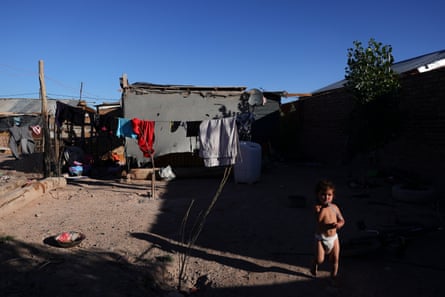
From atop the rubbish mountain the dirt tracks and tin-and-wood shacks of her neighbourhood, Manzana 34, can be seen. About 400 families live there, 300 metres from the piles of refuse. For many, the dump is not just a permanent health and environmental hazard, but also a means of survival: they find food, school supplies, furniture and construction materials.
In Neuquén and hundreds of Argentine towns, 150,000 children live within 300 metres of rubbish dumps in households where families cannot meet their basic needs. Children here often go hungry, drop out of school or finish without having learned the essentials, according to the Argentine Catholic University (UCA)’s Barometer of Social Debt in Children.
Across Argentina, there are about 5,000 open-air rubbish dumps. In many of them, children scavenge daily – a source of revenue in a country where 1.2 million children under 17 live below the poverty line.
“Children who live or work in landfills are invisible,” says Sebastián Medina, chief of staff at the national ombudsman’s office for children and adolescents.
After inspecting 11 open dumps, his team found no government protocols in place to protect these children, whose living conditions contravene the UN Convention on the Rights of the Child, which is constitutionally recognised by Argentina.
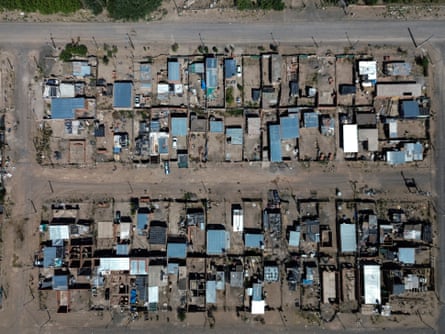
The ombudsman’s report recommends that municipal, provincial and national governments establish care centres for children whose parents work in dumps, and develop plans to close the sites and provide alternative employment.
National authorities insist that responsibility lies with provincial governments.
When asked whether specific policies exist, they cited “different care programmes, such as early childhood centres” as already in place.
The provincial government of Neuquén declined to comment on the landfill beside Manzana 34.
In the absence of solutions, the problem goes on. On a spring afternoon in Manzana 34, the heat presses down and the few trees offer no shade. The acrid smell of the dump drifts in on the wind, as Gisel drinks mate at her neighbour Johana’s home.
Johana has four children between the ages of nine and 15. The women’s houses are constructed from recycled materials: sheets of metal, cardboard, plastic and demolition debris. Beds are wooden pallets.
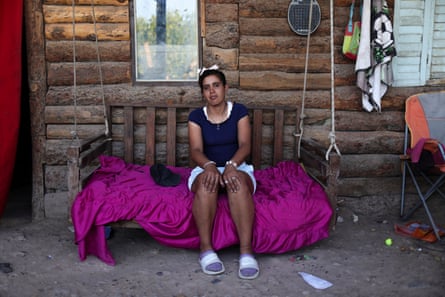
Last night, Gisel and her partner searched through rubbish from midnight until 7am, while their children were looked after by her sister. “It was a good day,” she says. Selling aluminium cans earned enough for noodles and tomato puree. “Yesterday, I only had two tins of tuna from the rubbish tip. The children went to bed hungry,” she says.
She found clothes to sell at a flea market. With the money, she will buy cold cuts from a neighbourhood WhatsApp group: “There are neighbours who sell everything they find in large quantities and in good condition. It’s like a small online market.”
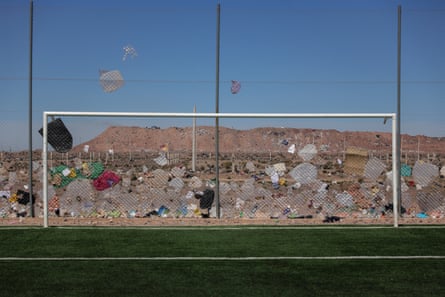
Faced with the shortcomings of the state, charities and community organisations are stepping in to ensure a better future for the local children. Amid rough gravel roads, a patch of green synthetic grass stands out: the football pitch of Club Deportivo La Colonia.
Until February, it was bare dirt. The municipality of Neuquén provided turf and a fence. Four parents founded the club to keep children off the streets. From 6pm to 9pm, 140 children play and eat a snack – often their only evening meal.
Three hundred metres away, the dump smokes on the plateau. On windy days, the fence catches clouds of plastic bags, and when the smoke thickens, football is cancelled. When there is no wind, the smell of burnt cable can drift over. Scrap collectors burn insulation to extract the copper inside. “The worst is when the rubbish explodes – the smoke burns your throat,” say neighbours.
Living near poorly managed landfills poses environmental and health risks, as research shows. These sites release toxic leachate that contaminates soil and water and produce gases such as methane and CO2, contributing to the climate crisis.
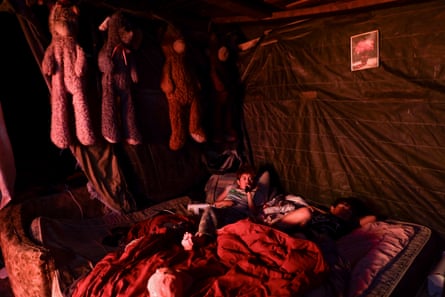
Residents face higher risks of illnesses, including respiratory, skin, gastrointestinal infections, congenital disabilities and cancer risks. Exposure to heavy metals and organic compounds can cause toxicity and long-term health problems.
Nazarena Bauso, a researcher at the UCA, says that poverty is not merely income-based but also reflects living conditions.
“A child exposed to a rubbish dump and who doesn’t eat well gets sick more often. If they share a bed and lack space to study or play, they don’t develop privacy or intellect. If they drop out of school to work at the dump, they never know other realities, such as aspiring to a formal job,” she says. “When they take them to the rubbish dump, parents don’t realise all this because hunger is more urgent.”
“The little monkeys,” Johana points from the pitch toward the dump. That’s what they call the children who climb lorries to grab expired goods dumped by supermarkets. “Once, a child lost four fingers. A few years ago, another was run over and killed. The lorries don’t check if there are children there,” she says.
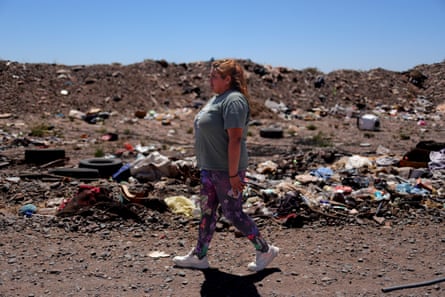
Until recently, Johana scavenged with her children. “Thank God my partner got a job at a sawmill and we don’t go any more,” she says.
Children suffer most from existing alongside the dump as it affects everything: the air they breathe, the food they eat, and the dangers it creates where they play. “They have cuts from glass, bronchospasms, gastrointestinal diseases and skin allergies,” says Dr Ignacio Veltri, who runs a health post in a container near the dump.
Veltri and student volunteers from the National University of Comahue set up the post to offer medical care, vaccinations and check-ups. “Many parents bring their children to the dump because they have nowhere else to leave them. When there is such scarcity, it’s better not to judge but to help,” he says.
Despite the vulnerabilities they face, Maia, her siblings and Johana’s children have big plans. Their mothers love to talk about dreams: a stable job, happiness for their children. Gisel wants to leave the dump and open a bakery. She shows photos of decorated cakes. Maia also wants to be a baker. The other children dream of being footballers, architects or police officers.
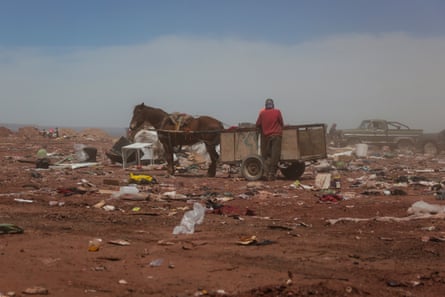
When the dump swelters under the sun, whipped by the Patagonian wind, Maia and her siblings stay home in the neighbourhood below. The streets are deserted. Within an hour, a yellow weather alert will be issued due to strong Patagonian winds that amplify the environmental problem.
On the plateau, the storm begins: copper-coloured dust and flying plastic bags shrouding those who scavenge. Two thin boys, 11 and 14, struggle forward with burlap sacks heavy with their day’s haul. Some would say they have had a good day.
For Maia, a good day is finding false nails or toys. A bad one was when her mother pricked her hand with a syringe. Still, she prefers to talk about her dream – shared with her mother – of apple pies, sweet white cream and the scent of vanilla.
-
This story is a collaboration with Fundación La Nación in Argentina. Read it in Spanish here.