.png) 3 months ago
77
3 months ago
77
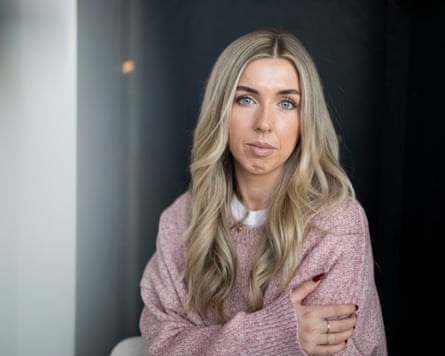
On a cold morning in December 2024, florist Madeline King was on a buying trip to her local wholesaler when a wave of dizziness nearly knocked her over. As rows of roses seemed to rush past her, she tried to focus. She quickly picked the blooms she needed and left.
I’m not doing this any more, she thought.
That month, after eight years, she closed her Minneapolis-based florist. She had started the business aged 22, transforming it from a one-woman show operating out of her dad’s warehouse into a 10-person team, creating extravagant floral displays for weddings and building a loyal social media following.
The dizziness she experienced that day wasn’t new. By that point King, 30, had spent years battling fatigue, headaches and nausea. Her brain was foggy. She’d walk into rooms and forget why she was there. Now, she believes her symptoms were a result of pesticide exposure.
“It was definitely earth shattering,” she says over Zoom. “To find out that I feel this bad because of my job … is horrible and stressful. And also, why is no one talking about this?”
Many people don’t think of pesticides when they look at a bouquet of flowers. But they’re full of them, according to Pesticide Action Network (PAN), a UK charity. Buying from your local supermarket won’t necessarily put you at risk, say experts – that falls to the growers and florists who handle what the charity describes as “toxic bombs”.
Chemicals protect flowers from disease and pests and, as customers want perfect blooms year-round, keep them looking uniform. But research shows they can easily be absorbed through skin contact or inhalation by people exposed for hours every day.
Unlike food, there is no upper limit on pesticide residue levels in flowers in the EU, UK or US. To a certain extent, this makes sense – we don’t typically eat flowers. Yet despite a growing sustainable flower industry in Britain, where blooms are grown on small farms, seasonally, with few or no pesticides, the UK still imports roughly 85% of its flowers, according to the British Florist Association (BFA). Many are imported along opaque supply chains from countries such as Ecuador, Colombia, Kenya and Ethiopia, where pesticide use is less regulated, says Nick Mole, policy manager at PAN.
Many florists feel fine. Take Sean Daly, who owns Chelsea Flowers in west London and has worked in the industry for more than two decades. When I ask him about pesticides, he simply replies: “It’s never come up.” If he wears gloves, he’s not thinking about chemicals. “I’m also a musician,” he says. “I’ve got to protect my hands, you know?”
Then there are others, like florist Laure Marivain. Her 11-year-old daughter, Emmy, died in March 2022 from cancer. In a landmark case, her death was recognised by France’s Pesticide Victims Compensation Fund, a national body set up to support workers exposed to pesticides. Officials acknowledged a link between Emmy’s cancer and her exposure in utero to pesticides during Marivain’s pregnancy. “If someone had warned me, my daughter would still be here,” Marivain told Le Monde.
Although the flower industry has long used a wide range of pesticides that can seriously harm human health, what those harms look like exactly is difficult to say because data is scarce, says Jean-Noël Jouzel, research director at France’s National Centre for Scientific Research. Together with Giovanni Prete, assistant professor at the Sorbonne Paris Nord University, he has been researching the link between parental occupational exposure to pesticides and paediatric diseases, interviewing Marivain and two more florists. One woman’s child also died from cancer, while the third mother’s five-year-old has neurodevelopmental disorders.
“The relationship is never clearcut,” says Jouzel. “And so in these three cases, it’s very plausible that there is a link, but, of course, no certainty.”
What few studies exist paint a bleak picture. One, from 1990, found that roughly 9,000 flower workers in Colombia were exposed to 127 pesticides – and suggested those who were pregnant might have higher rates of premature births and babies with birth defects.
Another, from 2018, identified 107 pesticides in an analysis of 90 bouquets, 70 of which ended up in the florists’ urine, despite them wearing two pairs of gloves to handle flowers. Exposure to one particular pesticide, clofentezine, was four times higher than the acceptable threshold. The US Environmental Protection Agency has classified it as a possible human carcinogen and, in 2023, it wasn’t approved for renewal by the EU because of its endocrine disrupting properties, which can cause cancer and birth defects.
In industries like cotton, there’s been a real effort to reduce chemical usage on farms, explains Michael Eddleston, professor of clinical toxicology at the University of Edinburgh, who has spent decades researching pesticide deaths. The problem with flowers, he says, is that no one’s checking, so there’s no incentive to change decades-old practices.
Now, however, there is a small but growing call to raise awareness among authorities and florists, a predominantly female workforce, who are exposed daily to residues but often don’t wear protective equipment – or don’t realise that they should.
Roisin Taylor is a Durham-based grower, florist and researcher working in sustainable cut flowers who has started raising awareness of the issue of pesticides on TikTok. “It’s a very scary thing to hear,” she says. “So understandably quite a lot of florists are quite resistant to talking about it. And also, it’s women, so no one cares.”
King’s problems started a few years in. She was spending five days a week, eight hours a day, surrounded by flowers – cutting stems, designing bouquets and installing displays. But every month, she rotated through a series of illnesses: a stomach bug, flu, nausea. Although she appeared relatively healthy on paper, something wasn’t adding up, she says.
She visited a naturopathic doctor, a trained alternative health professional who specialises in identifying underlying causes of illness (rather than just treating symptoms). Multiple blood tests over a one-year period showed her liver enzymes were high, she says, which can be a sign of liver damage from poisoning. King’s naturopath suggested it could be pesticides.
“It was like a lightbulb went off in my head,” says King. When she read the Belgian study, which found pesticides in florists’ urine despite them wearing two pairs of gloves, it blew her mind, she says. She’d spent half a decade using her bare hands.
From then on, she wore protective gear, and ensured her team did, too. She also started using air purifiers in her studio, buying more locally grown flowers and taking daily supplements for her liver. Despite this, things worsened. She remembers travelling to one wedding job where she could barely lift her head off the car seat en route to the venue (her husband was driving).
That King’s symptoms disappeared once she left the industry supports the idea that they were connected to pesticide exposure, says Eddleston.
Many others, however, are simply left guessing. Handling flowers every day may well have consequences we don’t yet understand. “There’s a whole group [of pesticides] that cause cancer, or are recognised to probably cause cancer, and [florists] are probably being exposed to them. There’s a whole group that affects reproductive health. They’re probably being exposed to them too,” says Eddleston. “What I would worry about as a florist is long-term chronic exposure to multiple pesticides … which are simply not being controlled and that can’t be safe.”
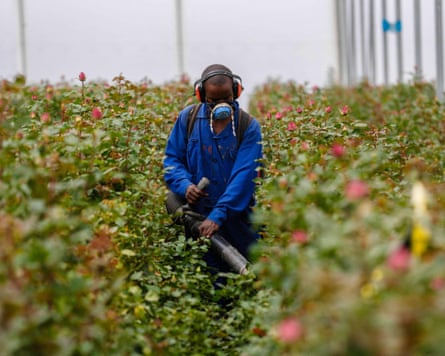
It is also incredibly hard to prove causality. According to an investigation by Daily Nation, flower-farm workers in Kenya – where pesticides are used extensively – have reported a range of worrying health issues, from vomiting to damaged organs, loss of limb function and even death.
The problem, says Mole, is that it is harder for florists to show that their symptoms are being directly caused by this. “You can’t single things out,” he says. “You know, I touched this bunch of flowers in 2013 and I’ve got cancer down the line.”
Rashes and skin complaints are also common among florists – a 2016 study found the prevailing issue among the 25 florists interviewed was skin allergies, irritations and itching. These symptoms can be easily caused by pesticides or chemicals, says Eddleston. But, again, it’s tricky. Angela Oliver, CEO of the BFA, says that the trade body publishes a list of flowers and plants that also cause skin irritations.
One thing most of the florists I interviewed for this piece agreed on is the serious lack of education and awareness about pesticides within the industry. I can also vouch for this. When I decided to train as a florist earlier this year while freelancing as a journalist, I didn’t use gloves for months. I had no idea I should.
Certain floristry courses in the UK, such as those approved by the training and qualifications body City & Guilds, do teach students that employers should provide PPE, including gloves. But these courses are expensive and aren’t a mandatory requirement – many simply learn on the job.
Beyond that, there are no occupational hazard guidelines publicly available for florists, according to Oliver. The organisation itself publishes information on workplace health and safety policies, but you need to be a paid member to access it.
“This is part of why the trade association exists,” she says. “To try to get everybody singing from the same hymn sheet.”
A few years ago, French guidelines listed risks like cuts and working in cold environments, but there was virtually no mention of pesticides. After public outcry over Emmy Marivain’s death, that has gradually started to change. The government also launched a study to assess flower industry workers’ exposure to pesticides. Although the conclusions aren’t expected for another few years, French media say it should lead to proposals for regulatory changes, such as setting maximum pesticide residue limits for flowers. In the meantime, UFC-Que Choisir, a French consumer organisation, is demanding more immediate measures, such as compulsory labelling to better inform people about the chemicals sprayed on flowers.
But many florists only hear about the risks through word of mouth or reading the news. Roisin Taylor, the Durham-based grower who has mostly worked with locally grown stems, says the chalky film that covers her hands when she touches imported flowers is obvious. And she knows to wash her hands thoroughly before she eats lunch. “But if you had no education in this … your baseline as a florist is maybe thinking: it’s just dust,” she says. “It’s not dust. It’s chemicals.”
Kally Spencer-Townson, a 35-year-old freelance florist and gardener in Gloucestershire in the UK, says she only became aware of the risks of pesticides after reading about Emmy Marivain’s death. She now always wears gloves. “I just thought, I’ve definitely been ingesting whatever pesticides were on these flowers,” she says. “It is unsettling.” She says she has seen florists cut pizza with their scissors – the same scissors that have already touched hundreds of stems that day.
In contrast to the fashion and food industries, where increased scrutiny has helped improve traceability, floristry supply chains are still incredibly opaque. Although large buyers like supermarkets can set standards and source directly from farms, most florists are independent and buy “blind” from wholesalers, according to a report by Cissy Bullock, florist and co-founder of the School of Sustainable Floristry, and Olivia Wilson, founder of Wetherly, a British flower studio. This is because labels on imported flowers typically lack clear information about chemical usage, origin and labour practices.
Amy Aniceto, 41, founder of London-based Sweet Frank Flowers, a floral design studio, says she wants more information about the risks of her job. “By the time I’m handling these flowers with gloves, what is my exposure level? It’s just impossible to find that research,” she says.
Oliver says she’s never come across pesticides affecting florists’ health before – and the BFA isn’t planning any further discussion on the issue.
For Eddleston, data is key. “What you’re telling me makes me think we should be recruiting 1,000 florists and studying their health. Do we find that 10 years later, they all die from cancer? It surprises me that [this] hasn’t been picked up before and it hasn’t been recognised as a problem. But I think it’s something to worry about.”
With cut flowers reaching sky-high prices, and margins shrinking, it’s understandable that florists may be unwilling to address something as insidious as pesticides. After all, you can’t see them, so it’s easy to pretend they’re not there.
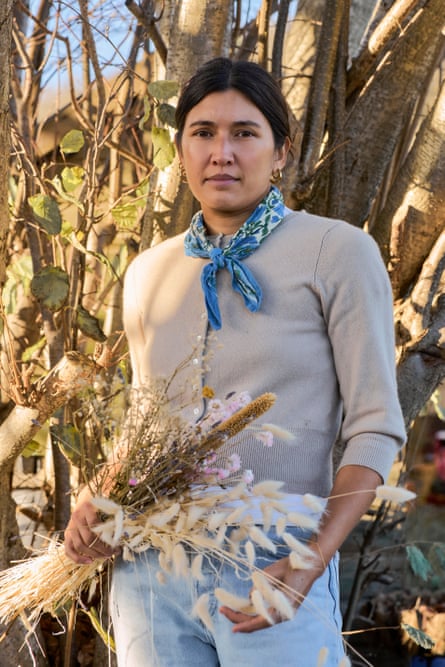
Although King is one of the rare dissenting voices in an industry that seldom talks about the issue, or perhaps realises that they should, she also doesn’t want to scare anyone. Her advice? Wear gloves, use air purifiers, crack open a window where possible and try to use more locally grown flowers to reduce exposure.
“If you love what you do, it’s worth continuing, as long as you can do it in a healthy way,” she says. “Floristry is beautiful, and there’s so many people that have amazing careers and make amazing things. I don’t want to demonise the industry, but I do think there’s a really dark side to floristry that is just not talked about.”