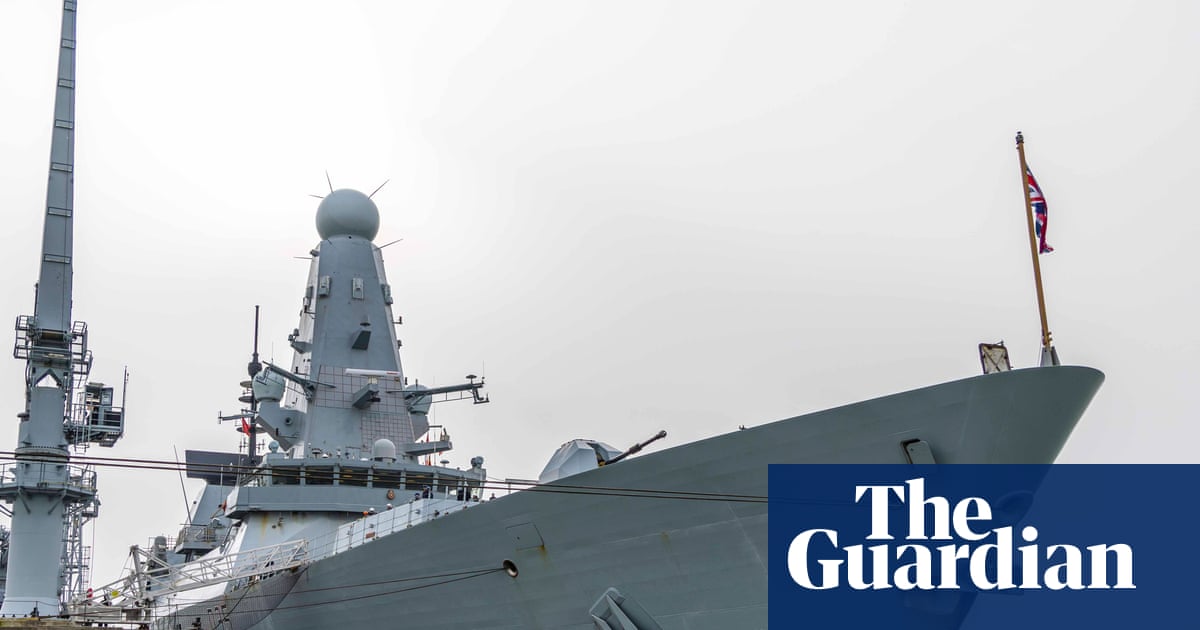
.png) 18 hours ago
15
18 hours ago
15
The US has expanded its aerial offensive against Iran, hitting a city hosting a nuclear power plant, while Iran has responded with strikes on Bahrain and Kuwait, as diplomats insist talks are ongoing.
Iranian media on Monday reported strikes around Tabriz, believed to hold underground missile bases, as well as Bushehr, home to the country’s only operational civilian nuclear power plant as the US military said it had struck “military command centers, air defence and coastal surveillance sites, maritime capabilities, missile and drone launch sites and communications networks”.
Iran launched attacks against Bahrain, which hosts the US navy’s fifth fleet, and Kuwait, in addition to striking tankers in the strait of Hormuz, which carried a fifth of global oil and gas supplies before the war.
The tit-for-tat attacks came as the region lurched back towards a total war despite an interim peace deal agreed last month. Shipping in the strait has slowed to a trickle due to the fighting and the price of oil reached its highest in a month, passing $90 a barrel, exacerbating the global energy crisis.
The memorandum of understanding (MoU) to halt attacks and open the strait is now more than halfway through a 60-day implementation period that was intended to provide breathing room for diplomacy.
In a sign that talks could still stop the escalating round of conflict, Iran said on Monday that diplomacy with the US was ongoing despite the fighting, without giving details on the content of the discussions.
“We have been informed by mediators, we have received messages – without going into details – but the main point is that the diplomatic apparatus has been active in recent days and ideas have been conveyed to us by certain mediators,” Iranian foreign ministry spokesperson Esmail Baghaei said at a press conference in Tehran.
Hours earlier, the US secretary of state, Marco Rubio, said the US was still open to negotiations with Iran, but that “it has to be real”.
“We’re going to continue to respond. If the door opens to diplomacy – if the guys that want to do something productive for Iran win and take control of that system, or take control of the negotiations – that’ll be a very positive development,” Rubio said.
Mediators including Qatar and Pakistan have continued to speak to both sides during the current round of escalation in an attempt to bring the two sides back to the negotiating table.
The US military said a service member was killed on Saturday in northern Iraq, where the US has military bases, during a controlled detonation of what was called unexploded ordnance on a downed Iranian attack drone. It was the third US death in recent days, after two military service personnel were killed in an Iranian attack on a Jordanian airbase on Friday, with a third missing in action.
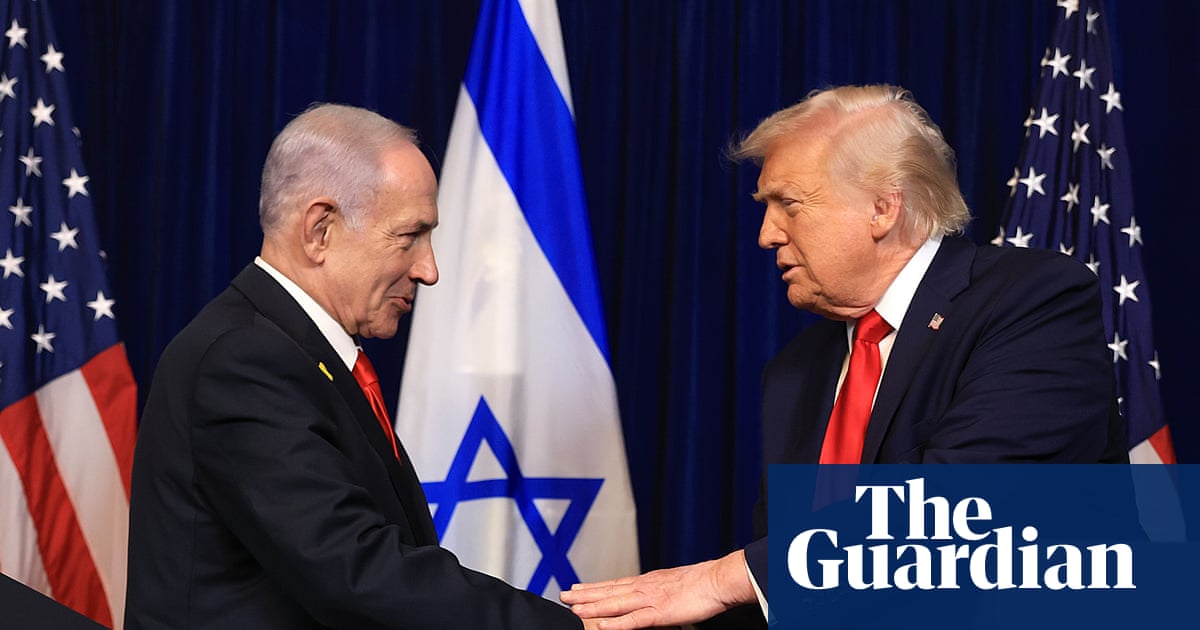
“We hit them very hard again tonight,” Donald Trump said as he returned to Washington after the World Cup final, adding “we did that in honour of the, probably three, it’s probably three great patriots”.
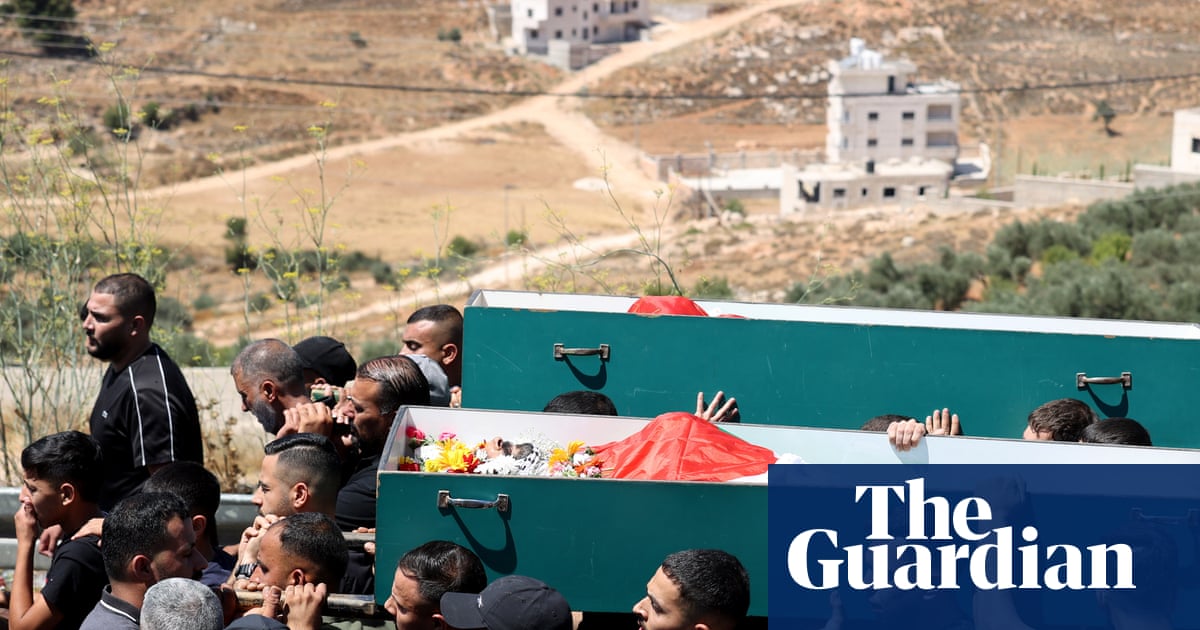
Since the war began, 17 US service members have been killed. Iran’s health ministry said on Friday that 50 people had been killed and more than 500 wounded in the current round of fighting.
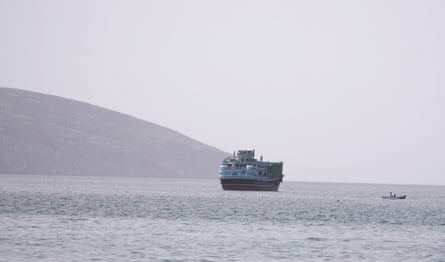
As the strikes began early on Monday, a ship caught fire in the strait of Hormuz near the coastline of Oman in the southern corridor the US military has encouraged ships to use to avoid Iran’s control.
The crew safely abandoned the vessel, while the ship was recovered by a tug boat, the United Kingdom Maritime Trade Operations agency said.
Iran’s Islamic Revolutionary Guard Corps (IRGC) claimed two oil tankers were blown up after attempting to transit through the southern route, but there was no independent confirmation.
The IRGC also claimed to have launched a “surprise attack” on an enemy command centre in the al-Tanf region of Syria, in a statement reported by state news agency IRNA.
After Iran targeted sites in Jordan on Sunday, Israel warned of the danger of the strikes spilling across its borders, reigniting a direct regional conflict that had been restrained even as tensions between the Trump administration and Iran have soared again.
“If Iran fires missiles at Israel, we will attack them with full force,” said the Israeli defence minister, Israel Katz, on Sunday. The US is expected to send dozens of additional refuelling planes to Israel as part of a reinforcement of its force posture in the region, a US official told Reuters.
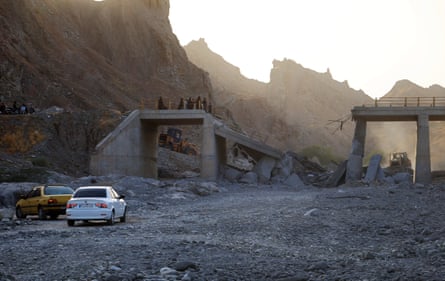
Trump has threatened to target Iran’s power stations and bridges to try to compel Tehran to loosen its hold on the strait of Hormuz.
The US energy secretary, Chris Wright, defended the Trump administration’s strategy for the war, but argued that the mission had since shifted toward ensuring oil shipments could move through the strait of Hormuz.
“We did a pause to try to get an agreement with the Iranian people to allow oil to flow without them attacking it,” Wright said on Sunday. “They’ve proven unwilling to do that, and we’ve pivoted. Now, what we’re doing is assuring that that oil and gas and other products can flow through the strait of Hormuz with or without Iranian cooperation.”