.png) 11 hours ago
9
11 hours ago
9
Our journalists always try to spend as long as they can in places to more fully understand things and explain what’s going on. But they don’t often get the chance to keep returning and reporting over a period of 12 months.
“You very rarely have the resources and time to be able to have that back and forth over a year and form ongoing relationships with people,” says Guardian journalist Lisa Bachelor, who was able to do just that as part of a long-term project exploring the lives of young people in coastal towns across England and Wales. The year-long series, Against the tide, wrapped up last week.
The series was initially sparked by research showing that young people living in England’s coastal areas have disproportionately higher rates of undiagnosed mental health conditions. Working alongside the documentary photographer Polly Braden, Lisa sought to put the voices of 16- to 25-year-olds front and centre to explain what was going on and what can be done.
Given those aims, and the duty of care to the young people featured, the project required a lot more groundwork than usual. “As a reporter or photographer, you weren’t just thinking: I need to go there, find that person, get that angle, do it by this time,” says Lisa. “So it took that pressure off.”
“That meant we were able to live their experiences with them rather than just come in and tell their stories,” adds Polly. “We could be there in those moments when things were actually happening. That was a really big privilege.”
Their approach didn’t just make for deeper insights, it also resulted in more wide-ranging impacts. These included taking some of the young people to give evidence to parliament, spurring local councils to take concrete actions, hosting an exhibition of the photography and even collaborating with a railway organisation that wants to use the material in local train stations. The project’s ripple effects also included less tangible impacts – and proved transformative for everyone involved.
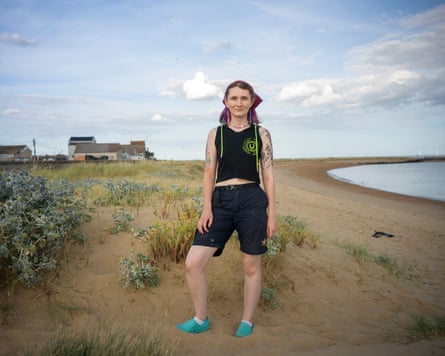
From the outset, Lisa and Polly wanted Against the tide to be guided by the concerns expressed by young people, rather than the preconceptions about their lives. Coastal towns and communities consistently dominate UK deprivation statistics, and young people who live in them face some of the country’s worst educational attainment levels and grapple with local challenges such as the seasonal nature of many jobs.
“Before we started, we went to Blackpool, to Harwich, lots of the places featured in the series, and we sat with young people and listened,” says Polly. “We spoke about what it’s like to be represented by someone coming from outside your town, to be photographed in your town, and they would tell us how it was really annoying to be told that they were from the most deprived place again and again, and how did we expect them to feel good about where they lived? Having discussed this with them, Lisa and I could then try to address those concerns. We asked them to show us all the amazing creativity in their town and we’d go with them and see all the things they were doing.”
Indeed, some of the most memorable moments from the series capture the young people’s hopefulness, resilience, talent, creativity and humour. The articles, photography and videos stand as a direct challenge to the negative stereotypes perpetuated by some parts of the British media that seem to revel in blaming young people and making everything seem hopeless and bleak. The reporting teams on Against the tide also worked with local organisations to make sure the young people were properly supported throughout the experience.
“Many of them have told us how great it is to feel like they’ve finally been listened to, which is one of the big things we wanted to achieve,” says Lisa, who is editor of the Guardian’s Seascape series.
“And they didn’t just feel proud to be part of a story about their own town, but also part of a bigger national story about what it’s like to be young today,” adds Polly.
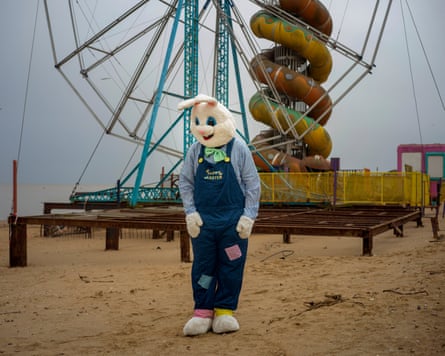
By helping to give people a genuine voice, the series captured the imagination of audiences and policymakers alike.
Lisa and Polly had always wanted to involve politicians in some way, but they never imagined they would end up being invited to take 16 young people from coastal places to parliament to give evidence about their lives to MPs. That memorable day in May also allowed people from the different coastal towns to meet each other. “It was quite a big thing for them to come together – some of them hadn’t travelled that far before,” explains Lisa. “And one of the things we kept hearing was that young people and communities on the coast have much more in common with each other than they probably do with those in equivalent inland towns. The things that knit them together are so often the same.”
Some young people featured in the series have subsequently been approached by local councils, broadcasters and film-makers. The sense of recognition and empowerment has been profound. “One young woman told us she actually feels like she’s part of what’s going on where she lives now. And she talked about just how much of a difference that makes,” says Lisa.
Others have had their voices more literally amplified in the form of voice recordings that feature in an exhibition of Polly’s photographs, which opened at the Arnolfini gallery in Bristol last month. The exhibition will move to Colchester’s Firstsite gallery in October.
Meanwhile, a rail organisation in Lancashire has approached the team about displaying some of the material from the series on posters along a coastal railway line. Other work created by local young people is being put up at Blackpool North train station in an arrangement that will run for the next 10 years.
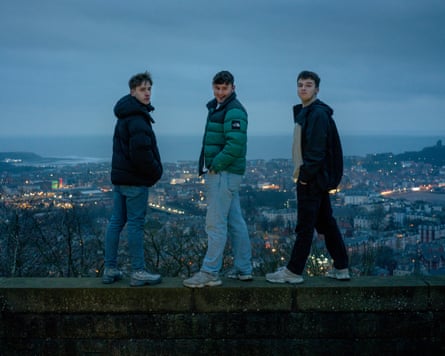
The series has also proved transformative for Lisa and Polly, the wider team of reporters and audio and video producers, and the various organisations and academics they collaborated with. “I can’t express just how much collaboration there has been every step of the way on this project, how that’s unlocked things,” says Polly. “So it’s changed me because I want to work like that much more going forward.”
“Yes, this has been absolutely transformative,” Lisa adds. “I’ve been reporting and editing for over 20 years at the Guardian and this series has really made me want to work more deeply with other groups of people.”
And of course, the series has also altered their own perceptions of the coastal towns – and sometimes even of themselves. Lisa grew up in Hull, a port city. “When I was young it had the dubious accolade of topping the ‘crap town of England’ list,” she explains. “But my experience growing up there was of a strong community, a real feeling of togetherness and a fantastic music and arts scene. So I hadn’t realised when I started this series how much I would recognise my past self in a lot of the things the young people were talking about in terms of how their towns are depicted and how it is contrary to what they want to say about the place they come from.”
Against the tide was produced by the Guardian’s Seascape team in collaboration with Polly and also included contributions from journalists across the Guardian.