.png) 2 months ago
25
2 months ago
25
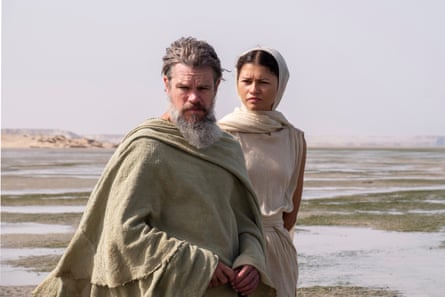
There are the American accents, gleaming body suits and a muddy Dunkirk palette. And then there is Lupita Nyong’o as Helen of Troy, a casting choice that recently drew racist attacks from the usual moaners of the internet, including Elon Musk, who complained it wasn’t authentic. Authenticity matters. He’s just focusing entirely in the wrong place. To many Greeks, what concerns us most about the first look at Christopher Nolan’s adaptation of Homer’s Odyssey is the whereabouts of Billy Zane.
Zane, like other beloved members of the Greek diaspora in Hollywood, has recently appeared on “Alternative Odyssey” lists on the Greek side of social media, as well as over dinner table debates from Patras to Palmers Green. (Theo James, Jennifer Aniston, Hank Azaria, and Dave Bautista are among the other nominees.) Greek and Greek Cypriot media platforms are writing open letters. It’s a symptom of feeling left out by Hollywood, again and with no explanation, from our foundational mythologies and epics, with a cast list that features not even a token –opoulos, –edes, or –iannou. Not a single Greek.
Nothing is new here. From Jason and the Argonauts (1963) to Troy (2004), Hollywood has mined Greek stories for generations without much concern for Greek representation – unless it suits a cliche.
As a film critic, I’ve groaned through my share of boisterous, plate-smashing, hapless “Zorbas” in Mamma Mia! (2008) or Shirley Valentine (1989). In sword-and-sandal epics, meanwhile, Hollywood often feels unable to square modern Greeks with legendary figures Achilles and Odysseus, or our historical forebears Alexander and Leonidas. Somehow, today’s Greeks and our antiquity are always disconnected. So, are we unworthy of our myths?
“It is true, there’s a sense that the world’s impression of Greeks is more Zorba than Achilles,” says Greece’s leading film critic Thodoris Koutsogiannopoulos. “I find it disheartening, and a lazy cliche, that the majority perpetuates, over more sophisticated iterations of what Greekness really is … It would be nice to see a Greek or two among the star cast, but it would be a surprise if it occurred.”
Many – myself included – assumed Nolan’s epic might buck the trend, might elevate at least one actual Greek actor from comic relief. After all, Homer isn’t short on characters.
Instead, when you get past the superstars – from Matt Damon (who has just been flaunted, Greek god-like, on a column plinth for GQ’s newest shoot) as the wily Ithacan, to Zendaya, Tom Holland, Charlize Theron, and Jon Bernthal, to supporting actors Himesh Patel, Will Yun Lee, and Travis Scott – it’s evident that Nolan selected his cast to be “representative of the world”, in the words of Nyong’o.
An honourable intention. But for us Greeks, it makes our absence even more glaring – especially in the year’s blockbuster event. If your film sets out to represent the world, wouldn’t it be obvious to fill one space at this large, wonderfully multicultural table with the people who are most authentically connected to the source?
The irony is, those who shout the loudest about “authentic” casting failed to notice there isn’t a single Greek in the film. Not that it matters to the likes of Musk and his sinister motives – but he couldn’t have got it more wrong.
For Greeks, the omission takes on another meaning: that ancient Hellenic stories are viewed as part of a shared western inheritance – a world literature – while the Greeks are somehow incidental to them. At worst, it suggests modern Greeks (particularly after decades of economic crisis) are no longer viewed as worthy custodians of these stories – a sentiment not unlike the logic used against returning the Parthenon marbles.
Nolan’s film also arrives at a different moment to previous sword-and-sandal movies, like 2004’s Troy. Hollywood treads carefully to pay cultural adaptations their dues, and this isn’t lost on Greeks. “That’s all we are talking about,” one friend in Athens, involved in cinema, said to me. “In Hollywood, Greek stories seem uniquely exempt from the representation conversations now surrounding other cultural inheritances.” None of us are counting on leading roles. But Greece’s film industry is quietly flourishing – with Yorgos Lanthimos, Athina Tsangari, and others, introducing homegrown actors like Angeliki Papoulia. As for our diaspora, Theo James’s turn in The White Lotus proves he’d make a charismatic Antinous. Had Nolan wanted, the talent was there; it’s unlikely any actor today rejects that call.
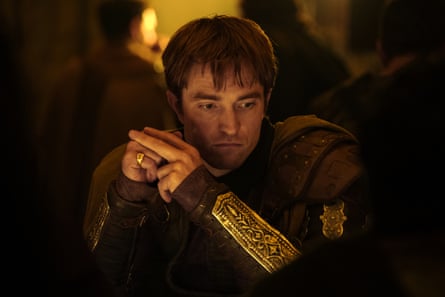
Of course, plenty of non-Greeks will ask: what’s all the fuss about? The Odyssey is fiction, after all. Yet it’s difficult to overstate how strongly these stories resonate in our culture today. Growing up in a Greek household in London, legends are recalled in such a way that I must admit to wilfully believing that there was a great Trojan war and perhaps some type of ruse involving a grand wooden horse. My mother places clay pots bearing the names of ancient heroes beneath Orthodox icons, and I have cousins named Achilleos, two aunty Athenas and a Cretan friend called Odysseas. At schools in Greece, young children learn to recite Homer’s poems in Ancient Greek, and phrases are used in everyday conversation.
Tales like The Odyssey, while cornerstones of world literature, have an intimate resonance in the Greek subconscious and in our sense of identity – as a people, not a nation. I imagine it would be the same for Indian Hindus and their Mahabharata or the Polynesian folklore that inspired Disney’s Moana. All said, I’m certain Greek audiences cannot wait to watch Nolan’s film – strange internet slang and inaccurate armour designs aside – because above all the Christopher Nolan fanfare, we enjoy seeing our heritage depicted.
Yet as Hollywood increasingly emphasises representation, exclusion provokes a doubly potent reaction. The debate in Greece around The Odyssey’s casting reminds me of the poem’s great theme: nostos – homecoming, after years of trials and obstacles. We Greeks are simply asking not to be written out of the journey.