.png) 1 hour ago
3
1 hour ago
3
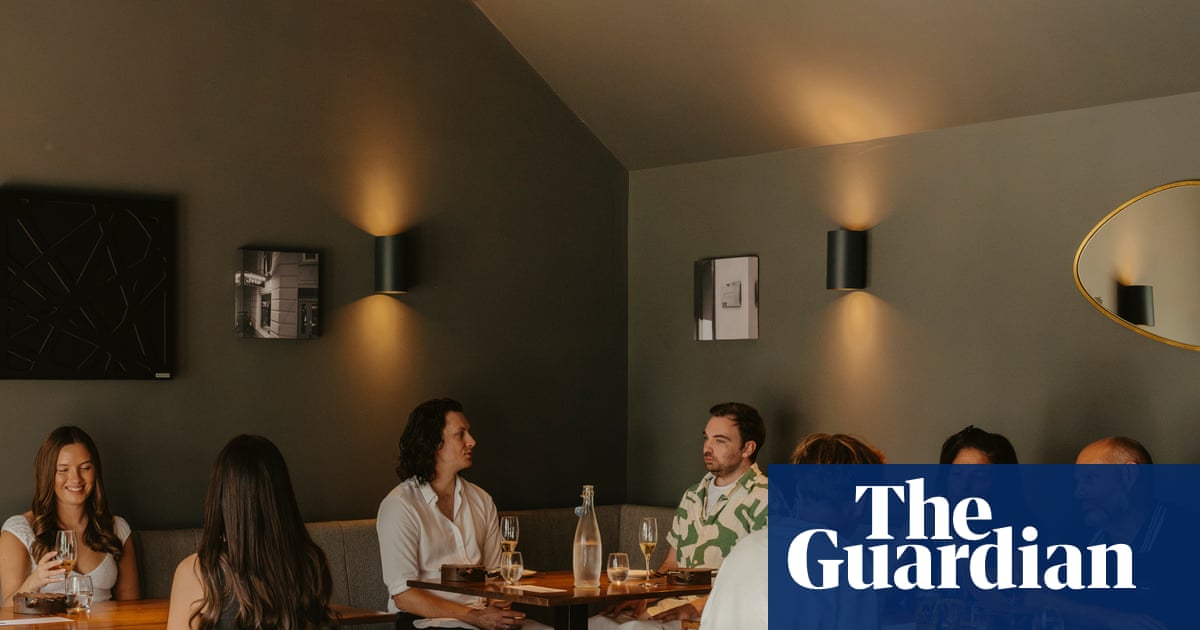
Femi Koleoso I wanted to bring together people who inspire me and whose work I think evokes hope and joy. Yinka, the first time I saw your work I thought: this is exactly what joy looks like – it’s bold, colourful and the perfect embodiment of that feeling. Leona’s music has brought me joy ever since hearing you when you were on The X Factor. You’re one of the most iconic Black British singers we’ve ever had. With you, Eberechi, your transfer to the Gunners meant a lot to a lot of Arsenal fans, but personally it was a really beautiful way of seeing that things do work out for the good people. Can you tell me about your journeys to where you are now?
Leona Lewis I grew up in Hackney and I was surrounded by music because my dad was a DJ. He had a million records he would play all the time. I gradually discovered people like Whitney Houston, Chaka Khan and Oleta Adams mainly through my dad and I got really drawn to powerful female singers. I started singing all the time. When I was at school, I had a hard time because I was bullied – singing and writing music became a way to find my voice, my joy and my confidence. From then, I knew music was what I was going to do with my life: I didn’t know how I would get there but I knew I had to. It’s interesting that you do a lot of youth work, Femi, because I went to a lot of youth groups in north London while I was getting into music and then from 14 to 17 I enrolled in the Brit School. It helped me establish my voice and since then I’ve always been obsessed with music and it’s become my therapy: my joy, my pain, everything.
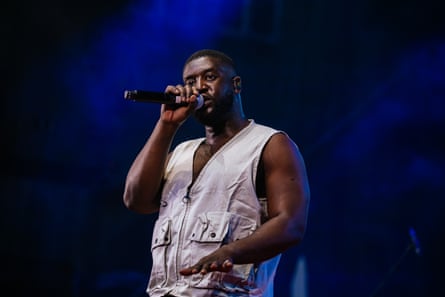
Yinka Ilori My journey started as a young kid from the Marquess Estate in north London. I remember always being the odd one out growing up there because I was really into design, architecture and anything creative while my peers were into playing football. My mum had like 11 jobs – in catering, as a hairdresser, in hospitality – and seeing her do so many different things ultimately inspired me to follow my own path. I loved art and when I was studying for my A-level, I got interested in how design and play can speak for communities and be a voice for their experiences. My A-level teacher, Mr Doherty, encouraged me to take art and design seriously and eventually I got my bachelor’s degree and applied for a £3,500 loan from the Prince’s Trust to start my practice.
During that period, I was splitting my time between working in retail at Marks & Spencer and having a small studio in Hackney, and just experimenting with designing, looking at Nigerian folklore. I love telling stories through design as it gives me the power to touch people. I can tap into an emotion and it will connect with people and that’s what has driven me forwards ever since.
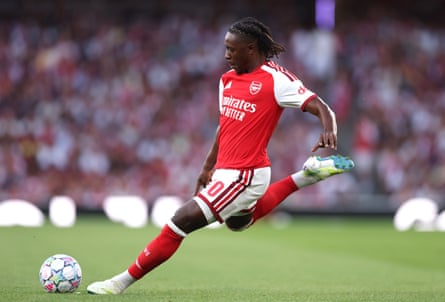
Eberechi Eze When I was younger I was released by eight football clubs: eight clubs said no, including Arsenal. But I remember knowing for sure that this thing was going to work out somehow. I knew it was going to happen because it’s been pressed so intensely on my heart, and on my mum’s heart as well, without putting pressure on me. It was always: “We pray it works out.” So there’s always been that hope, there’s always been that feeling of believing that this thing will come.
My wife was saying to me recently: “It’s crazy because you’re living your dream [of playing for Arsenal]. And a lot of people are doing things they like to do and enjoy doing.” So walking out at the Emirates [in 2025] and living that experience was, you can probably see on my face, it was just a moment of immense gratitude and thankfulness. To God for what he’s done and for fulfilling that promise that was made to me at eight years old. That thing that was in my heart.
FK With the new record, I’ve been interested in hope. I feel like you have a spectrum where on one side you’ve got pain and on the other side you’ve got joy. For you Leona, you mentioned going through bullying at school. What eventually allowed you to find a way out?
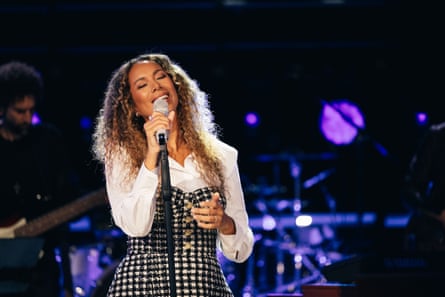
LL Music was my hope, and through singing I found a light to guide me. It gave me something to work towards and it was a form of escapism. It also became my fuel to get better. I remember learning the piano because of it, so the negative situation turned positive. Much like what Yinka said about his work, when I would write music and perform it, I’d feel really connected to others and it seemed like I could tap into their emotions too. When you’re going through a situation like bullying in school, you can feel really isolated, so having something else to focus on is important. Music made me feel less alone.
FK That really resonates with me, since our album is all about the different kinds of music that have come from a painful place but that end up bringing people joy. Things like calypso music doesn’t make sense to me because it was born out of enslaved Africans who were transported to the Caribbean and who ended up making steelpans out of oil drums. It should be the most painful music you can imagine, but it’s so joyful. Even music like grime and garage coming from council estates in London makes people rave and dance. Similarly, Yinka, has your work ever been able to drag you out of pain?
YI So much of my work is centred around being resilient. Growing up and being exposed to crime, seeing people lose their lives or seeing friends go to jail, you have to find a way to still see these people as people and acknowledge the beauty and joy in their lives. It made me think about embedding all these conflicting emotions into designing an object or a playground or pavilion – how can you find the ray of sunlight in darkness? I don’t want pain to be the main factor that shows up in my work; I want to lean into joy. When there’s joy in the work, there’s room for hope. Recently, I lost someone close to me and it’s been a real test of still being able to find joy through pain but I think I prevailed.
EE I would say being released by Arsenal was the most painful because I was 13 at the time. Arsenal was all I knew, all my family knew, we had been there for so long, since I was eight. And at that age, it is really all you know, that’s your identity, you’re wrapped up in it. I just remember after that almost feeling like the world was over and not knowing what to do. Anywhere I went afterwards would be compared to Arsenal. I was playing at Fulham and I would be thinking of my friends at Arsenal. When we faced Arsenal, it was like the biggest day of the year for me.
YI When you’re someone who celebrates joy, you have to wear that mask all the time, but there’s also loss and pain and you have to navigate those emotions too. Still, when people tell me about the way my work affects them, it’s a reminder to keep going because I’m doing something that impacts people’s lives in a small way. It’s the same when I listen to [Ezra Collective’s] I Have a God in the studio, I sing it and it takes me right to church! It’s the same with Bleeding Love, Leona; that’s the anthem that takes me out of what I’m feeling and reminds me of my purpose.
FK Forget the national anthem, Bleeding Love is the anthem! But have there been any hopeless moments for you Leona?
LL I remember being at the airport a few years ago and I was going through a bit of postpartum anxiety at the time after having my daughter. This woman came up to me and she just said: “Your songs saved me. They got me through a divorce and during some of the worst times in my life. I’d put your music on and sing it at the top of my lungs and it made me feel better.” She gave me the biggest hug and it felt like everything melted away. It still makes me emotional to think about it today. The less we can think about ourselves and connect with others and get ourselves out of our own way, the better.
FK A big part of why I love doing youth work and being around young people is that they are hope and joy machines. They consistently make you feel like everything’s going to be OK. Just this morning, I was spending time with some of the young people I work with as it’s A-level results day and even if they’re not happy with their results and feel like all hope has vanished, you’re only three sentences away from them feeling like they can take over the world again. That’s the beauty of young people: the dark times are never too long and the bright times are so bright. They give me real hope for the future. What are the things that give you hope?
LL Hope is so wrapped up with my four-year-old daughter; she embodies it for me. She has such light and love and so many opinions. She’s optimistic and it’s beautiful to see. When you have kids, so many things in life are put into perspective. The tiny things that you used to worry about vanish, since there’s no time to consider them. Instead, I’m just hopeful for her generation to step into a kinder, more compassionate and hopeful place for themselves, too. To keep that spirit with them always.
after newsletter promotion
YI For me, it’s seeing what my peers are doing. People like yourselves, the [artist and director] Julian Knoxes and all the people around me. They’re flying the flag of hope and joy in different ways and it’s beautiful. I was also really inspired by watching Shakira and Burna Boy’s World Cup half-time performance. That has been on repeat ever since it aired and it’s given me so much hope and joy for the future. It was beautiful with the colourful artwork on the floor and having children there singing with them. It really gave me positive energy for life and it’s stuck with me since.
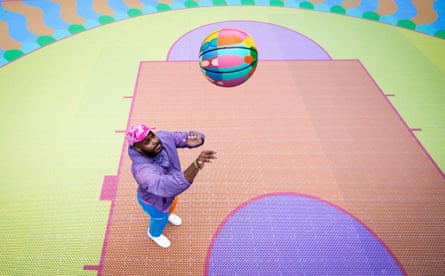
FK It’s funny you mention kids, Yinka, as I discovered your work after a kid in my youth group asked me to take him to this cool basketball court in Canary Wharf full of all these crazy colours. I remembered looking into it and realising you designed it! That was such a beautiful way into your art.
YI I need to give that kid a basketball!
FK He would love that, especially since he put me on to it. With you all being so established, what do you hope for yourselves going forward? What’s left that you’re aspiring to?
EE In line with my craft and the job I’m doing currently, and with [youth career mentorship charity] The Eze Foundation and the things that we’ve got going on around us, me and my family, the goal and the hope is to be able to inspire people beyond what I’ve done so far. I want to make people believe that they can do their own thing, their own success story.
LL I’m finishing my next record at the moment and I’m producing it all and trusting myself to do the whole thing, which is really new for me because I usually collaborate. I’m allowing myself to explore musically and to play the bass, drums and a little guitar.
FK You’re playing drums on the record? Respect!
LL It’s nothing on your level! But I’m leaning into that and exploring a different side to my musicality and allowing myself a space to grow. Sometimes you can get stuck in a box and it’s important to punch those walls away to see where you can go. That’s what I’m doing at the moment – trying to push myself creatively and be as authentic as possible while staying true to my music. It’s important for everyone to do.
FK What about you Yinka, what’s still on the list?
YI We’ve been working on a new foundation where the idea is to make play accessible for underprivileged communities. We want to create playgrounds, basketball courts and well-designed spaces that allow these kids to find themselves in creativity. We want to design in a global language that everyone understands. That’s what I want to focus my energy on for the next few years.
FK I want to end by saying how much of a positive influence you’ve all had on me. You’ve encouraged a lot of growth in me, so thank you. Let’s all move forward with hope.
Ezra Collective’s album Here Because of Hope is released on 18 September.